

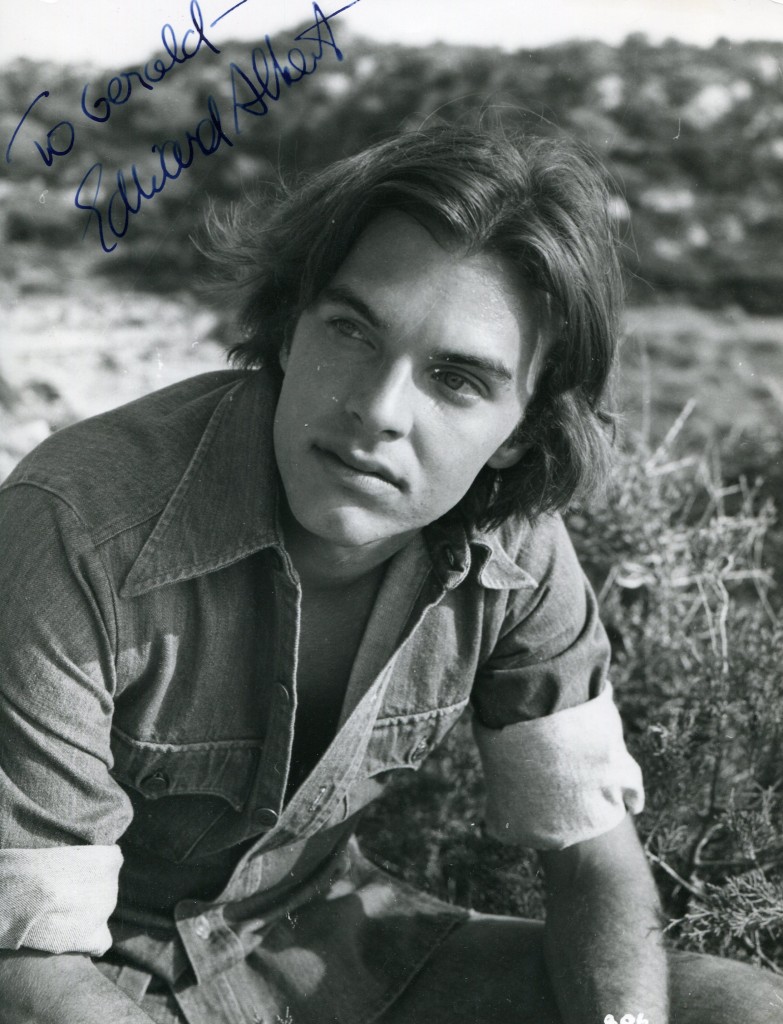
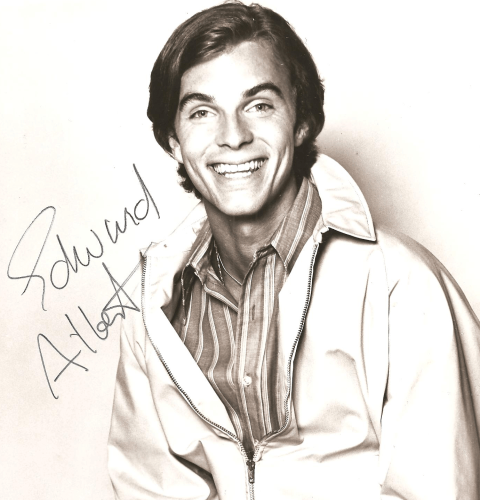
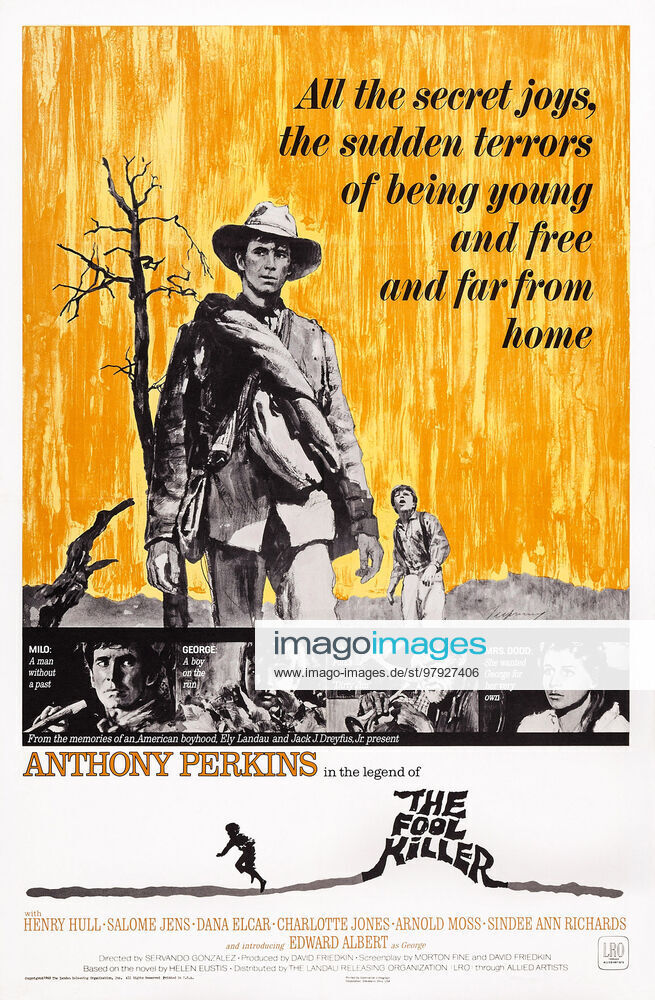
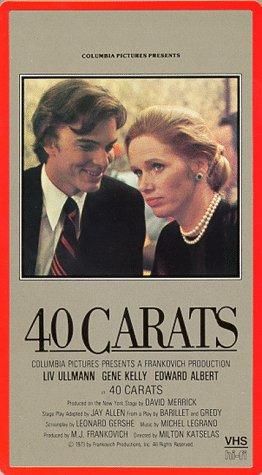
Edward Albert was born in 1951 in Los Angeles and was the son of actors Eddie Albert and Margo. He made his movie debut with Anthony Perkins in the 1965 “The Fool Killer”. He won widespread acclaim for his performance opposite Goldie Hawn in “Butterflies Are Free”. He went on to star opposite Liv Ullmann in “40 Carats”. He died in 2006 at the age of 56 shortly after the death of his father at 99. He was married to actress Catherine Woodville.
Gary Brumburgh’sentry:
he only son of Green Acres (1965) star Eddie Albert and Mexican actress/dancer Margo, Edward Laurence Albert managed to come out from under his father’s strong shadow and make a gallant showing of his own as a gifted thespian. Born in Los Angeles on February 20, 1951, Edward’s multi-cultural heritage and talented gene pool allowed him to become a man of many talents: songwriter, drummer, singer, photographer and, most importantly, activist
Growing up, he inherited an early interest in music and the performing arts. He made an auspicious film debut at the age of 14 in The Fool Killer (1965) co-starring as a young runaway who teams up with a tormented Civil War veteran (Anthony Perkins), a teaming that leads to murder. A strong, mature role for such a youngster, his next film appearance wouldn’t come about until seven years later. In the meantime Edward attended Oxford University and was studying psychology at UCLA when offered the breakthrough of a lifetime.
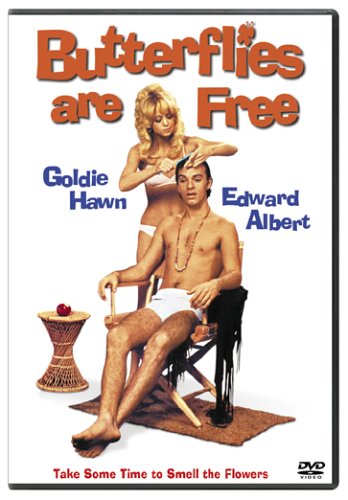
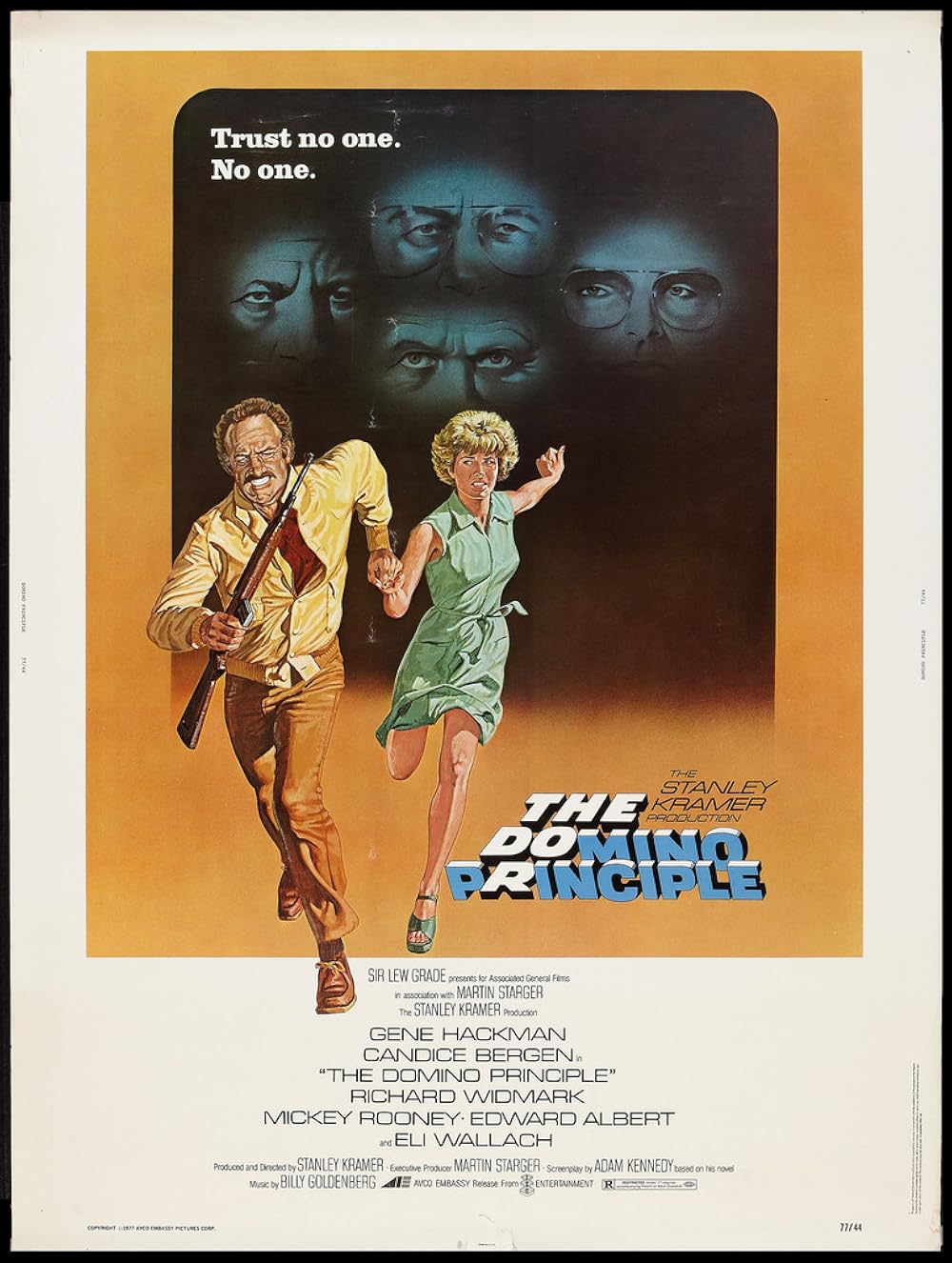
Signed up to play the difficult role of blind Don Baker–played on Broadway by Keir Dullea–who yearns for freedom away from his domineering mom (Oscar winner Eileen Heckart) and finds it in the arms of a liberated lass named Jill (Goldie Hawn) inButterflies Are Free (1972), Edward easily captured the hearts of millions with his tender, life-affirming performance. Edward walked home with the cinema’s Golden Globe Award as “Male Newcomer of the Year.” A confident, intelligent actor with a serene handsomeness and 1000-watt smile who just happened to possess the most magnetic pale eyes this side of Meg Foster, Edward was on a seemingly strong path to film stardom. Although he never found a comparable success to “Butterfly,” he did follow it up with another theater comedy favorite, 40 Carats (1973), in which he had a dalliance with older actress Liv Ullmann. He also played Charlton Heston‘s military son in Midway(1976), followed by highly visible roles in The Domino Killings (1977) and The Greek Tycoon (1978).
When film stardom did not pan out, Edward saw TV as a welcoming medium and made up for his sudden lack of star power with wonderful turns in major TV minimovies, notablyThe Last Convertible (1979). By the 1980s he had started making the rounds in formula low-budget action films and usually fared best when his flashy villainous side came into view. While such obvious movie titles as The House Where Evil Dwells (1982), Fist Fighter (1989), Demon Keeper (1994) and Stageghost (2000) pointed out the lack of quality in his offerings, it did provide a steady income and visibility. He also made frequent guest appearances on such shows as Falcon Crest (1981), L.A. Law (1986), Star Trek: Deep Space Nine (1993) and Dr. Quinn, Medicine Woman (1993) that kept him in the public eye. A solid regular as both good guy and bad guy on series TV, he gave his life (and, it seems, his paycheck) to the Beast after three seasons on Beauty and the Beast (1987) and, in contrast, played the dastardly Dr. Bennett Devlin on the daytime soap Port Charles (1997) for its first three seasons. Edward also used his vocal talents in animation involving such superhero icons as The Fantastic Four (1978), Spider-Man(1994) and “The Power Rangers”.
From his father and mother Edward developed a deep love and appreciation for the land and the diversity of cultures. As such, he divided his time between acting work and activism just as his father had done. Having owned a ranch in Malibu for over 30 years, he was a strong, positive influence and passionate spokesperson when it came to environmental and cultural affairs. In recent years he served on the California Coastal Commission and California Native American Heritage Commission.
Long married to lovely British-born actress Katherine Woodville, the couple’s daughter, Thais, continued the family musical tradition as a singer/songwriter for the rock group Sugar in Wartime. Following his mother’s passing from brain cancer in 1985, Edward became a selfless caregiver to his aging father, who began to develop early signs of Alzheimer’s disease in the 1990s. His father lived for more than a decade in declining health, dying in May 2005. In early 2005, Edward discovered he too was seriously ill after being diagnosed with lung cancer. He died surrounded by family on September 22, 2006, at the relatively young age of 55.
– IMDb Mini Biography By: Gary Brumburgh / gr-home@pacbell.net
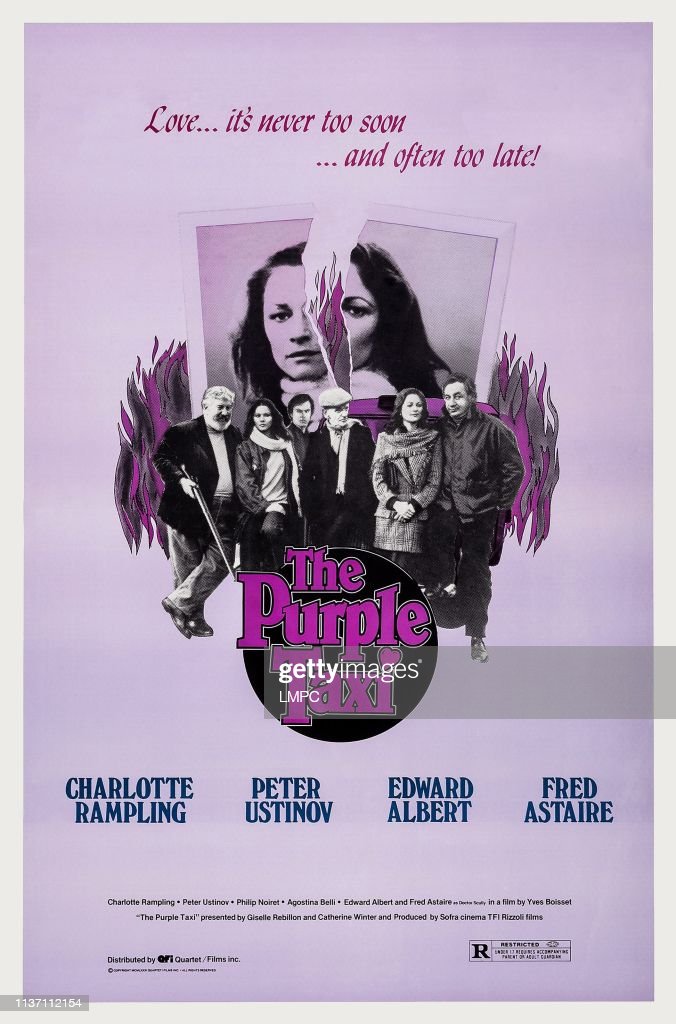
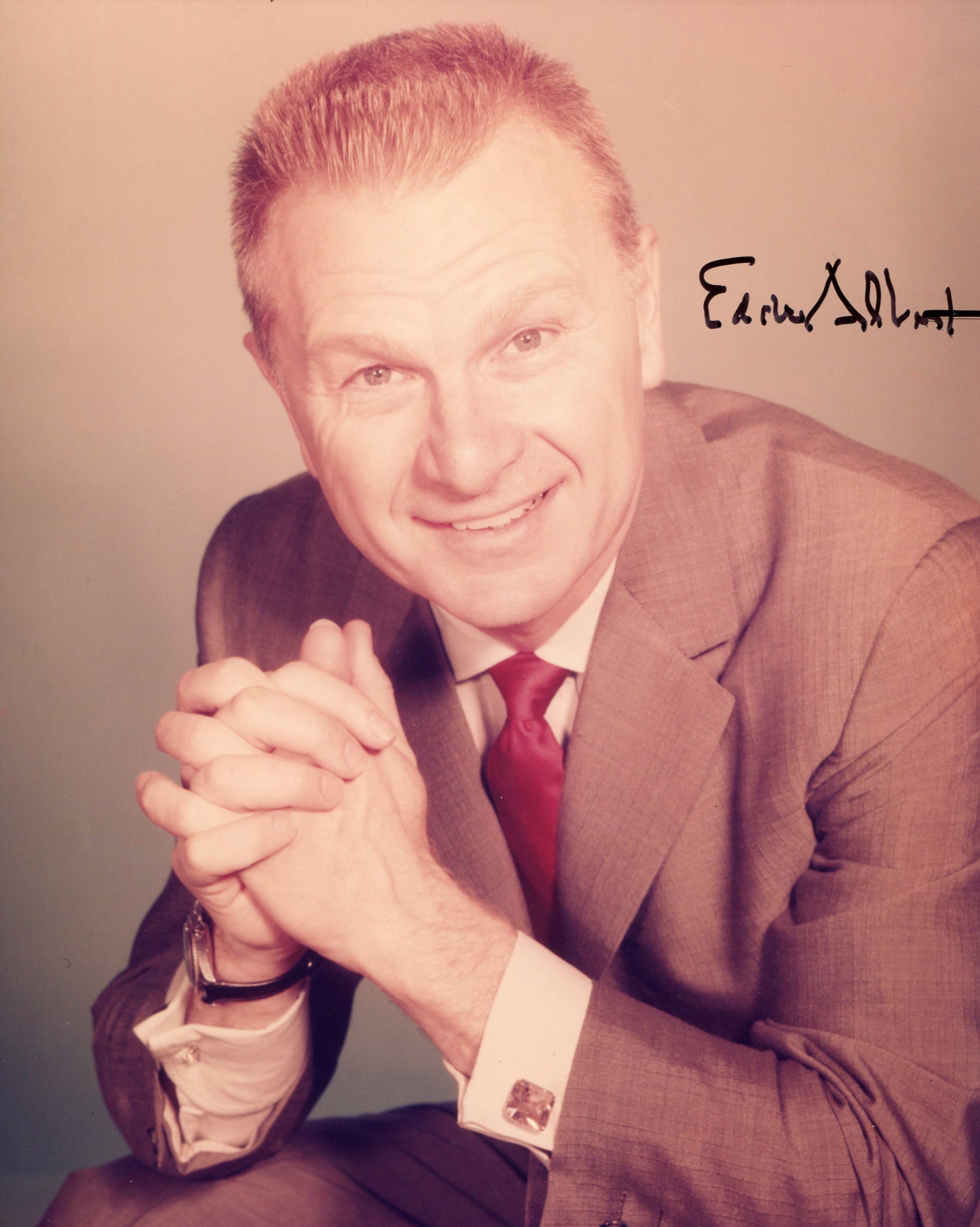
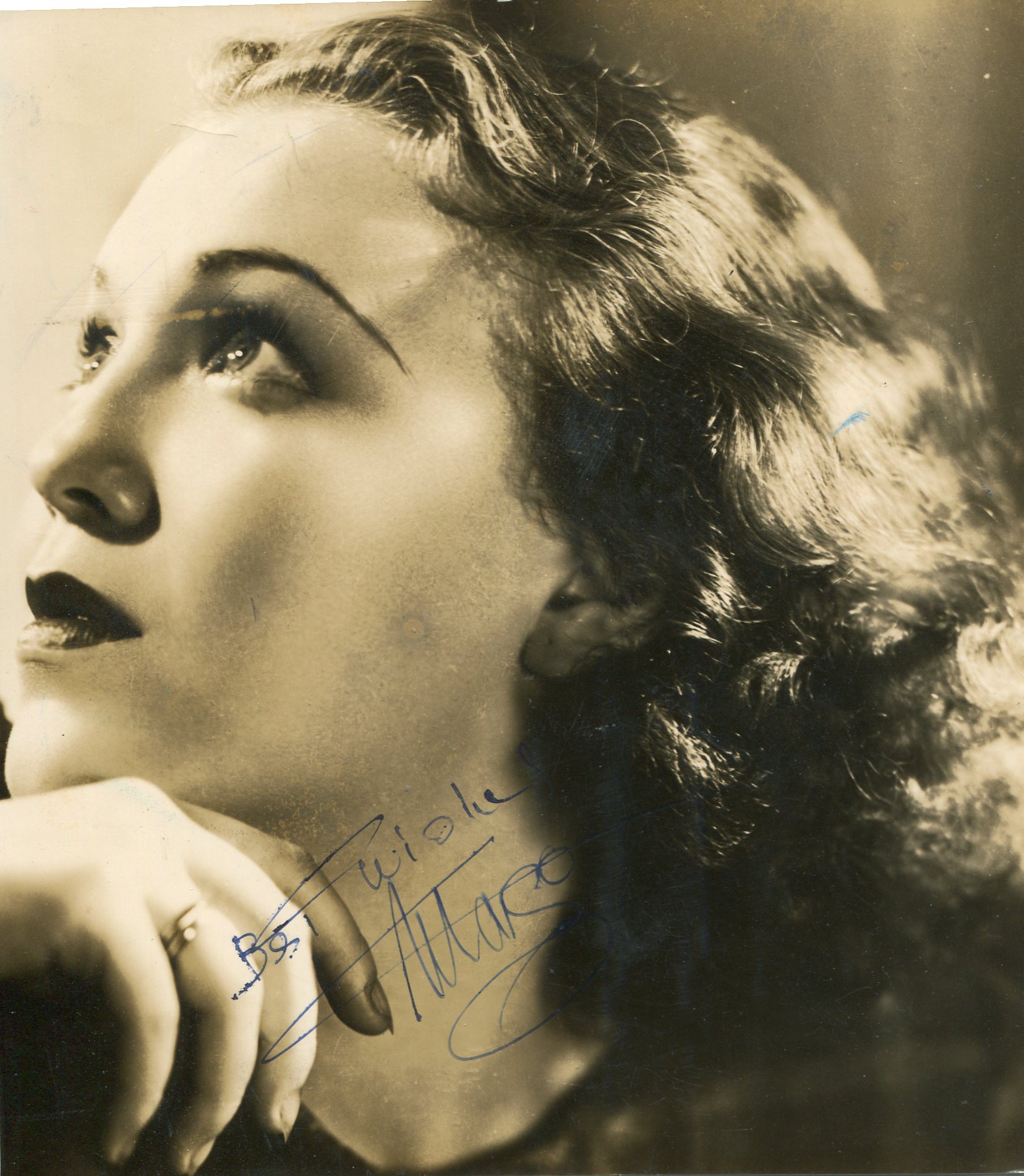
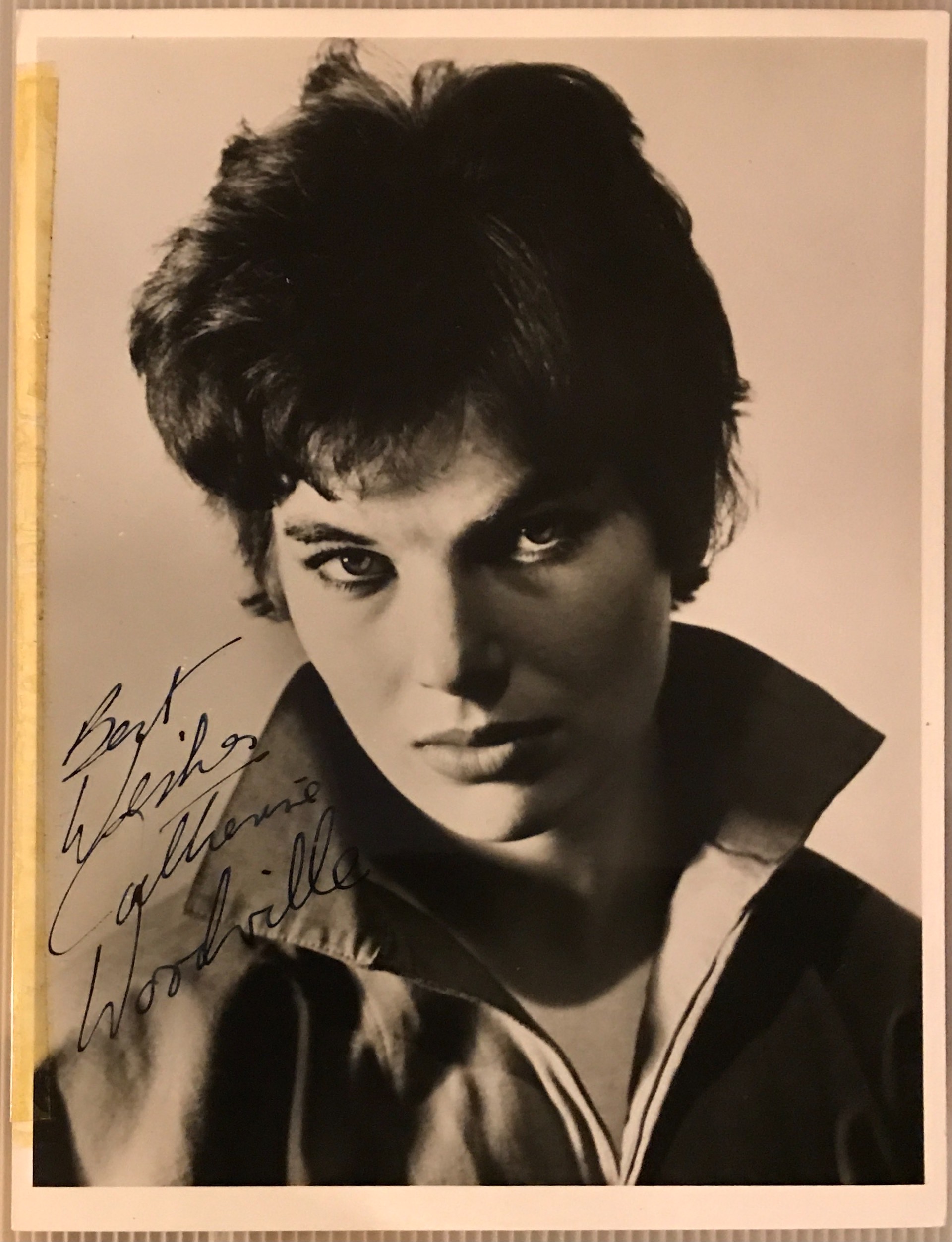
While his father was the quintessential “nice guy” of Hollywood, Edward Albert’s career was defined by a sensitive, often ethereal leading-man quality that eventually transitioned into rugged character work. He was a performer who seemed to carry the poetic weight of his mother’s heritage and the professional discipline of his father’s.
Career Overview: From Golden Boy to Character Veteran
Edward Albert’s trajectory is a classic Hollywood arc of early superstardom followed by a long, steady life as a working actor.
The Spectacular Debut (1972): After a few minor roles as a teenager, Albert shot to international fame in “Butterflies Are Free.” Playing a blind man attempting to live independently from his overprotective mother, he won the Golden Globe for Most Promising Newcomer.
The Leading Man Era (1970s): He followed his debut with major projects like 40 Carats (1973), playing a young man in a romance with an older woman (Liv Ullmann), and the star-studded disaster epic Midway (1976).
The Genre Transition (1980s–90s): As the “pretty boy” roles faded, Albert reinvented himself. He became a staple of action and horror cinema (notably Galaxy of Terror) and a prolific voice actor, most famously voicing the Silver Surfer and Daredevil in various animated series.
The Final Act: He dedicated much of his later life to caring for his father (who had Alzheimer’s) and became a passionate environmental activist before his own untimely death from lung cancer at age 55.
Detailed Critical Analysis: The “Sensitive” Leading Man
1. The Challenge of “Physical Absence”
In Butterflies Are Free, Albert faced the technical challenge of playing a blind character without relying on the “vacant stare” clichés of the era.
Analysis: Critics praised his tactile performance. He used his hands and his sense of hearing to “map” the set, making his movements feel authentically grounded. By focusing on the character’s wit and desire for agency rather than his disability, Albert helped modernize the portrayal of blindness in mainstream cinema.
2. The “Age-Gap” Specialist
In the early 70s, Albert became the face of a specific cinematic trend: the younger man involved with an older woman.
Critical Insight: In 40 Carats, he managed to make these relationships feel sincere rather than scandalous. He possessed a “mature youthfulness”—he looked like a boy but spoke with the gravity of an adult. This quality allowed him to hold his own against formidable screen icons like Liv Ullmann and Gene Kelly.
3. The “Cult” Pivot
By the 1980s, Albert moved into “B-movie” territory, but he never “phoned it in.”
Analysis: In the sci-fi cult classic Galaxy of Terror (1981), he provided a psychological weight to a film otherwise known for its gore. Critics have noted that Albert treated genre material with a Shakespearian earnestness. He brought a high-status, intellectual energy to “tough guy” roles, which gave his characters a unique, brooding edge.
4. Legacy of Vocal Resonance
Like his mother, Margo, Albert had a distinctive, resonant voice that became a major asset in his later career