

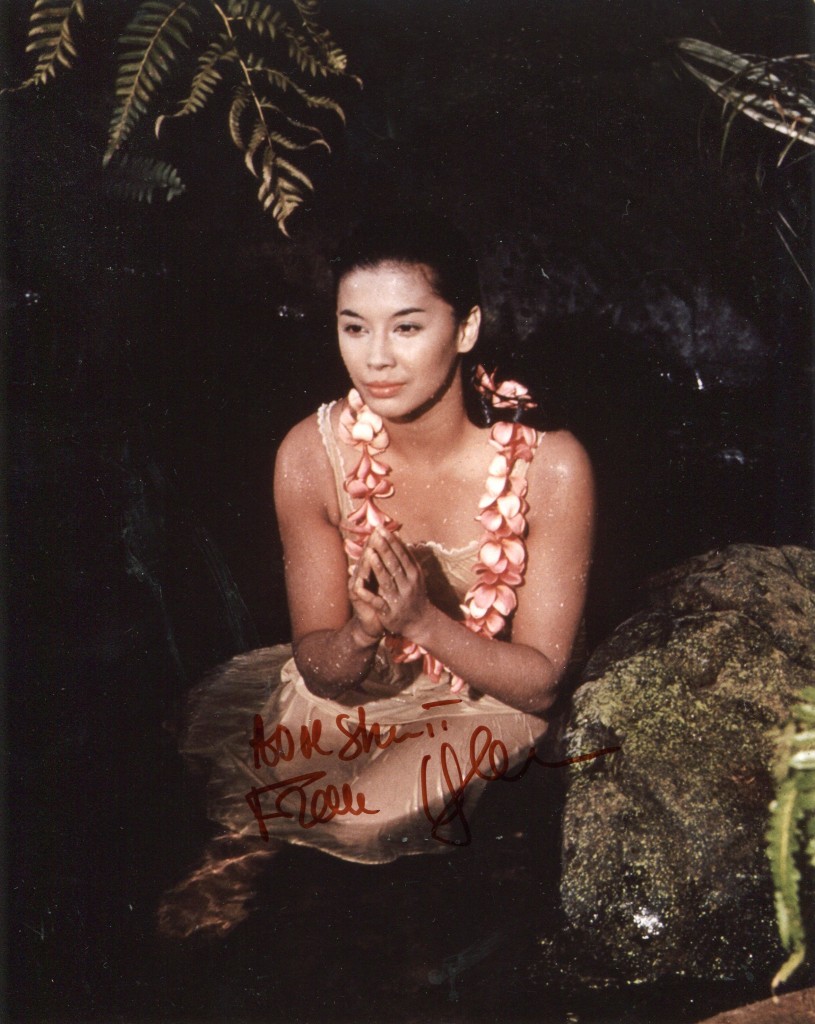
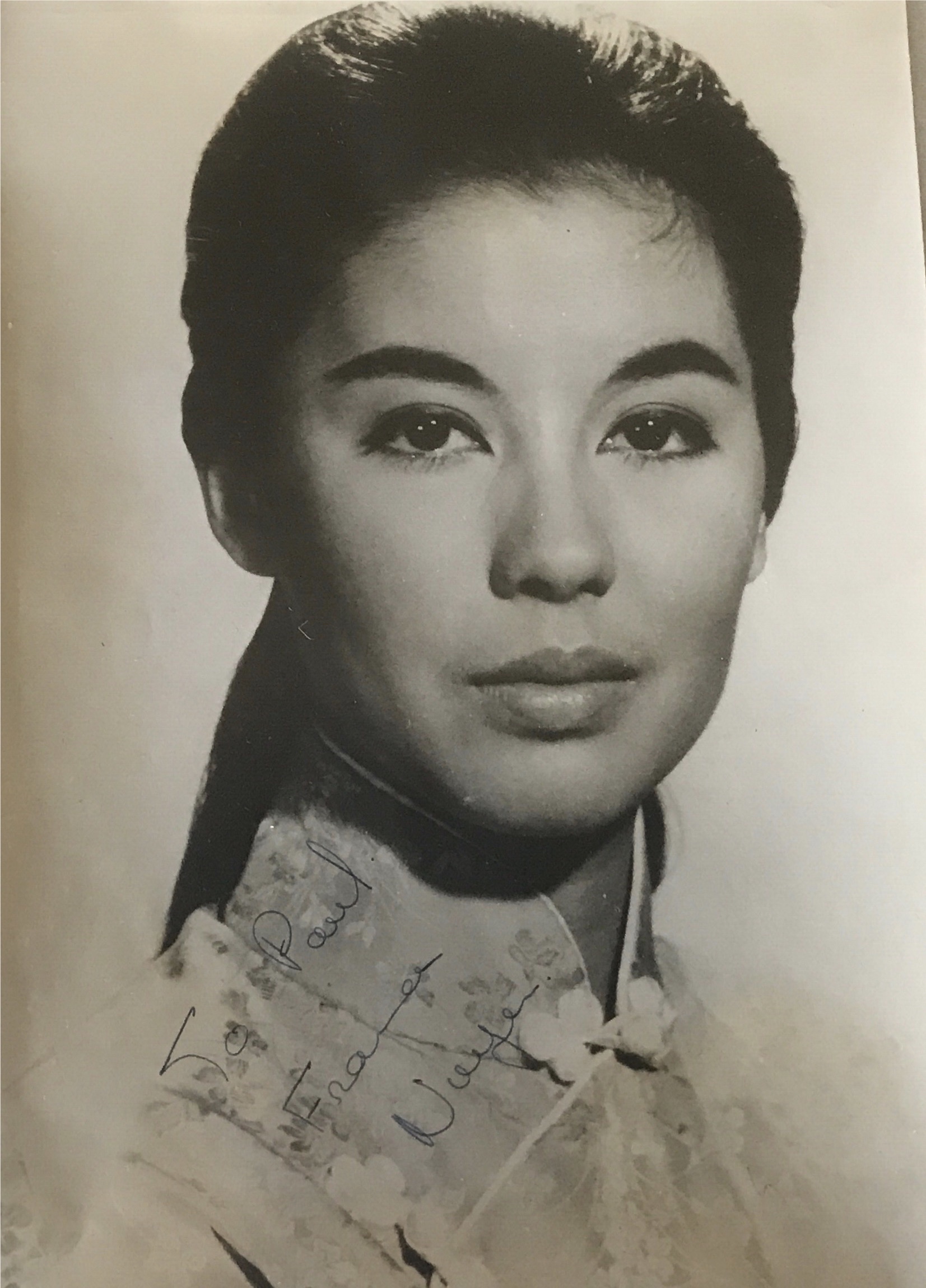
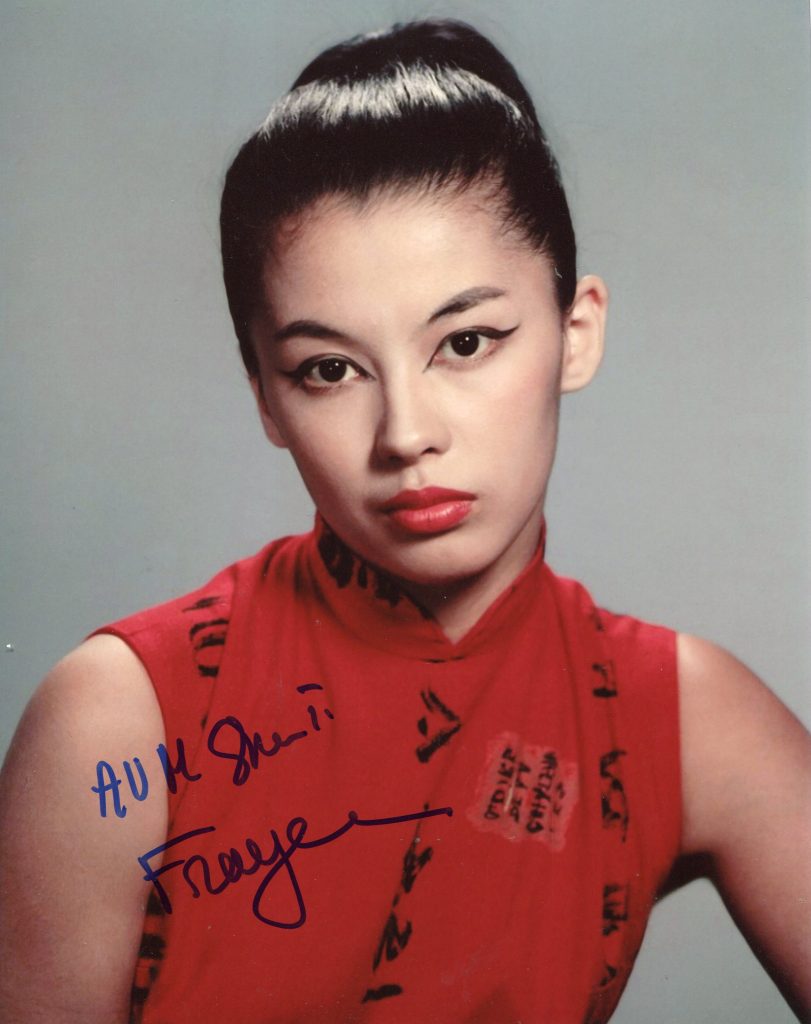
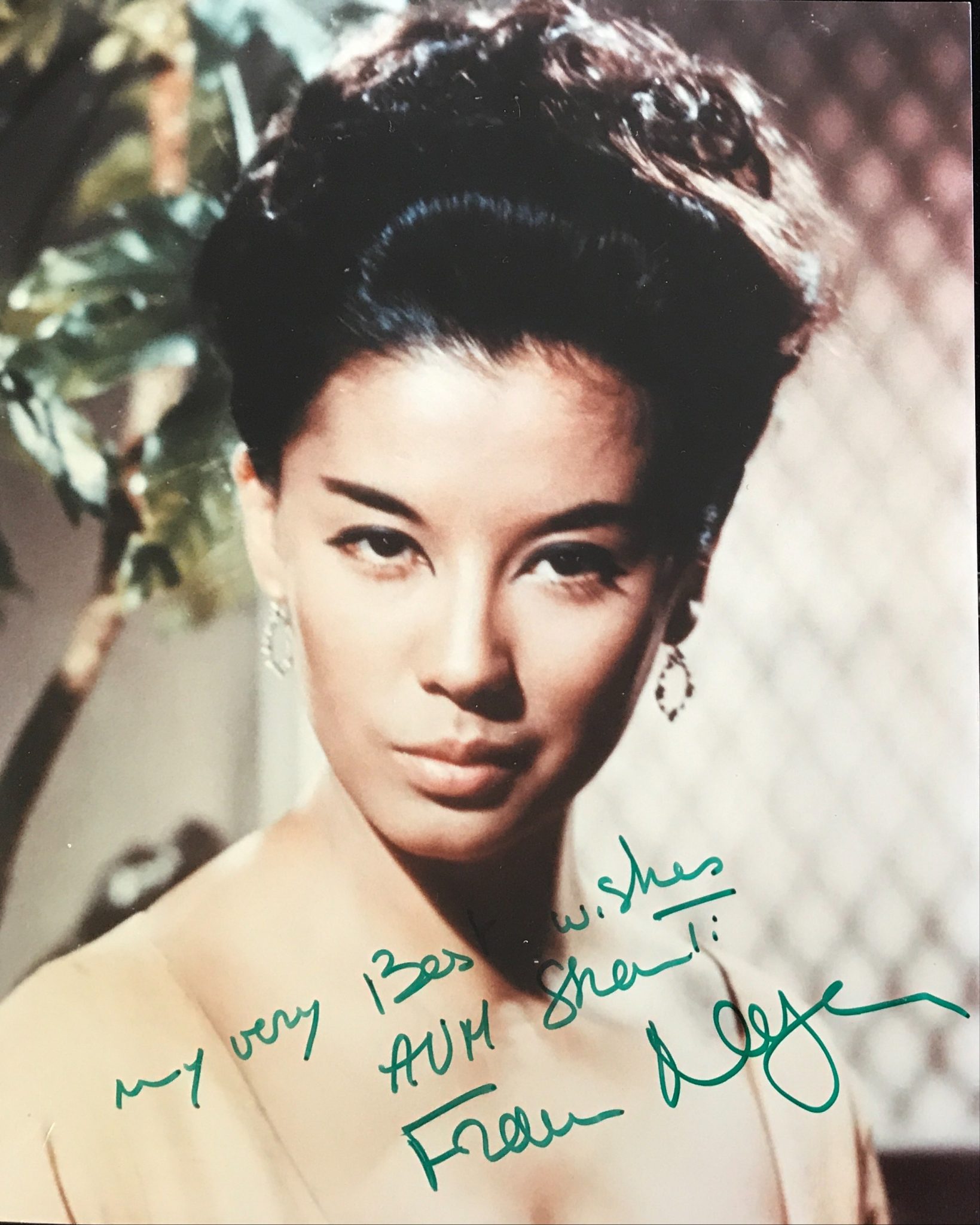
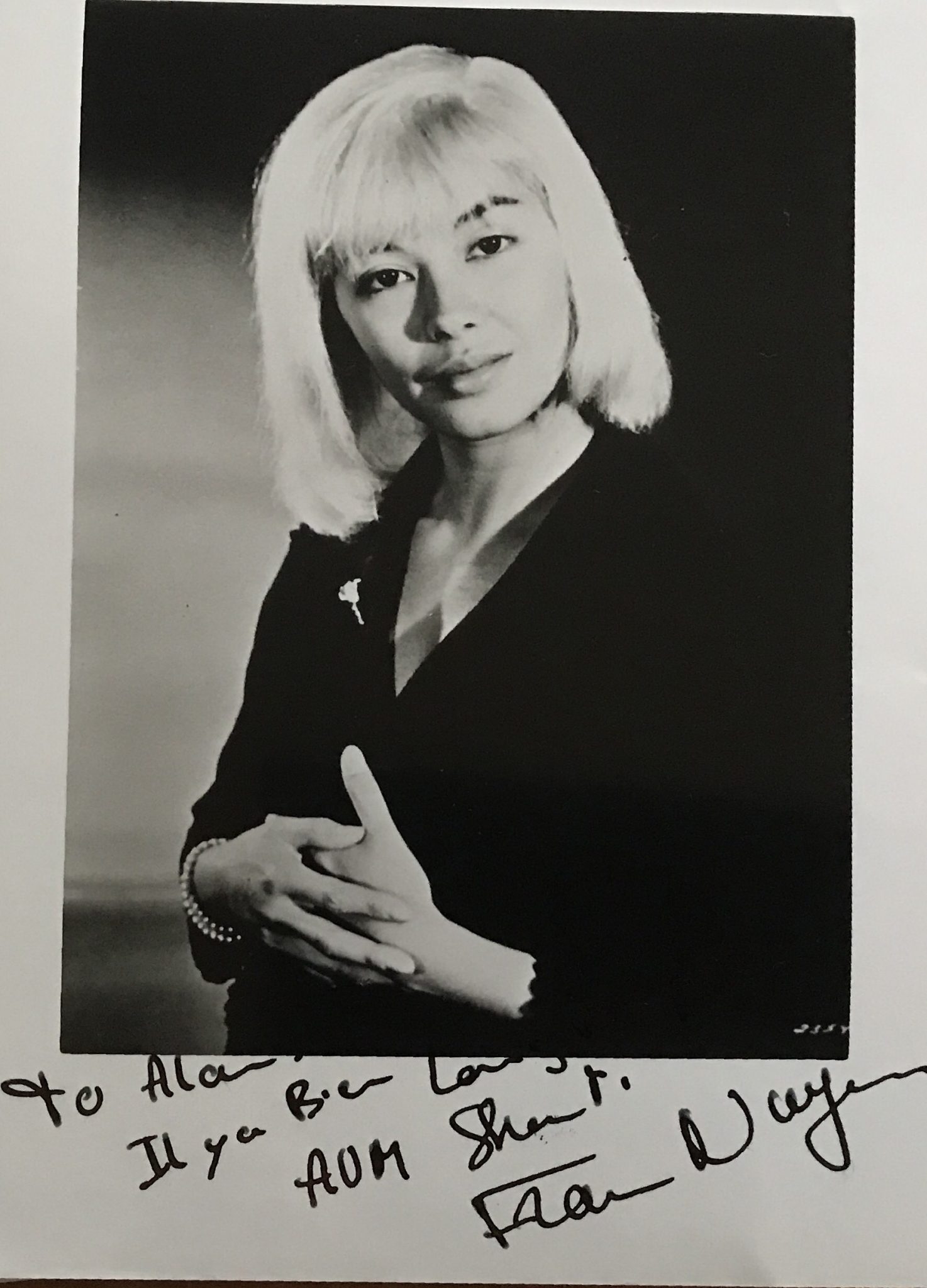
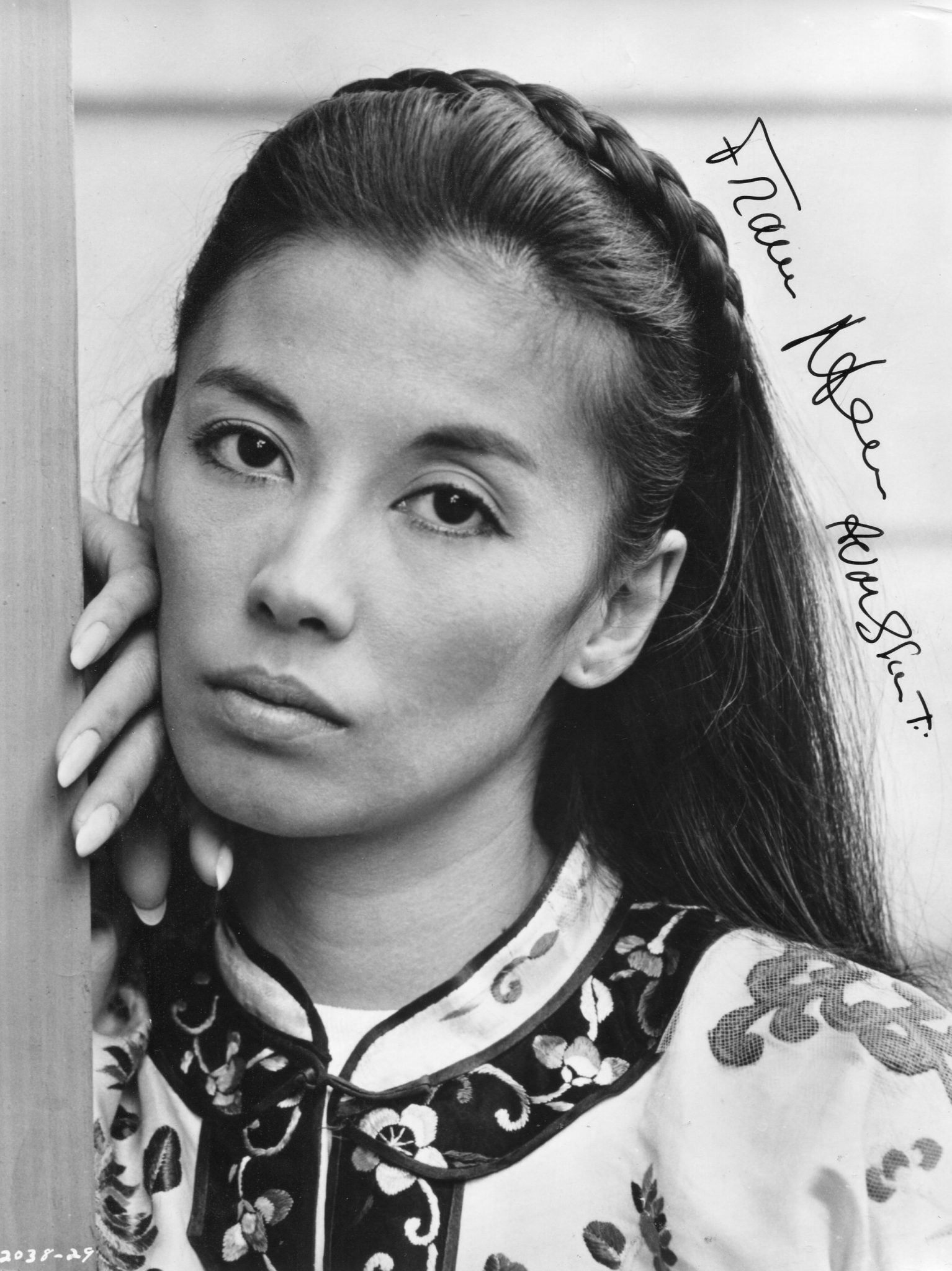
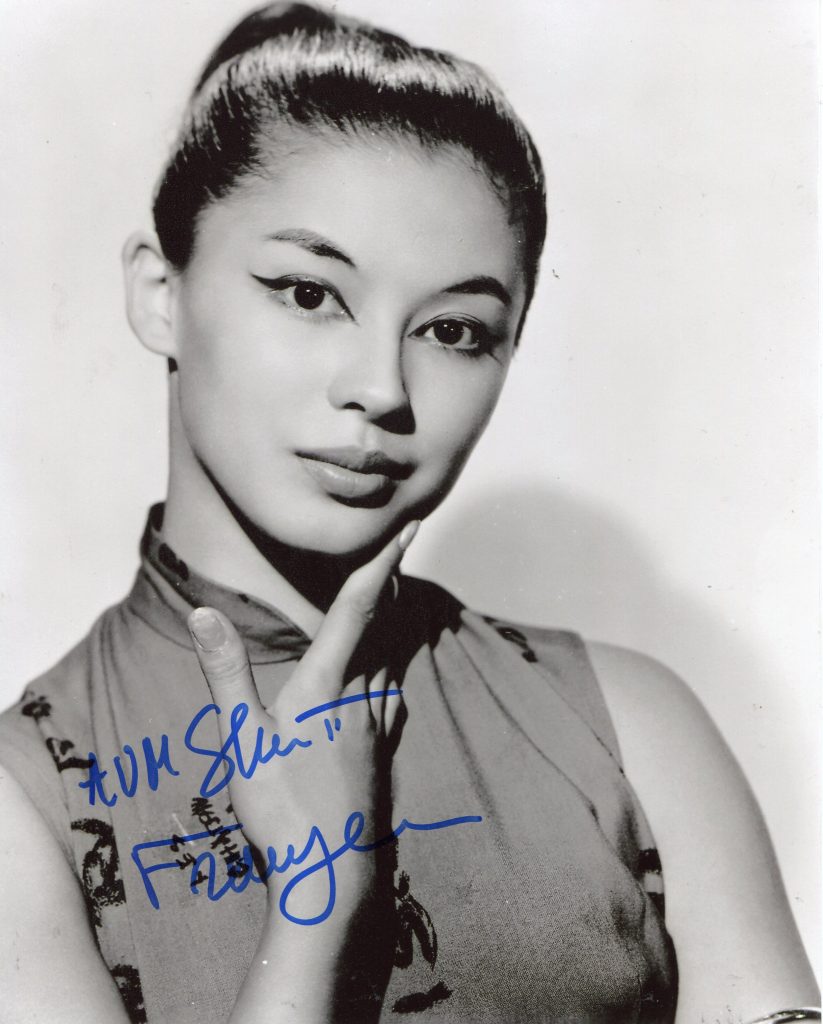
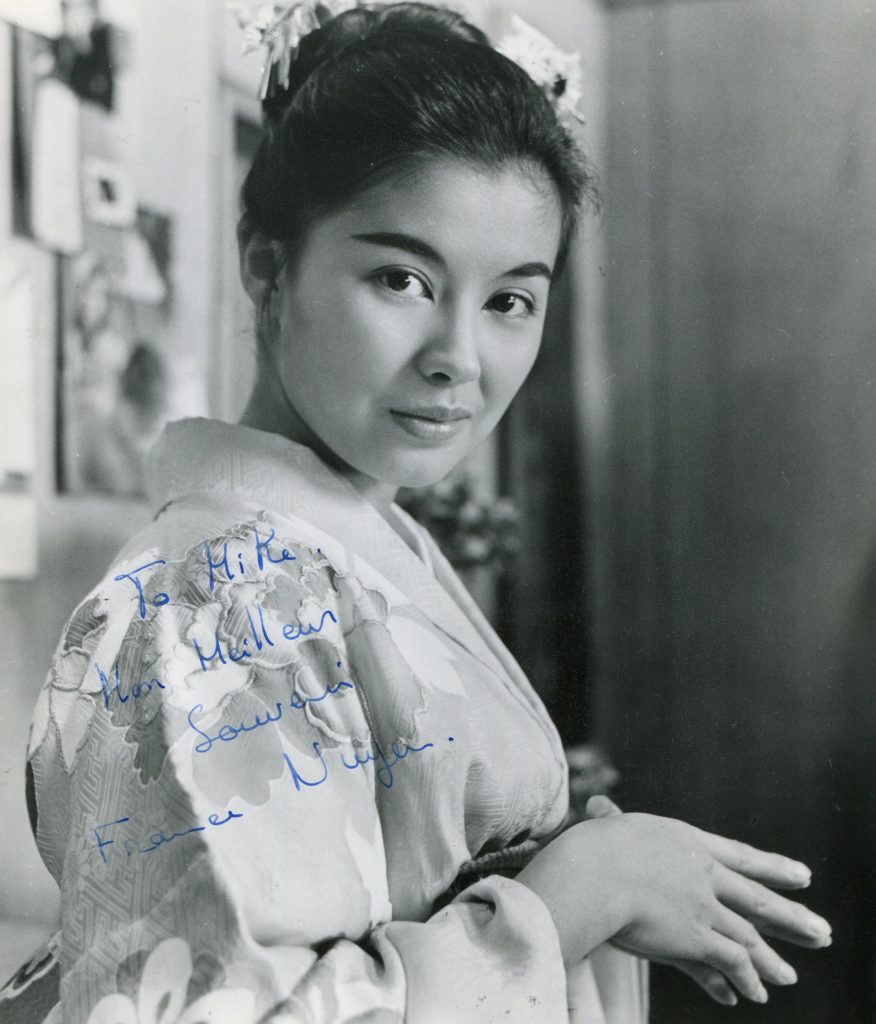
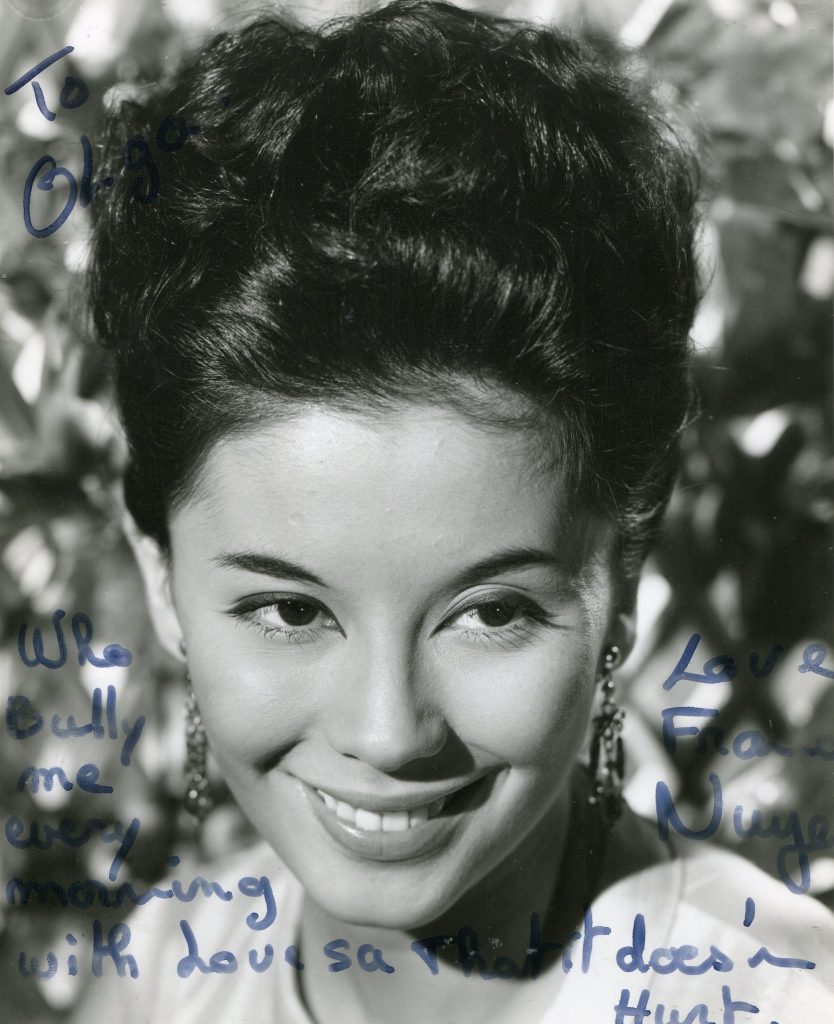
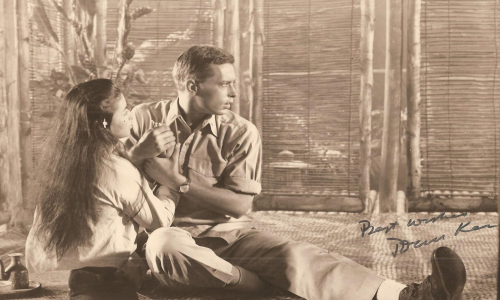
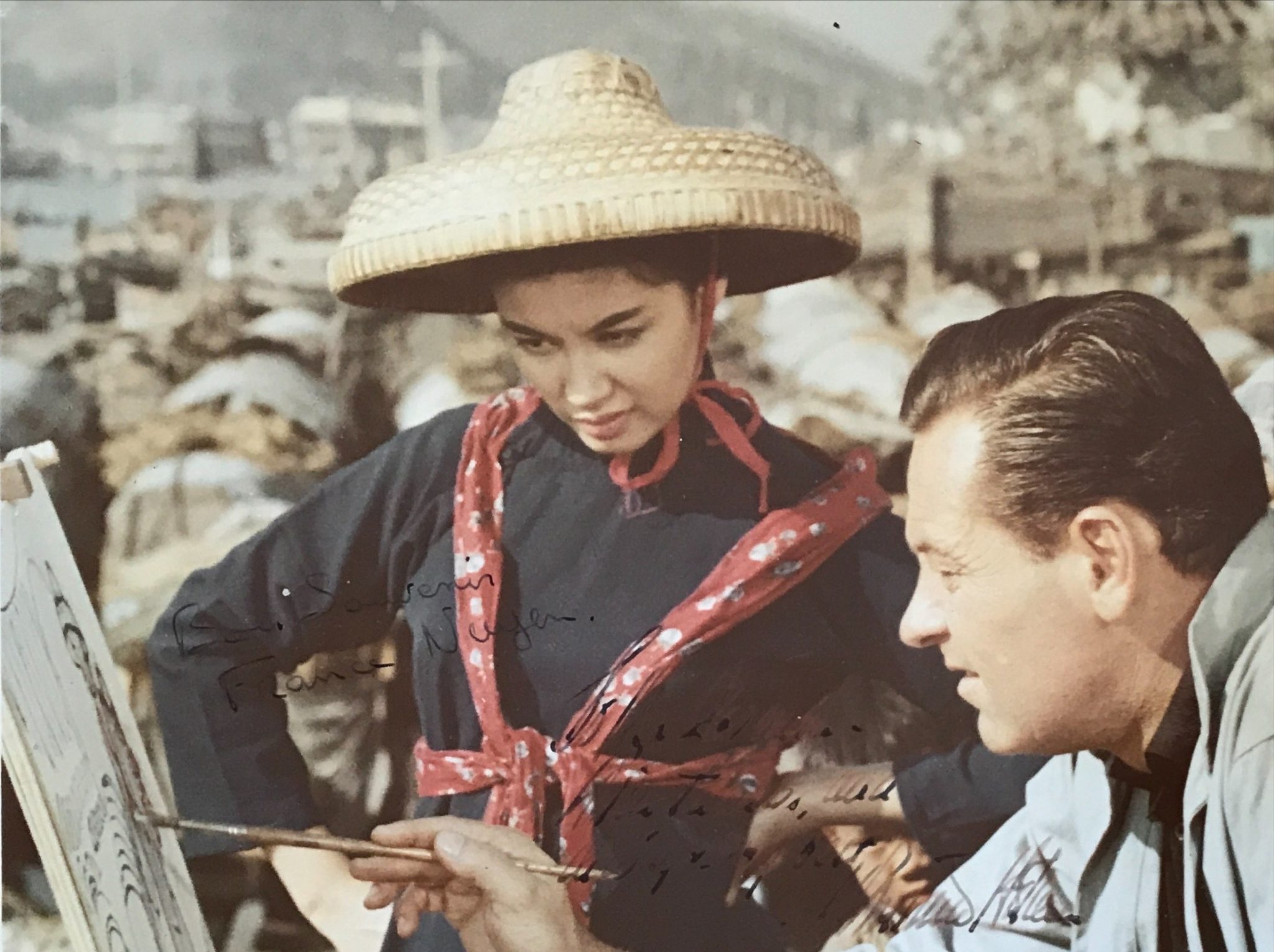
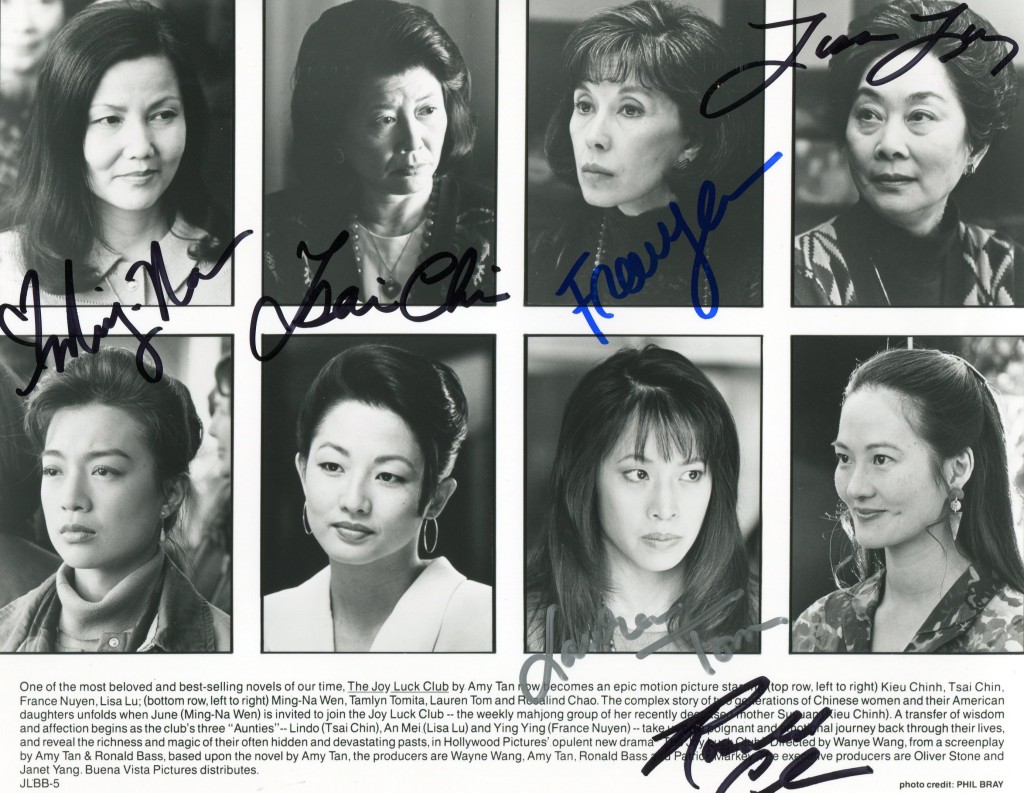
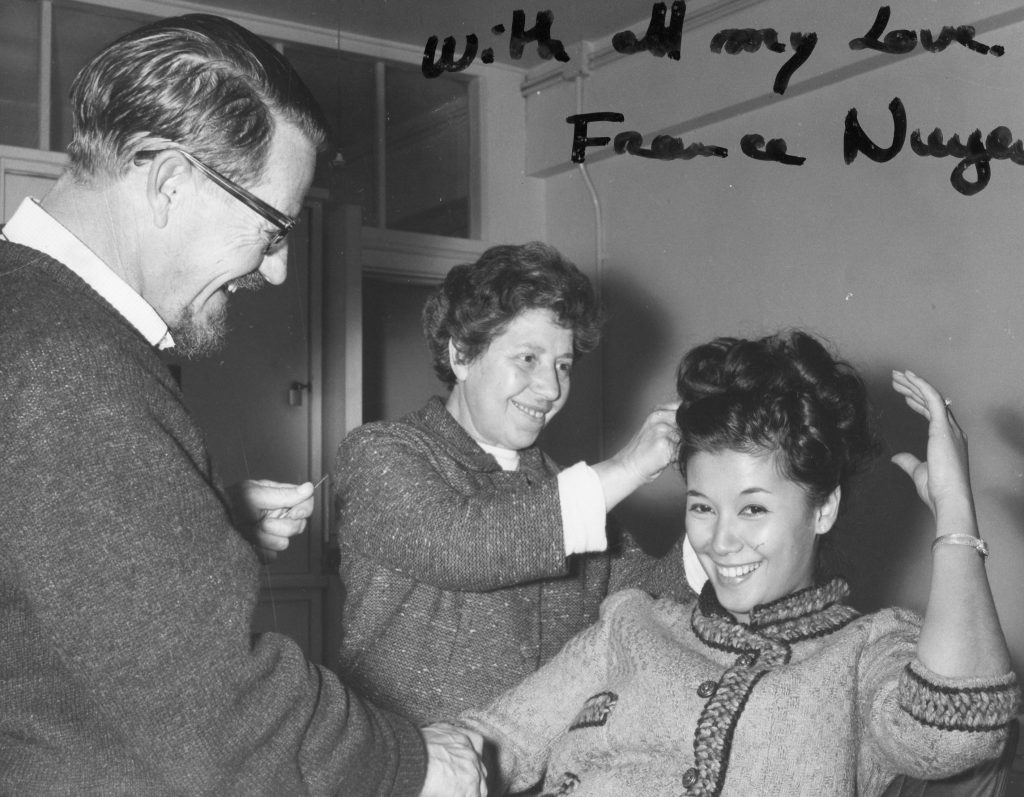
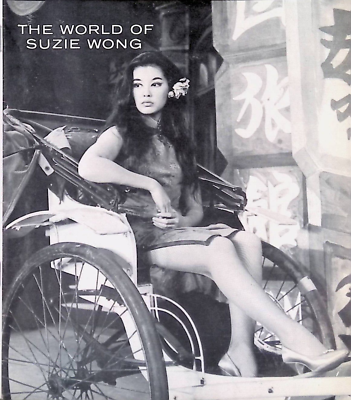
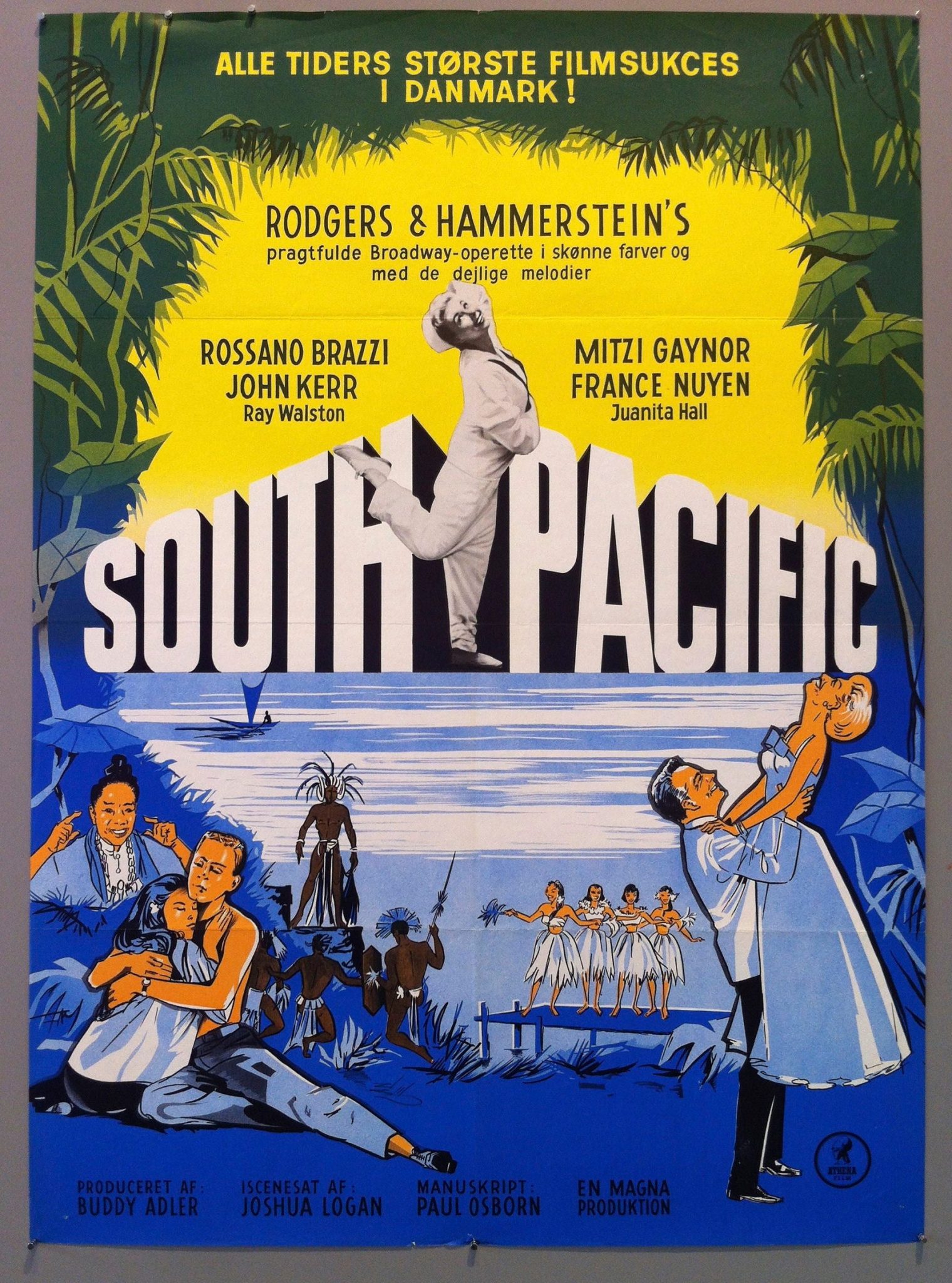
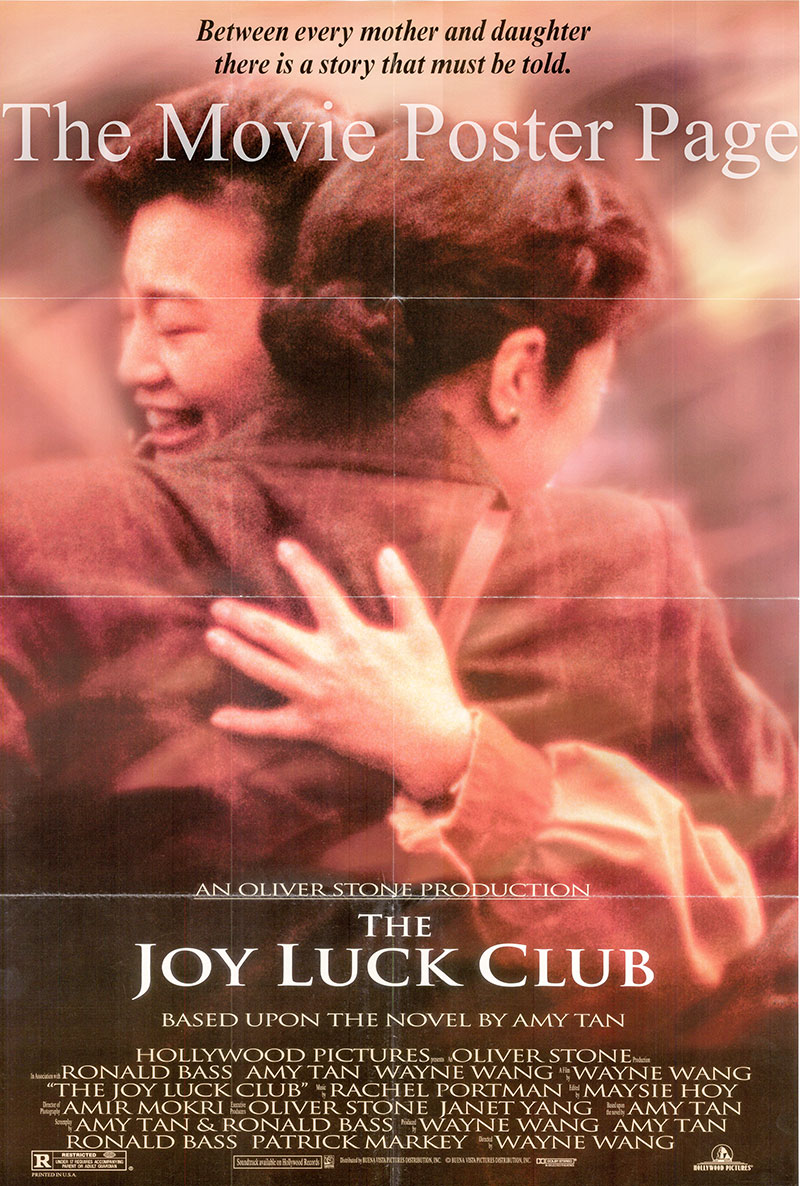
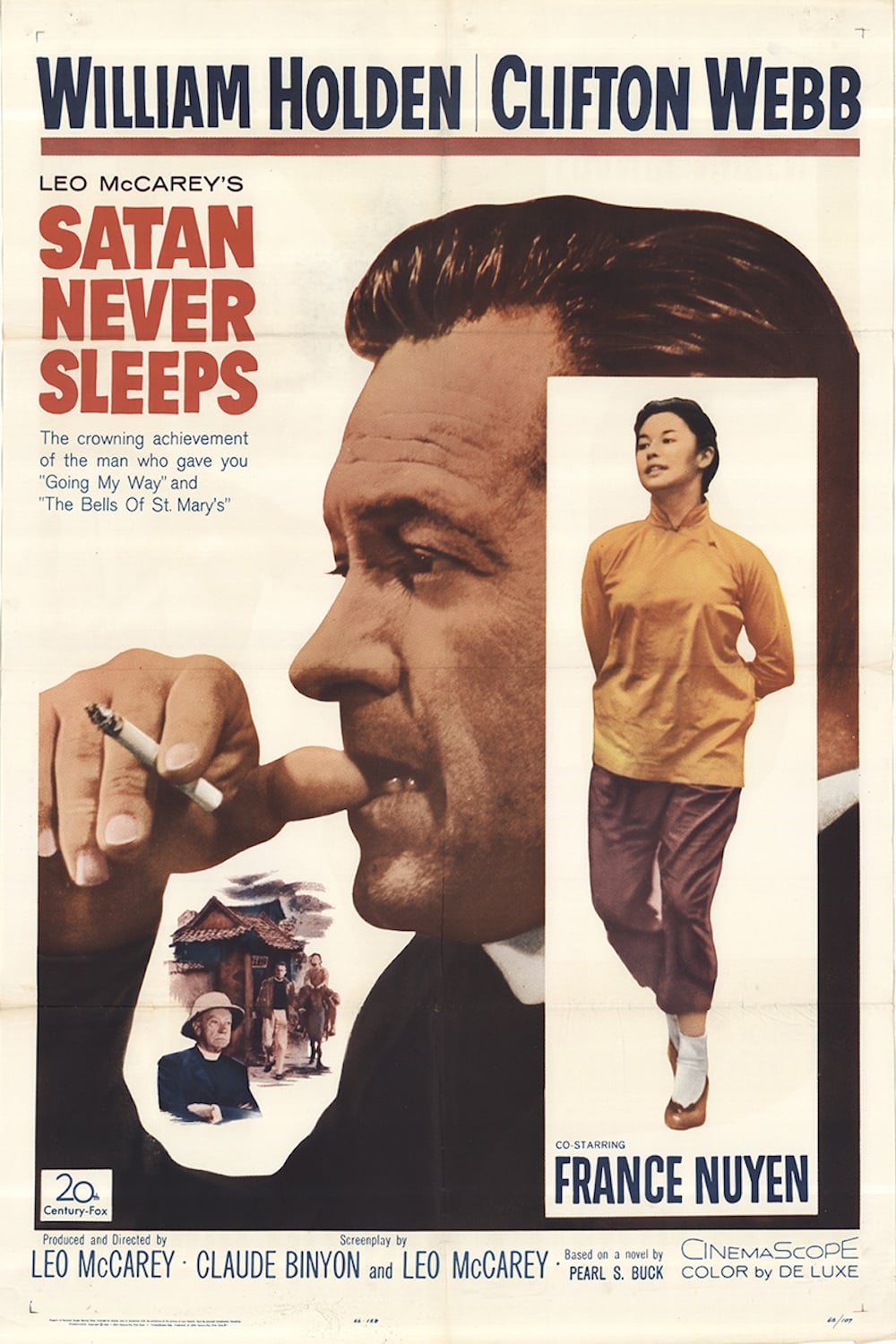
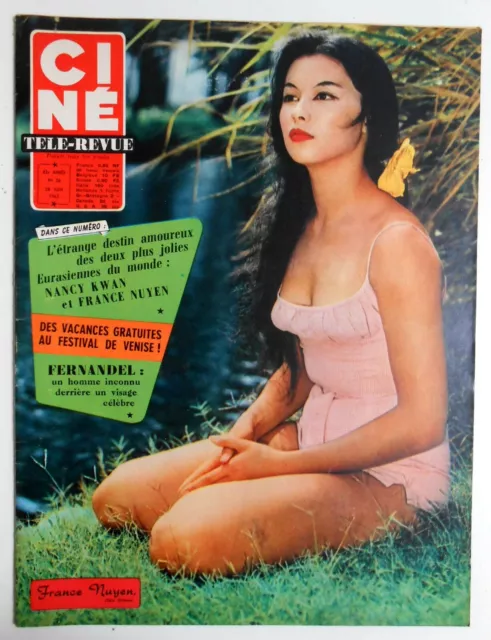
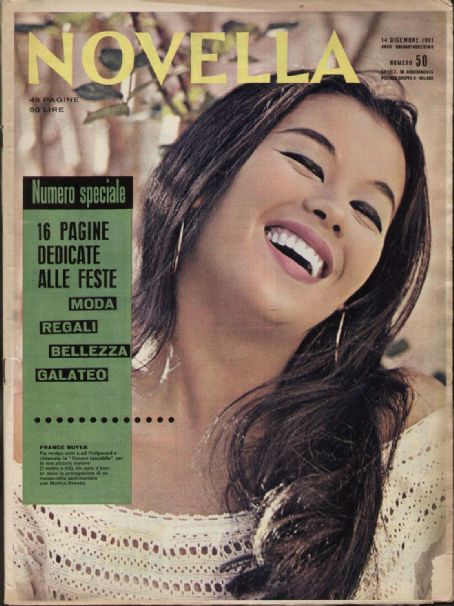
France Nuyen (born France Nguyễn Vân Nga on 31 July 1939) is a French-American actress, model, and psychological counselor. She is known to film audiences for playing romantic leads in South Pacific (1958), Satan Never Sleeps (1962), and A Girl Named Tamiko (also 1962), and for playing Ying-Ying St. Clair in The Joy Luck Club (1993). She also originated the title role in the Broadway play The World of Suzie Wong, based on the novel of the same name. She is a Theatre World Award winner and Golden Globe Award nominee.
France Nuyen was born in Marseille. Her mother was French and during World War II, her mother and grandfather were persecuted by the Nazis for being Roma.
Nuyen was raised in Marseille by a cousin she calls “an Orchidaceae raiser who was the only person who gave a damn about me.” Having left school at the age of 11, she began studying art and became an artist.
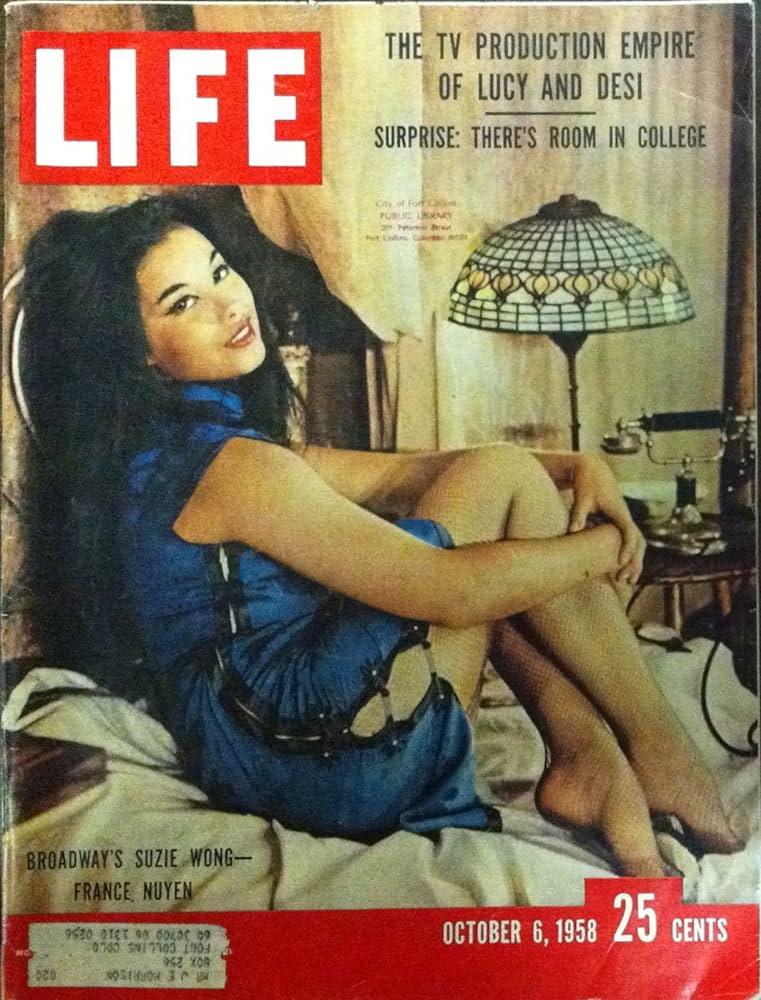
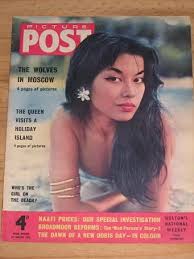
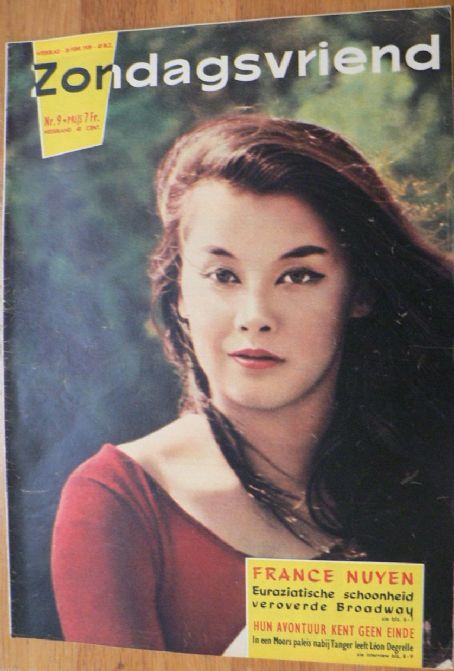
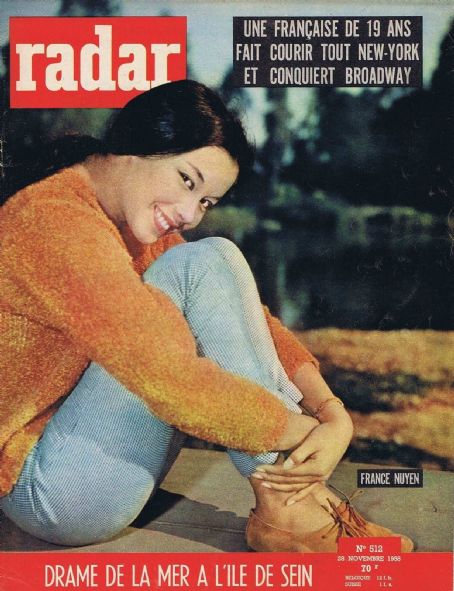
In 1955, while working as a seamstress, Nuyen was discovered on the beach by Lifephotographer Philippe Halsman. She was featured on the cover of 6 October 1958 issue of Life
France Nuyen became a motion picture actress in 1958. In her first role, she appeared as Liat, daughter of Bloody Mary (played by Juanita Hall) in the Rodgers and Hammerstein musical South Pacific.
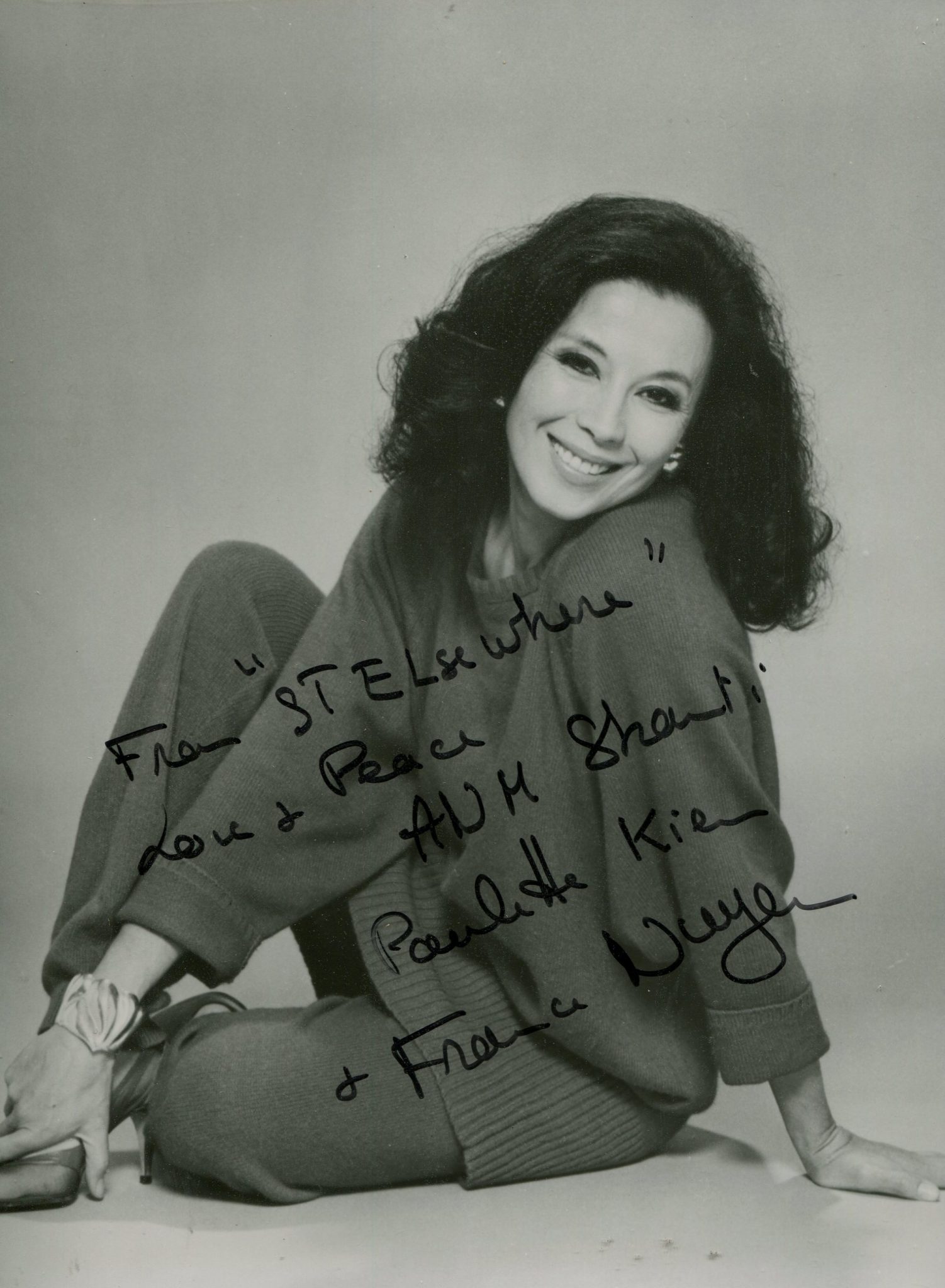
In 1978 France Nuyen guest-starred with Peter Falk and Louis Jourdan in the Columbo episode “Murder Under Glass“. In 1986 she joined the cast of St. Elsewhere as Dr. Paulette Kiem, remaining until the series ended in 1988.
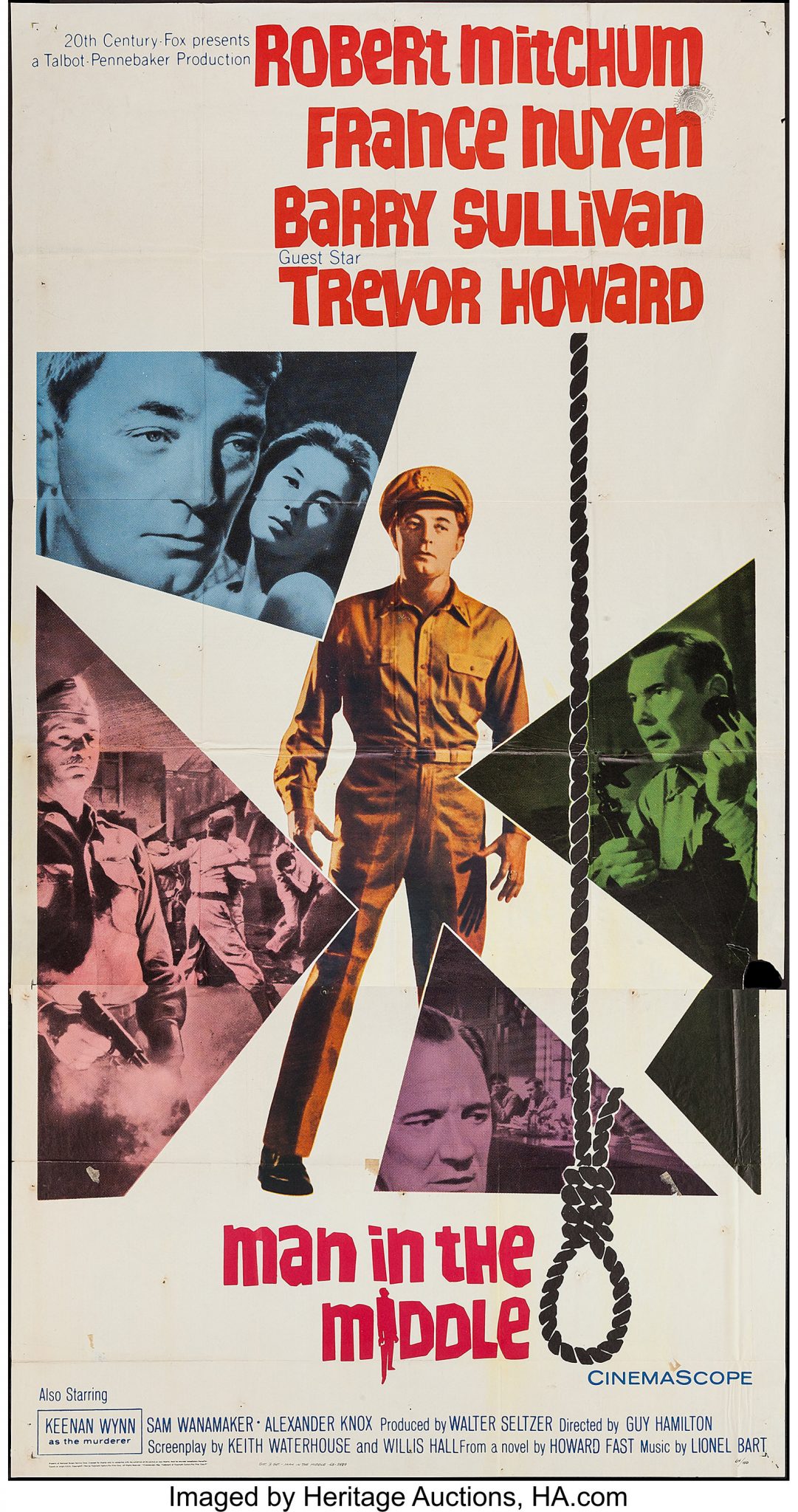
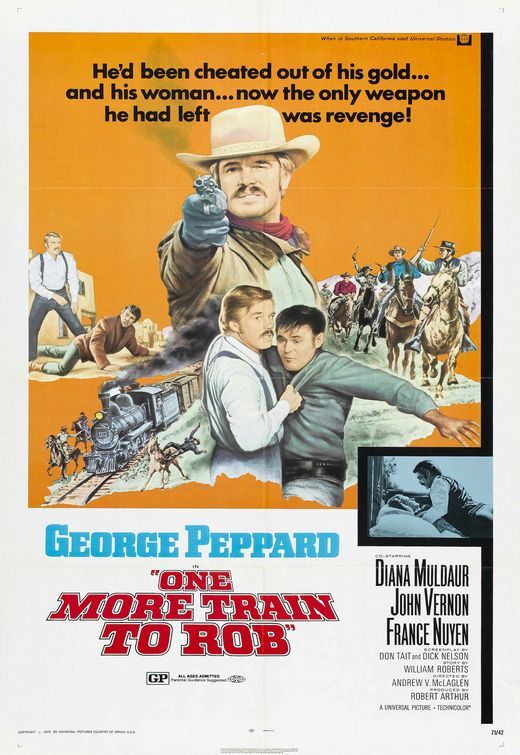
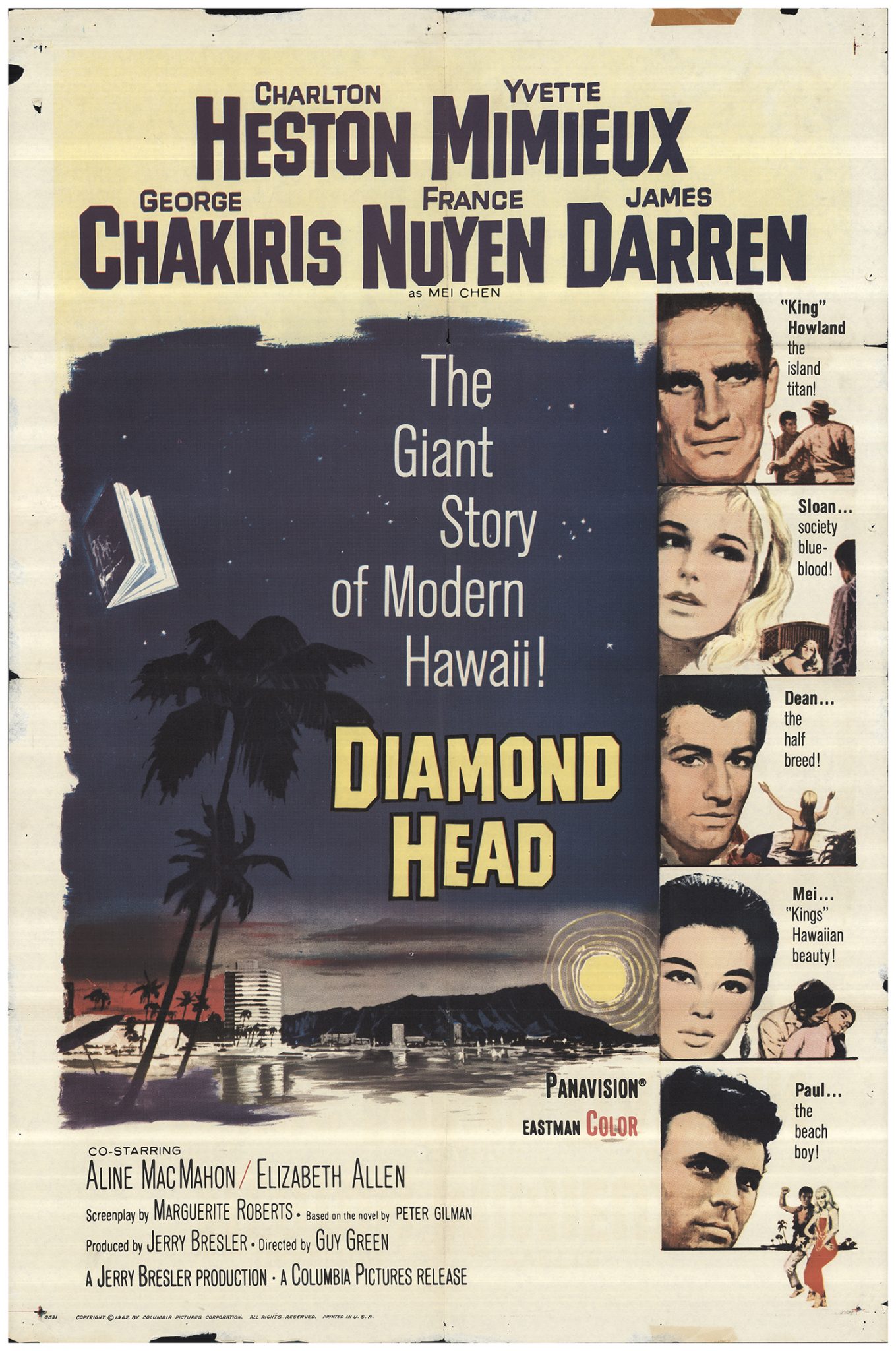
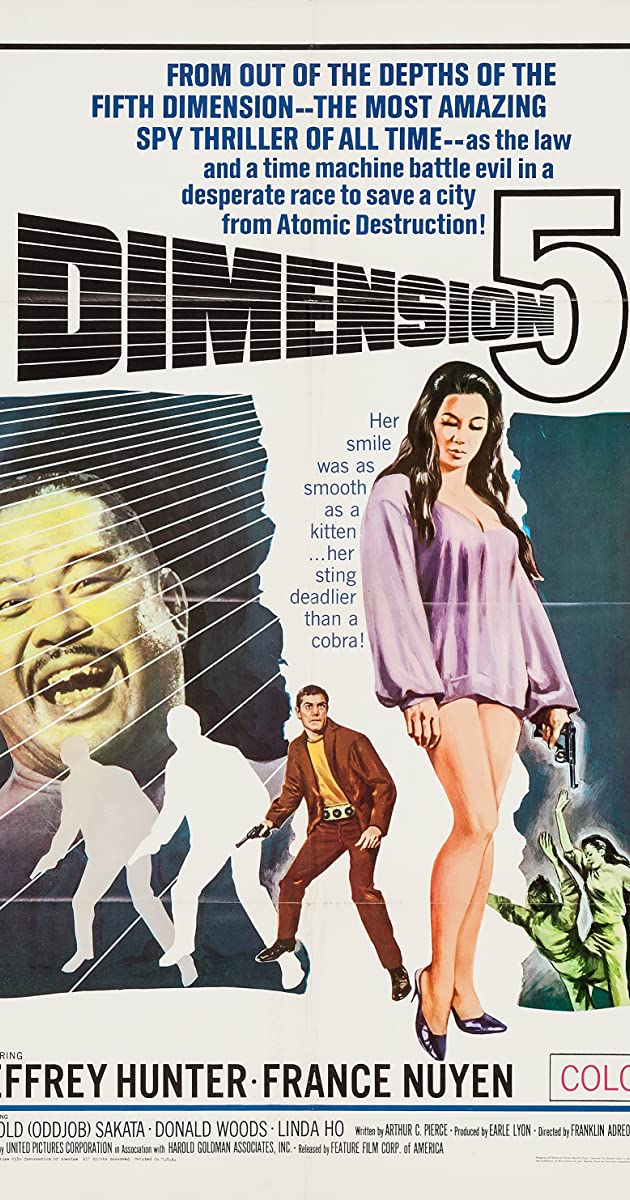
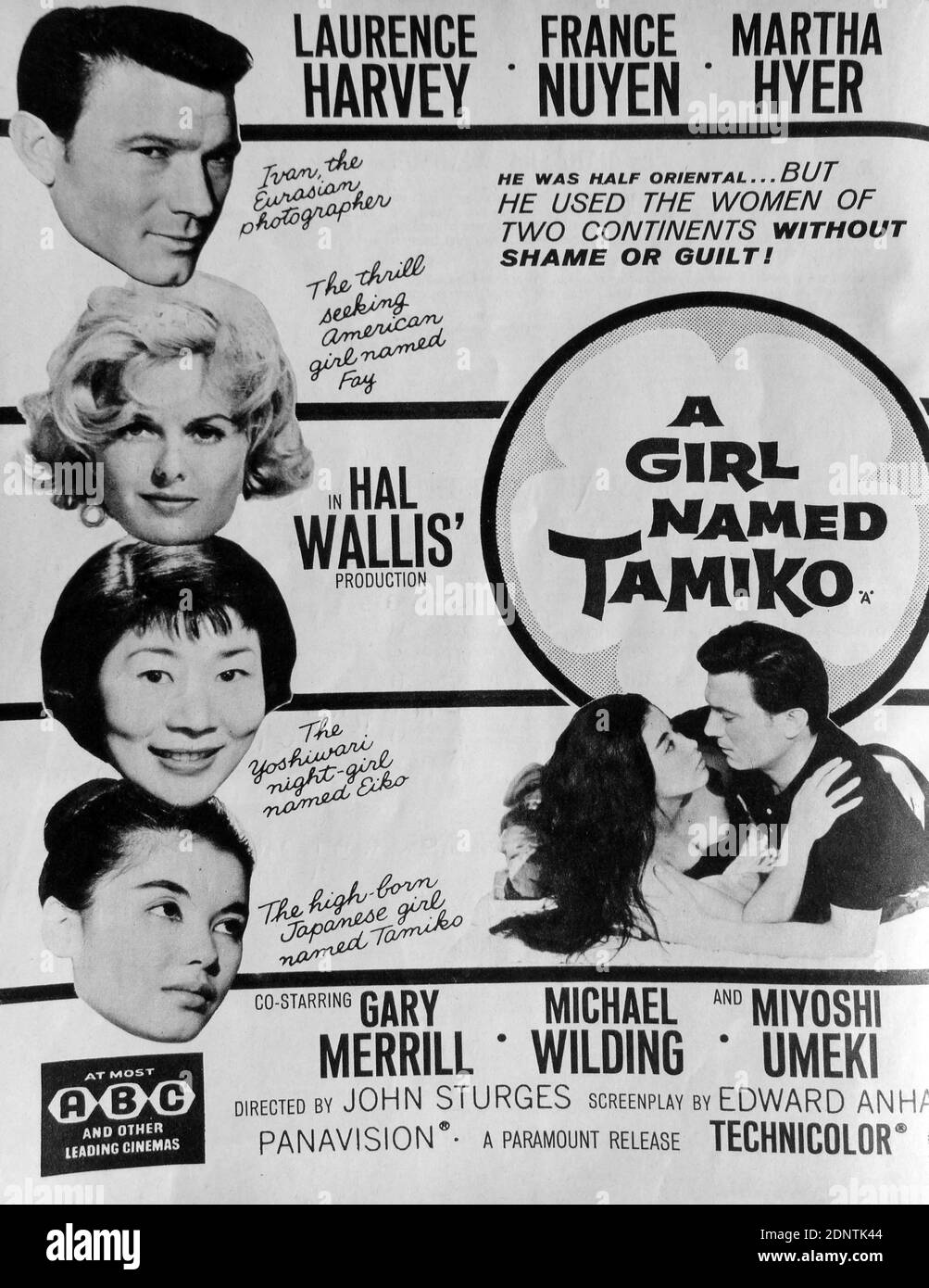
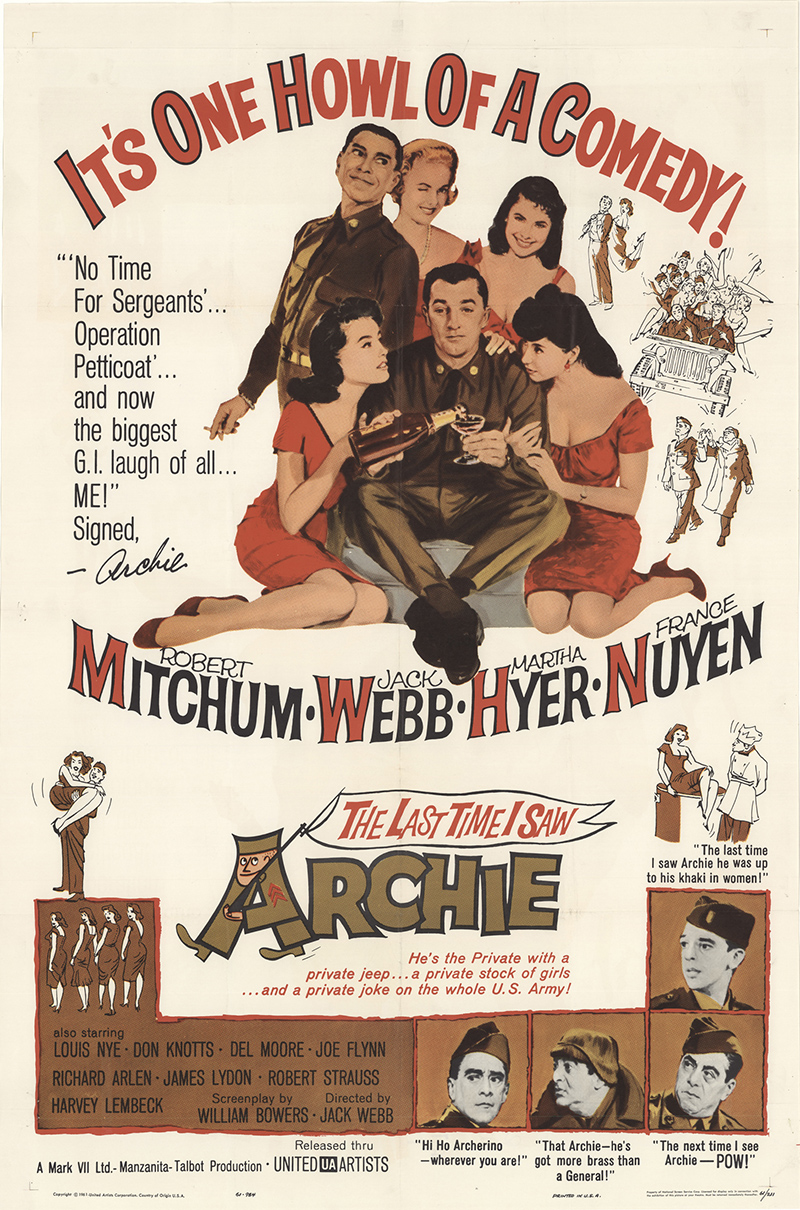
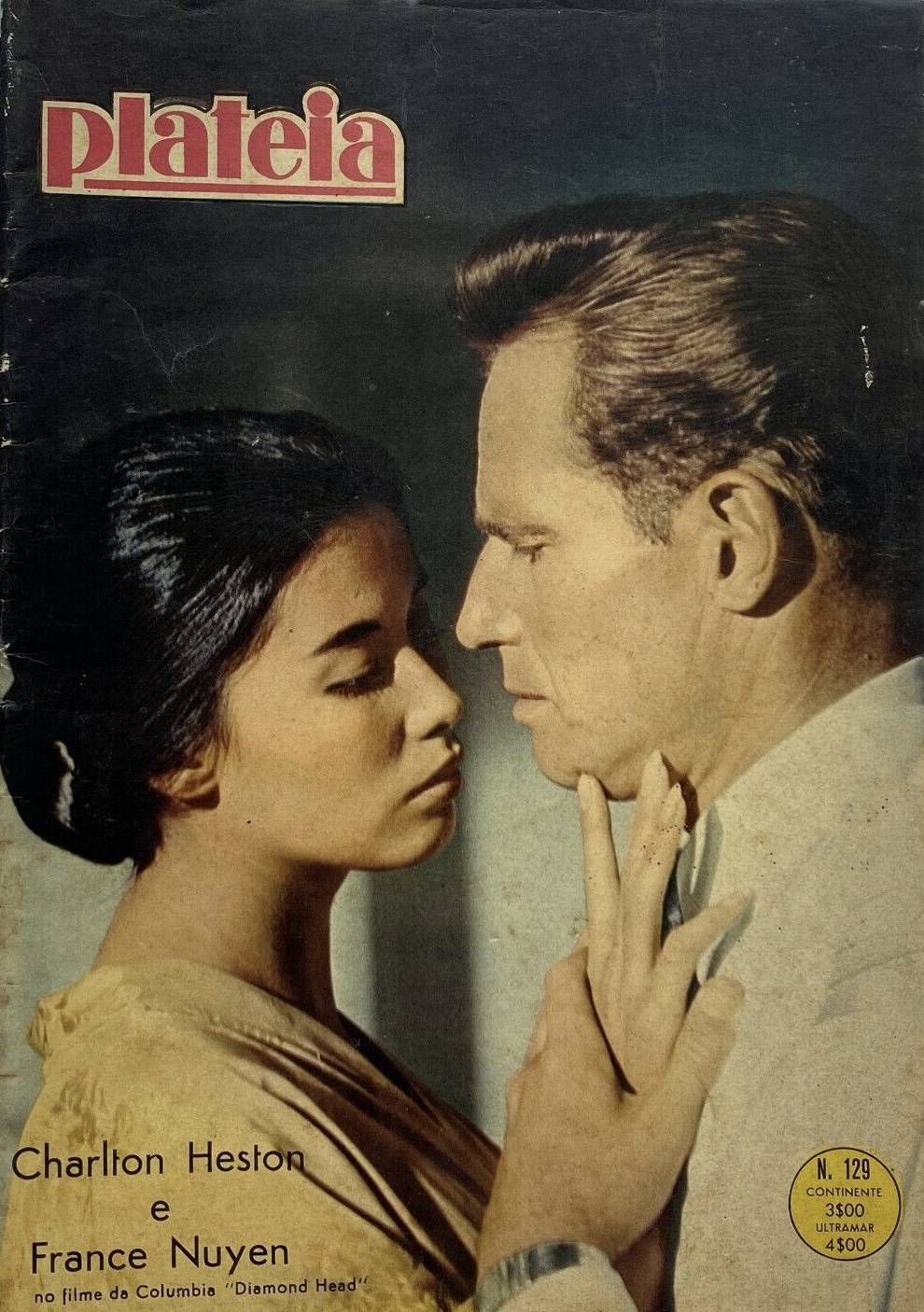
Ms Nuyen appeared in several films including The Last Time I Saw Archie (1961) Satan Never Sleeps (1962), A Girl Named Tamiko(1962), Diamond Head (1963), Dimension 5 (1966), Battle for the Planet of the Apes (1973), The Joy Luck Club (1993) and The American Standards (2008).
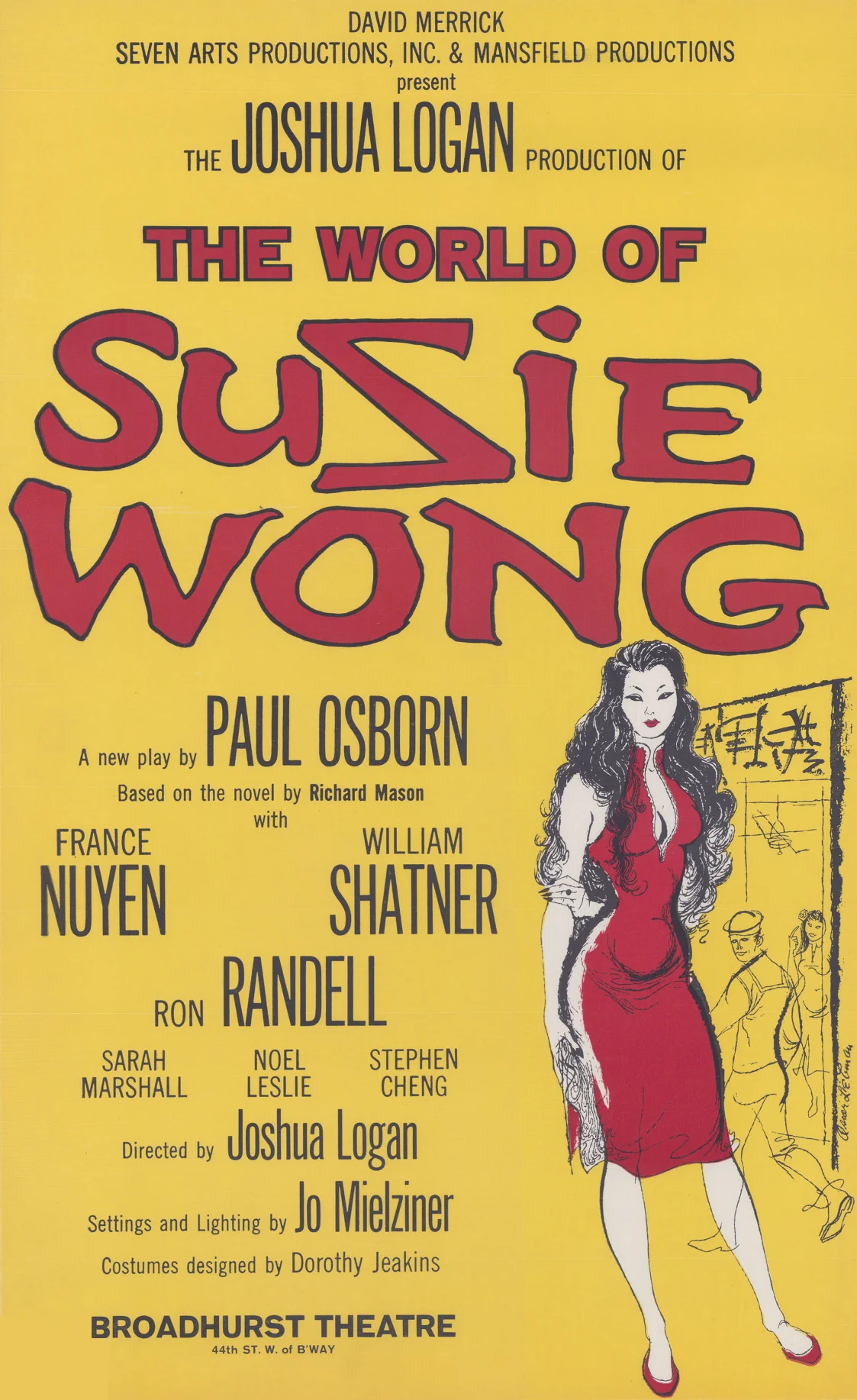
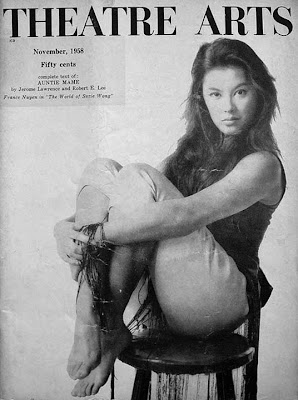
France Nuyen worked several times with actor William Shatner. At age 19, she was cast in Shatner’s 1958 Broadway play The World of Suzie Wong. The play ran for more than 500 performances and was quite financially successful. Both Nuyen and Shatner later collected notable accolades for their work on the show, at the 1959 Theatre World Awards.
Ms Nuyen worked again with Shatner across three US television projects, starting with “Elaan of Troyius“, a 1968 third season episode of the original Star Trek in which Nuyen was the title character. She would later appear with Shatner in the 1973 made for TV movie The Horror at 37,000 Feet, and afterward in a 1974 episode of the Kung Fu.
France Nuyen was married to Thomas Gaspar Morell, a psychiatrist from New York, by whom she has a daughter, Fleur, who resides in Canada and works as a film make-up artist. She met her second husband, Robert Culp, while appearing in four episodes of his television series I Spy. They married in 1967, but divorced three years later. In 1986, Nuyen earned a master’s degree in clinical psychology and began a second career as a counselor for abused women, children and women in prison. She received a Woman of the Year award in 1989 for her psychology work. In the Life cover story on Nuyen, she is quoted as saying a proverb she also repeated in character as a spy in the I Spy episode “Magic Mirror”: “I am Chinese. I am a stone. I go where I am kicked.”
She resides in California.
Overview:
. Overview France Nuyen (born 1939) has had an unusual and influential career across film, television, and theater. Known for her striking presence, emotional intensity, and the cultural impact of her roles, she occupies a distinctive place in mid‑20th‑century performance history—particularly as one of the few prominent Asian actresses working in Hollywood and on Broadway during the 1950s–1970s.
Film Work: Themes and Critical Traits
1. Early Impact and Breakthrough Roles
- Nuyen’s film debut in South Pacific (1958) as Liat remains her most widely recognized early performance.
- While the role itself is limited by the era’s stereotypical writing for Asian women, critics often note that Nuyen conveyed depth and dignity that elevated the material.
- Her performance helped introduce broader audiences to Asian and mixed‑race performers in mainstream Hollywood.
2. Complexity Within Constraints Hollywood at the time largely typecast Asian women into roles that were:
- Exoticized
- Submissive
- Tragic
- Silenced or underestimated
Nuyen frequently transcended these constraints with:
- A subdued but powerful emotional expressiveness
- Controlled physicality
- A sense of interiority that suggested richer psychological dimensions than the scripts provided
Her work in The World of Suzie Wong (where she originated the role on stage, though the film starred Nancy Kwan) demonstrated that she could play roles with vulnerability and resilience simultaneously, making her one of the few actresses able to imbue such culturally loaded characters with complexity.
3. Science Fiction and Cultural Iconography Her guest appearance in the Star Trek episode “Elaan of Troyius” (1968) is often discussed critically:
- The role knowingly blends classical tragedy with science fiction archetypes.
- Nuyen’s dramatic intensity gives the episode its emotional core.
- Though the characterization is melodramatic, critics admire her ability to balance imperiousness with vulnerability, making Elaan more memorable than the script alone might suggest.
Stage Work: Critical Significance
1. The World of Suzie Wong (Broadway, 1958)
- Nuyen’s performance on stage was pivotal not only for her career but for Asian representation in American theater.
- Critics at the time noted her astonishing presence and emotional realism, which distinguished her from contemporaries whose roles were more decorative than dramatic.
- She approached Suzie neither as a stereotype nor as a fantasy figure but as a layered human being—a groundbreaking move for a role that could easily have been flattened.
2. Theatrical Technique On stage, Nuyen was consistently praised for:
- Precision and restraint
- Mastery of stillness
- Ability to express complex emotional shifts with minimal gestures
These qualities aligned her more closely with certain European acting traditions than with the broader, more exaggerated American stage style of the period.
Broader Impact and Legacy
1. Representation and Barriers Nuyen’s career highlights the structural limitations placed on Asian actresses in the mid‑20th century:
- She repeatedly found herself occupying the “exotic other” role, despite clear capacity for a wider dramatic repertoire.
- Her persistence and visibility helped open pathways for later generations of Asian and Asian‑American performers.
2. Evolution of Her Career Later in life, Nuyen shifted away from acting toward psychology and humanitarian work.
This has sometimes overshadowed her artistic legacy, but it also demonstrates the intellectual depth and emotional intuitiveness she brought to her performances.
3. Critical Reassessment Recent scholarship increasingly views France Nuyen not as a performer limited by her roles, but as an actress who subtly resisted and reshaped the stereotypes available to her.
Conclusion France Nuyen’s stage and film work is best understood as a negotiation between her exceptional dramatic capabilities and the narrow opportunities available to her in mid‑century American entertainment.
Despite these limits, she created performances that were emotionally potent, culturally significant, and critically distinctive. Her legacy endures as both an artistic and representational milestone.



Career Summary
- France Nuyen (born 1939) is a French-born actress of mixed European and Asian heritage who became active in film, theatre and television from the late 1950s onward. She moved between American and international projects, working as both a leading woman and a character actress across film, TV and stage.
- Her career peaked in the 1960s and early 1970s, when Hollywood looked to cast “exotic” or Asian-heritage actresses in romantic, dramatic, and sometimes melodramatic parts. Later she shifted into substantial supporting and television work and occasional stage returns.
Career trajectory and highlights
- Early career and image: Nuyen’s striking looks and international background led to early visibility in theatre and screen work. Early on she was frequently cast in roles defined by ethnicity or sensuality, which helped her break into major productions but also limited the range of parts offered.
- 1960s–1970s: This is when she achieved her highest profile, appearing in feature films and TV productions that leveraged her cosmopolitan persona. She worked with notable directors and co-stars and became a recognizable face when stories required an Asian or “exotic” female lead.
- Later work: From the late 1970s onward Nuyen accepted more character and supporting roles in television series, TV movies, and occasional films. She also returned to the stage intermittently, where she could access a wider variety of parts than mainstream film often provided.
Acting style and screen persona
- Screen presence: Nuyen’s performances are marked by an elegant reserve and a measured emotionality. She often conveyed intelligence, dignity, and restrained sensuality rather than broad displays of melodrama.
- Strengths: Her multilingual, international image lent authenticity to characters with transnational or cross-cultural backgrounds. She had an ability to anchor romantic or tragic narratives with subtlety, making quieter moments feel lived-in.
- Limitations: Repeated casting in ethnically narrow roles kept her from demonstrating a wide stylistic range on screen. In projects that demanded overtly theatrical or larger-than-life acting, her understated approach could seem too contained for the material.
Typecasting and industry context
- Nuyen’s career illustrates a common pattern for actresses of Asian or mixed heritage in mid‑20th‑century Western cinema: rapid entry into high-profile parts because of “exotic” appeal, followed by typecasting into narrow archetypes (the dutiful daughter, the tragic lover, the mysterious foreign woman, the femme fatale).
- The constraint was structural: Hollywood frequently lacked nuanced roles for non-white women, and casting practices favored stereotyped portrayals. That limited Nuyen’s opportunities to evolve into a mainstream, bankable star despite her talent and early visibility.
Critical reception and legacy
- Contemporary critics often praised Nuyen’s poise and the naturalism of her quieter scenes; reviewers tended to respond most positively when material allowed psychological nuance rather than relying on clichéd exoticism.
- Historically, she is significant both as a visible example of mid‑century efforts to diversify casting (albeit imperfectly) and as a performer whose best work shows how restraint and presence can serve character-driven drama.
- Her legacy is complicated: she’s remembered partly for the kinds of roles the system offered to women like her, but also for making those roles believable and, at times, emotionally resonant.
Strengths, weaknesses, and overall assessment
- Strengths: Elegance and subtlety on screen; believable portrayals of complex, often wounded or conflicted women; capacity to work across stage, television and film; an international image that broadened the kinds of stories she could appear in.
- Weaknesses: Career constrained by racialized typecasting; limited opportunity to show range in mainstream cinema; periods of underuse as industry tastes and casting practices shifted.
- Verdict: France Nuyen is best understood as a talented actress whose career both benefitted from and was limited by mid‑20th‑century Hollywood’s appetite for “exotic” leads. When given nuanced material, she could deliver memorable, quietly powerful performances; her larger historical importance lies in what her career reveals about ethnicity, gender and stardom in that era
France Nuyen’s humanitarian work is not a side project; it is a rigorous second career that occupies more of her life’s timeline than her initial peak in Hollywood. Her transition from “Orientalist icon” to a clinical psychologist is one of the most significant reinventions in the industry’s history.
The Academic Pivot
In the late 1970s, at the height of her television fame, Nuyen intentionally stepped away from the spotlight to address a deep-seated interest in the human psyche.
Education: She attended California State University, Los Angeles, and later earned a Master’s Degree in Clinical Psychology from Antioch University.
Motivation: Nuyen has often stated that her interest in psychology was born from her own experiences navigating displacement, identity as a French-Vietnamese woman, and the psychological weight of being “commodified” by the film industry at a young age.
Areas of Clinical Focus
Nuyen did not just open a private practice for the elite; she focused on the most marginalized and traumatized populations in Los Angeles. Her work specifically targeted:
Abused Children and Women: She spent decades working with wards of the court and victims of domestic violence.
Incarcerated Populations: She notably worked within the Women’s Penitentiary in Chino, California, providing therapy and self-image workshops for inmates.
Marginalized Communities: Her clinical work extended to treating prostitutes, substance abusers, and delinquent youth, focusing on the “dynamics of domestic violence” and the “cycle of abuse.”
Recognition and Public Service
Her commitment was recognized at the highest levels of local and state government:
Woman of the Year (1989): Named by the City of Los Angeles for her extensive work with abused children.
Policy Committee: In 1990, she was appointed to the Inter-Agency Council on Child Abuse and Neglect (ICAN) by the L.A. County Board of Supervisors, where she helped shape policy for child protection.
Commendations: Between 1981 and 2005, she received over 17 awards and commendations for her dedicated service from the Governor of California and the California State Senate.
Critical Analysis: The Synergy of Acting and Healing
Critically, Nuyen’s humanitarian work provides the “missing link” to understanding her late-career acting brilliance.
1. Informed Performance
Her role as Ying-Ying in The Joy Luck Club (1993) is frequently cited as her masterwork. Critics noted that she brought a “harrowing authenticity” to the character’s dissociation and trauma. Knowing that Nuyen was, at that time, a practicing therapist for trauma victims, the performance can be viewed as an informed clinical study of post-traumatic stress, rather than just a dramatic interpretation.
2. Deconstructing the “Object”
In her youth, Nuyen was often “the observed”—a beautiful object for the Western gaze. Through her humanitarian and psychological work, she became “the observer” and the healer. This shift allowed her to return to Hollywood on her own terms, often playing authority figures (like Dr. Paulette Kiem on St. Elsewhere) or complex maternal figures that demanded intellectual respect.
3. Cross-Cultural Spiritualism
Nuyen also integrated Shamanism, folklore, and spiritual healing into her philosophy, bridging the gap between Western clinical psychology and Eastern ancestral wisdom. This unique “cross-cultural” approach made her a sought-after lecturer on the dynamics of self-image and healing