

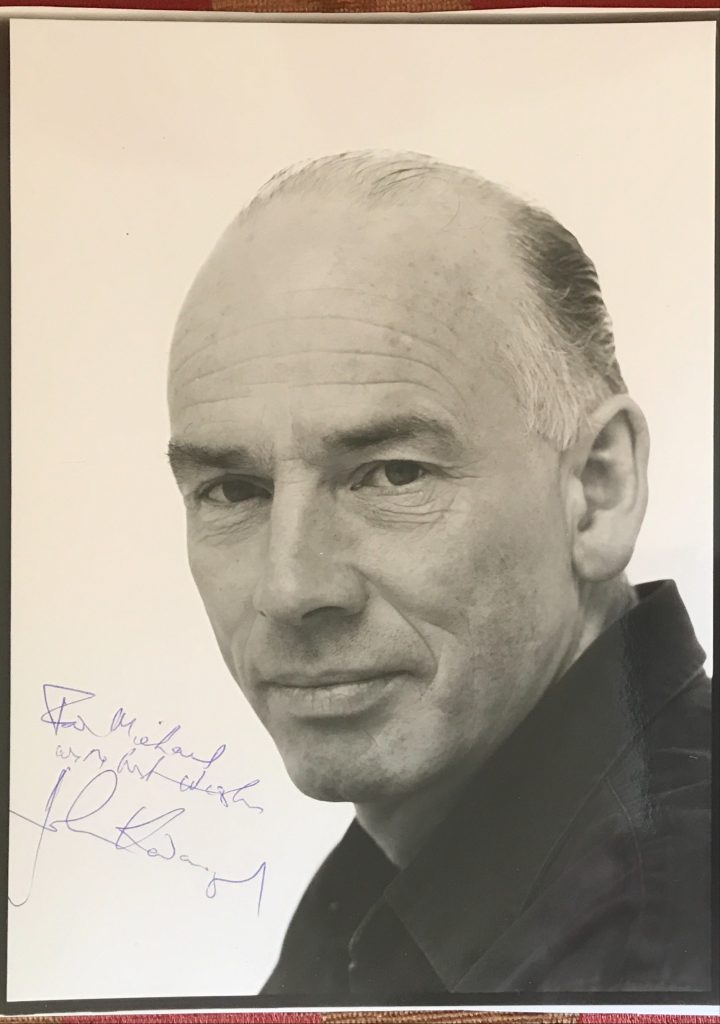
John Kavanagh

John Kavanagh

John Kavanagh is an outstanding  actor whose work has mostly been on the stage with occasional forays into film.   His first film ws “Paddy” in 1970.   He was excellent in the television adaptation of William Trevor’s “The Ballroom of Romance” as Bowser Egan.   He travelled to the U.S. to make “The Black Dahlia” in 2006.   He starred recently in TV’s “Father and Son”. as the father of Dougray Scott.   Further details on John Kavangh’s career can be found on “The Agency” website here.

John Kavanagh (Wikipedia)

John Kavanagh is an Irish actor who has acted on the stage, in over twenty films including Cal (1984), Braveheart (1995) and Alexander(2004), and in numerous television programs. His awards include being nominated for the Drama Desk Award for Outstanding Actor in a Play in 1989 for his role in a revival of Juno and the Paycock.

John Kavanagh had attended the Brendan Smyth Academy since he was 19-years-old and following it, attended Abbey Theatre. In 1967 he joined the company and stayed with them for 10 years before becoming freelancer.[1]
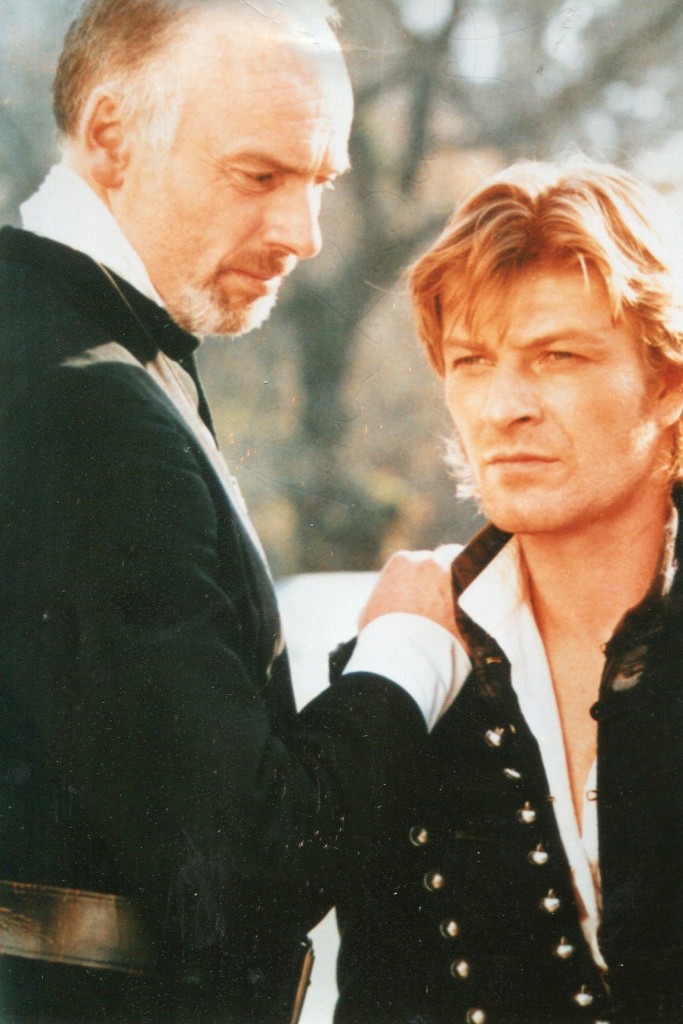
John Kavanagh
John Kavanagh

John Kavanagh is an Irish character actor. He began his career with the Irish comedy Paddy (1970), where he played the small role of Willie Egan. That same year, he played another small role in the World War II film The McKenzie Break (1970), about a P.O.W. camp in Scotland whose prisoners are preparing an escape.

The next twelve years brought Kavanagh no new films, though he continued to act on stage. Finally, he decided to return to screen acting with the theatrical film The Ballroom of Romance (1982), which put him in a romance with actress Brenda Fricker. The film was followed up with the small film Attracta (1983), and the made-for-television movie The Country Girls (1984), starring Sam Neill.
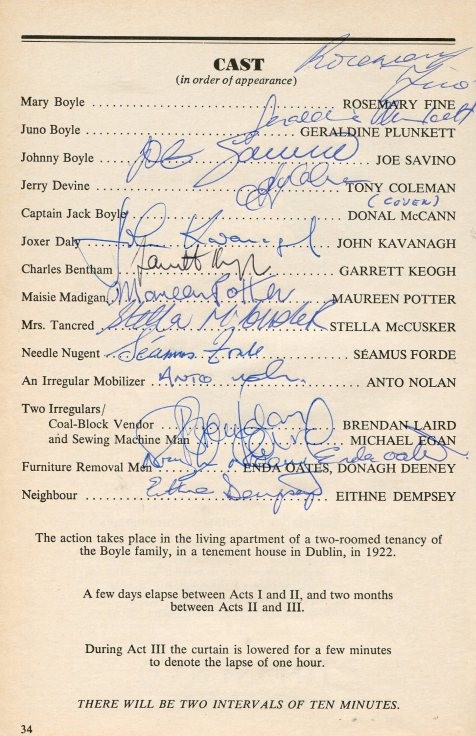
Maureen Potter
Maureen Potter

Kavanagh’s next theatrical film was one of the most famous films of his career: the Irish film Cal (1984), starring Helen Mirren and John Lynch. The film was about a young member of the IRA (Lynch) who is seeking to get out of the organisation. He meets the widow of one of the IRA’s victims (Mirren) and they begin a love affair.

Moving on from this film, Kavanagh acted in a number of films and television series. He participated in the thriller The Fantasist (1986), the crime drama Bellman and True (1987), the action film Joyriders (1988), and the independent film 4 Play: In the Border Country (1991), among others.

Kavanagh’s career picked up considerably in the mid-nineties. He acted alongside such classic actors as Mia Farrow and Jim Broadbentin the John Irvin film Widows’ Peak (1994). Kavanagh then guest-starred in the Sharpe series (starring Sean Bean and Hugh Fraser), where he played the holy man Father Michael Curtis. That same year, he acted in Braveheart (1995) as one of the nobles who routinely changed sides from Scotland to England in the Scottish wars of independence. Kavanagh next acted in Some Mother’s Son (1996), a prison film written by Jim Sheridan, and reunited with Brenda Fricker in Pete’s Meteor (1998).

After a number of smaller films, Kavanagh acted in another historical epic: the Oliver Stone film Alexander (2004), starring Colin FarrellVal Kilmer and Anthony Hopkins. Kavanagh played the role of Parmenion, the old general who questions Alexander’s actions. After a plot to kill the young leader is foiled, Parmenion is accused of being the mastermind behind it and is murdered. While the film was a triumph overseas, its domestic box office was a fraction of the budget, and it received negative reviews for a number of reasons. After this, Kavanagh acted in Brian De Palma‘s murder film The Black Dahlia (2006) which failed at the box office.

Kavanagh rebounded with the successful television series The Tudors (2007). Starring fellow Alexander cast member Jonathan Rhys Meyers, the series plays out the story of England’s turmoil in the time of Henry the Eighth and his life as he breaks from the Catholic Church. In 2012 Kavanagh was cast in Michael Hirst‘s TV series Vikings.

Kavanagh collaborated as vocalist with Paul Brady on the record The Green Crow Caws, a musical celebration of the words of Seán O’Casey.

John Kavanagh is the father of actress Rachel Kavanagh.

John Kavanagh (born 1945) is often described as the “actor’s conscience” of the Irish stage and screen. While a global audience recognizes him for his transformative roles in massive historical dramas like Vikings or Braveheart, his career is fundamentally rooted in the rigorous, classical traditions of the Abbey Theatre.

A critical analysis of Kavanagh’s work reveals an actor who specializes in “erudite intensity”—characters who are defined by their intelligence, their spiritual burden, or their quiet, simmering menace.


I. Career Overview: From The Abbey to Kattegat

1. The Abbey Pillar (1967–1980s)

Kavanagh joined the Abbey Theatre in the late 1960s, quickly becoming a central figure in the company’s “Modern Renaissance.”

  • The O’Casey Interpreter: He gained early acclaim for his roles in the Dublin Trilogy, particularly Juno and the Paycock. Critics noted his ability to find the dignity in O’Casey’s “flawed men.”

  • The Friel Connection: He was a key interpreter of Brian Friel, appearing in the original productions of masterpieces like Aristocrats (1979). His work with Friel established his reputation for “intellectual naturalism.”

2. The Film Breakthrough (1980s–1990s)

Kavanagh successfully transitioned to the international screen, often cast as figures of moral or religious authority.

  • The High-Stakes Supporting Player: He appeared in The Ballroom of Romance (1982) and Cal (1984). His most recognizable early film role was as Craig in Mel Gibson’s Braveheart (1995), where he brought a grounded, political weight to the Scottish rebellion.

  • The Sheridan Collaborations: He worked with Jim Sheridan in The Field (1990) and In the Name of the Father (1993), providing the gritty, authentic “texture” required for these seminal Irish films.

3. The Global Icon: Vikings (2013–2020)

In his later career, Kavanagh achieved a new level of fame through the series Vikings.

  • Dual Roles: He performed the extraordinary feat of playing two vastly different characters: the shrewd Pope Leo IV and the enigmatic, disfigured The Seer. The latter became the show’s spiritual anchor, a role performed under heavy prosthetics that relied entirely on Kavanagh’s vocal and physical precision.


II. Detailed Critical Analysis

1. The “Theological” Presence

Critically, Kavanagh is the preeminent actor of religious or spiritual conflict.

  • The Burden of Authority: Whether playing a priest, a cardinal, or a pagan oracle, Kavanagh avoids the cliché of the “holy man.” Critics praise his ability to show the weight of belief. In The Seer, he used a rasping, otherworldly cadence that suggested a character who existed between two worlds, making the metaphysical elements of the show feel visceral and terrifyingly real.

2. The Master of “Stillness” and Subtext

Like many of his Abbey contemporaries, Kavanagh is a master of the unspoken.

  • Intellectual Menace: In roles where he plays an antagonist, he rarely shouts. His power comes from a terrifyingly calm “stillness.” Critics often highlight his eyes; even when his face is immobile, his eyes suggest a mind that is three steps ahead of everyone else in the room.

  • The Brian Friel Influence: His years performing Friel taught him the value of the “subtextual pause.” He understands that what a character doesn’t say is often more important than the script. This makes him a favorite of directors who want to add layers of complexity to a scene without adding dialogue.

3. The “Chameleonic” Vocalist

One of Kavanagh’s greatest tools is his voice—a rich, resonant instrument that he can manipulate with surgical precision.

  • Prosthetic Acting: Playing The Seer in Vikings required him to act through layers of silicone. Critically, his performance was a masterclass in vocal acting. He managed to convey vulnerability, ancient wisdom, and absolute dread through a voice that sounded like “gravel and honey.”

  • Classical Diction: Even when playing gritty, contemporary roles, his classical training is evident. He has a way of “shaping” a sentence that gives it an almost Shakespearean weight, which is why he is so effective in period dramas.


Iconic Performance Comparison

Character Work Year Critical Legacy
The Seer Vikings 2013 A transformative, prosthetic-heavy performance that became a cult icon.
Craig Braveheart 1995 Provided the necessary “political realism” to a romanticized epic.
Canon O’Byrne The Field 1990 The definitive portrayal of “Church Authority” in modern Irish cinema.
James Joyce Nora 2000 Showcased his ability to inhabit complex, real-life intellectual giants.

John Kavanagh is the “Architect of Gravity.” He brings a sense of historical and moral weight to every project, whether it’s a 100-million-dollar Hollywood epic or a three-person play in a Dublin basement. He remains one of the most respected and technically proficient actors in the history of the Irish stage.

Leave a Reply

Your email address will not be published. Required fields are marked *