

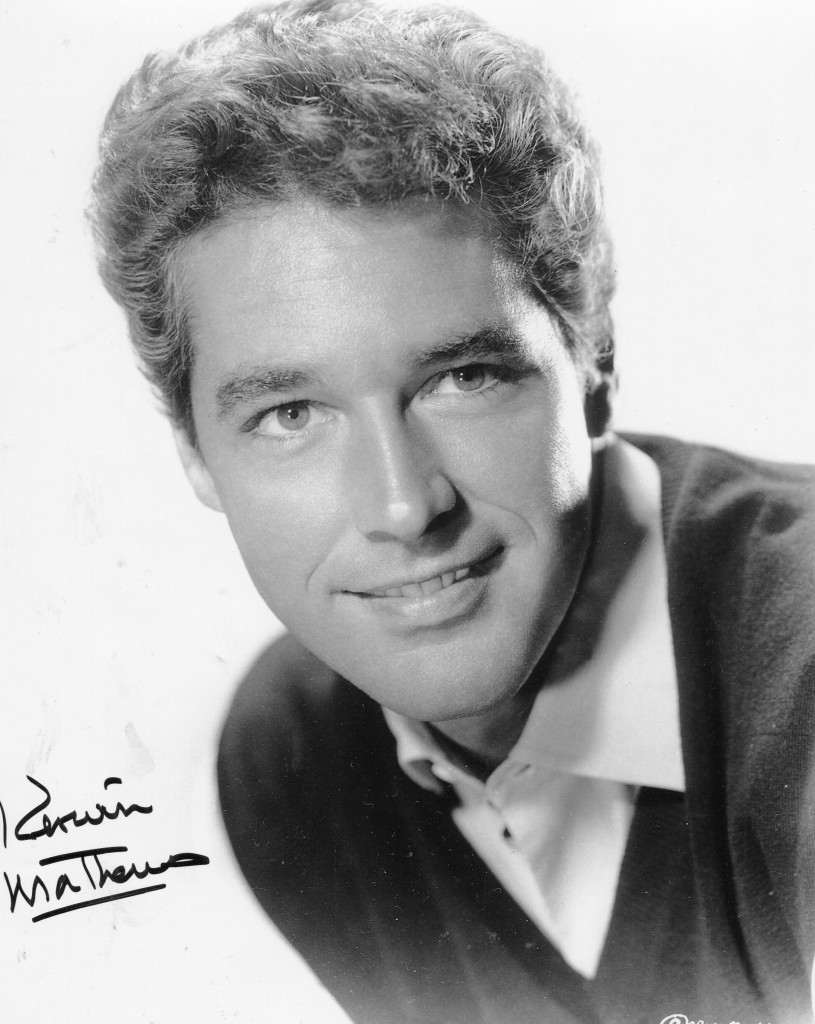
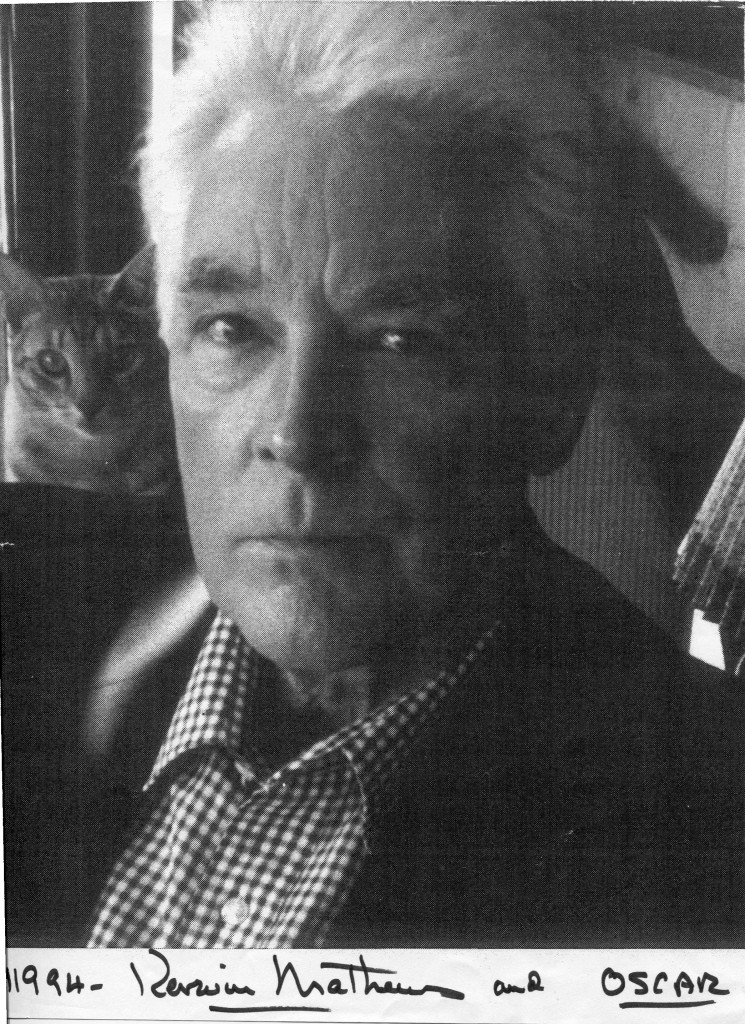


Kerwin Mathews obituary in “The Guardian” in 2007.
Kerwin Mathews is best known as the hero in such cult classics as “The Seventh Voyage of Sinbad” in 1958, “The Three Worlds of Gulliver” in 1960 and “Jack the Giant Killer” three years later. He was born in Seattle in 1926. he originally trained to be a teacher. He served in the Army Air Corp during World War Two. In 1954 he was awarded a Columbia film contract and was given a major role in his first film “Five Against the House” with Kim Novak and Guy Madison. Two of hsi major films are “The Garment Jungle” with Gia Scala and “The Devil at 4 O’Clock”.He retired from acting in 1978. Kerwin Mathews died in 2007 at the age of 81.
The Guardian obituary by Ronald Bergan:
It is inevitable that the screen actor Kerwin Mathews, who has died aged 81, should be forever associated with children’s fantasy films, using stop-motion special effects, almost as if he were an animated figure himself. But the handsome Mathews was flesh and blood, and worked hard to make the rather bland heroes, whether Sinbad, Gulliver or Jack the Giant Killer, more than one-dimensional, acting realistically with the many animated creatures he had to confront.




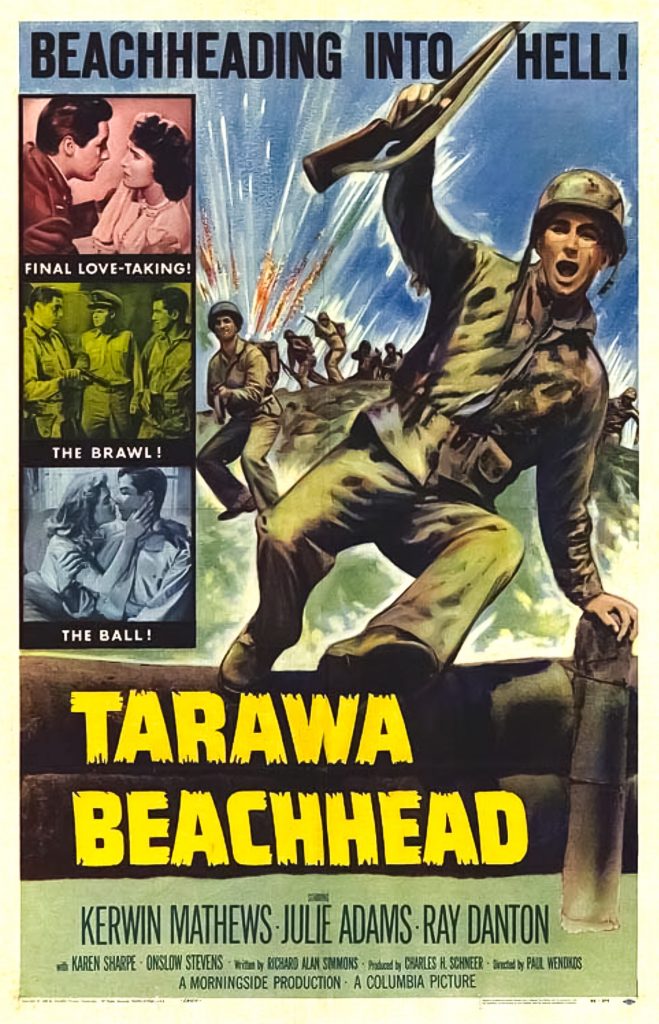


Mathews had to interact with nothing facing him, because all the monsters were added later. “His eyes were always concentrated on the unseen subject,” explained legendary animator Ray Harryhausen, who created the spectacular stop-motion effects for two of Mathews’ biggest successes, The 7th Voyage of Sinbad (1958) and The 3 Worlds of Gulliver (1960). In the former, Mathews battled a 30-foot cyclops, a giant roc and its two-headed chick, a fire-spitting dragon and, most famously, a warrior skeleton, with whom he has a climactic sword fight. However, in most of his films, he also had to fight against banal dialogue, often winning the battle by bringing conviction to the roles.
Born in Seattle, Mathews moved with his mother to Wisconsin after his parents’ divorce. Later he was inspired when “a kind high-school teacher put me in a play, and changed my life”. But it was only after serving two years in the wartime Army Air Force, and a spell teaching English, that he started acting professionally at the Pasadena Playhouse, where he was spotted by an agent, who got him a seven-year Columbia Pictures contract. Mathews’s screen debut was in Phil Karlson’s heist drama, 5 Against the House (1955), as the smartest of five students who plan to rob a casino in Reno.
This was followed by a leading role in The Garment Jungle (1957), one of his rare sorties into Hollywood realism. In this potent look at the US clothing business, he played the son of Lee J Cobb’s corrupt union official.But The 7th Voyage of Sinbad turned Mathews into an action hero in episodic narratives with interchangeable plots in which the hero sets sail to rescue a beautiful girl, although it was usually the animation that rescued the films. Harryhausen’s Super Dynamation filled The 3 Worlds of Gulliver with tiny (Lilliputian) and huge (Brobdingnagian) people, and Jack the Giant Killer (1962) had a dragon, courtesy of Projects Unlimited.
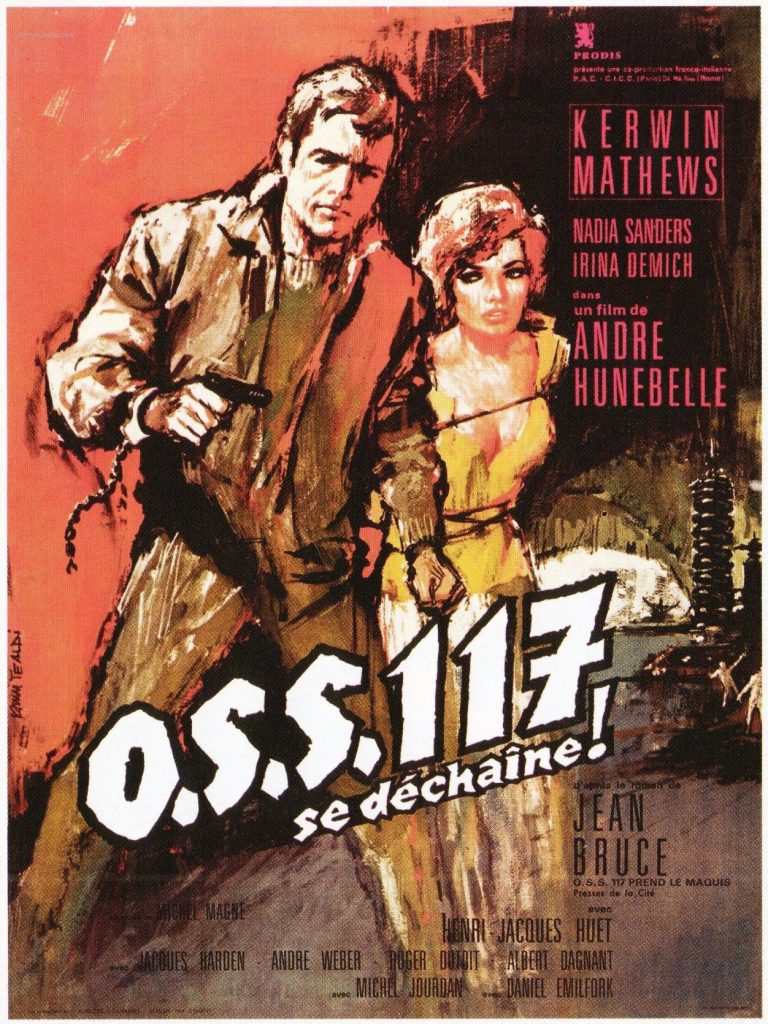
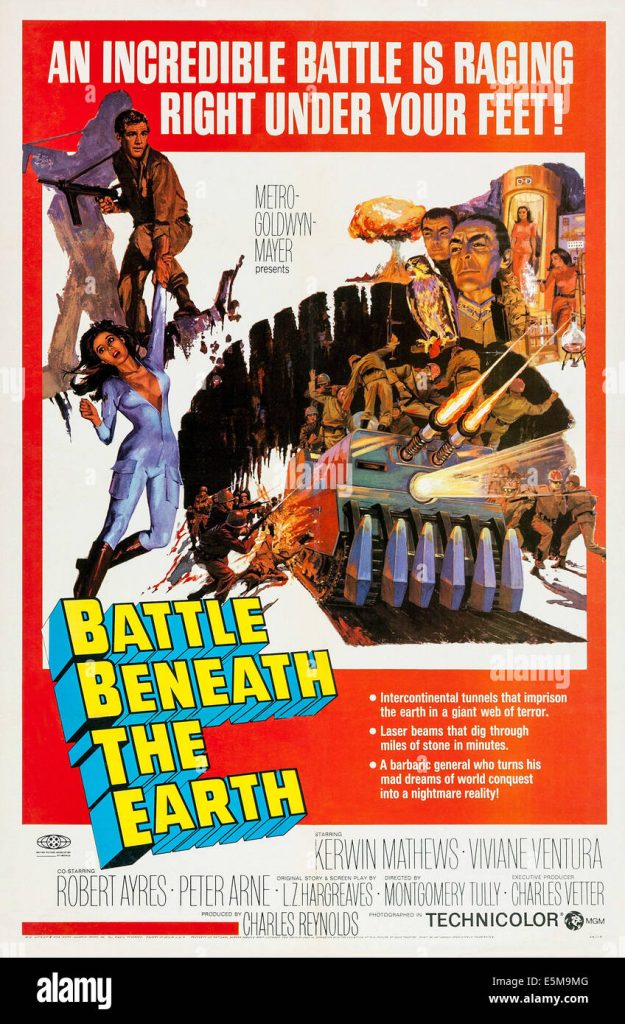
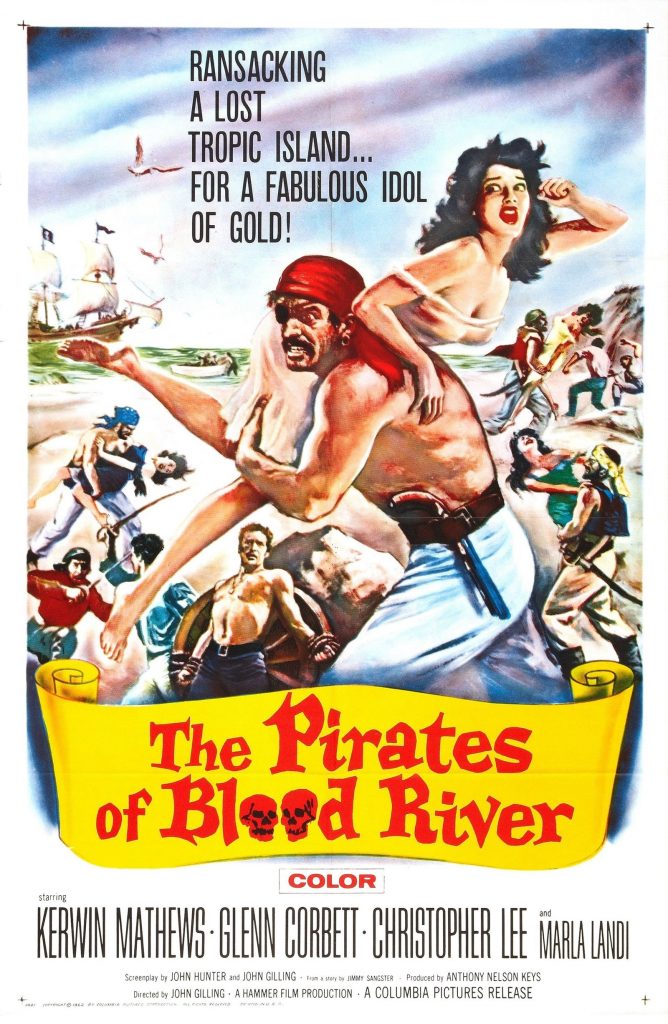
In the Hammer swashbuckler Pirates of Blood River (1961), Mathews falls into the clutches of Christopher Lee, and in the French-made Shadow of Evil he is a James Bond wannabe named only OSS 117. More ludicrous was Battle Beneath the Earth (1968), a red-baiting thriller in which the Chinese have built a series of tunnels under the US stocked with H-bombs. It is up to Mathews, leading a small army, to eliminate the threat.
Although Mathews felt that none of his films offered him a good acting role, he was most pleased with his performance as Johann Strauss Jnr in Walt Disney’s two-part television biopic, The Waltz King (1963). He spent much of the latter part of his career in bad horror movies such as Octaman (1971), as an ecologist who comes across an upright octopus (a man in a rubber suit) who goes around slapping people to death.
In 1961, he met Tom Nicoll, a British display manager at Harvey Nichols, who became his partner for the next 46 years. In 1978, having retired from acting, he and Nicoll, who survives him, moved to San Francisco, where they ran an antique business.
· Kerwin Mathews, actor, born January 8 1926; died July 5 2007
His Guardian obituary can be accessed online here.
.
Kerwin Mathews (1926–2007) occupies a distinctive, almost mythic space in mid‑twentieth‑century American cinema—a performer who combined the classical poise of the studio era with the sincerity and physical grace demanded by postwar adventure and fantasy films. Best remembered for a small set of iconic roles in 1950s–60s fantastical adventures—particularly The 7th Voyage of Sinbad, The 3 Worlds of Gulliver, and Jack the Giant Killer—Mathews brought an anchoring seriousness to fantasy storytelling. While some contemporaries reduced him to two‑dimensional heroism, critical reassessment has found in his work a subtle balance of masculinity and innocence, stage discipline and cinematic wonder.
Early Life and Formation
Born in Seattle in 1926 and raised in Janesville, Wisconsin, Kerwin Mathews studied speech and drama at Beloit College, later serving briefly in the U.S. Army Air Forces during World War II. After teaching high‑school speech, he returned to acting, honing classical technique in regional repertory and summer stock. Columbia Pictures talent scouts discovered him performing with the Berkeley Repertory Company in the mid‑1950s, signing him to a studio contract.
That RKO/Columbia grooming gave him the polish of the old studio system—careful diction, stage posture, and a disciplined body awareness—that would prove essential to his later fantasy roles, which required projection rather than psychological deconstruction.
1950s: Columbia Contract Player and Emerging Leading Man
Mathews first appeared in small roles in 5 Against the House (1955) and The Garment Jungle (1957). Critics instantly noticed a clean-cut earnestness reminiscent of a young Gregory Peck—a moral, contained presence amid a Hollywood drifting toward more neurotic Method styles.
The 7th Voyage of Sinbad (1958)
The turning point in Mathews’ career—and arguably the cornerstone of his cult legacy—arrived when producer Charles Schneer and stop-motion animator Ray Harryhausen cast him as Sinbad the Sailor. Mathews’ disciplined theatricality proved ideal for the fantastical context: he projected conviction opposite imaginary monsters and fantastical landscapes created by Harryhausen’s visual effects.
Contemporary reviews often acknowledged that his acting “made belief possible.” Variety praised his “straightforward valor and handsomeness,” while Sight & Sound later noted that “Mathews grounds the myth not in machismo but in moral optimism—he looks at creatures as challenges, not freaks.”
His partnership with Harryhausen created a new cinematic archetype—the rational hero in an irrational world—which would influence adventure cinema through the 1970s.
Early 1960s: The Fantasy Cycle and European Expansion
The 3 Worlds of Gulliver (1960)* and Jack the Giant Killer (1962)*
These films reaffirmed his status as cinema’s gentleman‑explorer. Critics at the time dismissed the scripts as juvenilia, but reappraisal shows how Mathews subtly elevated the material. He played Gulliver and Jack with a scientist’s curiosity and an Enlightenment clarity rare in genre heroes. His physically expressive acting—precise gesture, measured timing—created empathy even when special effects now appear primitive.
Film historian David Pirie described him as “the Bressonian professional cast into Technicolor fantasy—restrained amid chaos.” Mathews’ ability to treat fantasy adventure with moral seriousness lent dignity to what might have been camp.
European and Genre Work
After leaving Columbia, Mathews moved between Hollywood and European productions: spy thrillers (The Man Who Never Was TV spin‑off, The Pirates of Blood River 1962, Maniac 1963), and swashbucklers (The Long Ships 1964). In them he reaffirmed himself as the “literate adventure lead”—cultured, cool under pressure, romantic without swagger.
In Hammer’s Maniac, directed by Michael Carreras, he explored the noir fringe of heroism: seduced, manipulated, ambivalent. Critics in retrospect see this as an early hint of his flexibility, anticipating the morally shaded protagonists of later thrillers.
Late 1960s–1970s: Television and Personal Reassessment
As Hollywood shifted toward anti‑heroes and psychological realism, Mathews’ classical hero demeanor went out of vogue. He transitioned to television, guest‑starring in Marcus Welby M.D., The F.B.I., Mannix, Hawaii Five‑O, and others. In each, he carried the hallmark clarity of line and voice, yet industry tastes favored improvisatory naturalism.
He occasionally returned to European film—Barquero (1970) with Lee Van Cleef, Swedish Wildcat (1972)—but by mid‑1970s he quietly retired from acting. Relocating to San Francisco, he devoted himself to antique dealing and art collecting, re‑emerging only rarely for retrospectives and fantasy‑film tributes.
Acting Style and Interpretation
| Element | Characterisation |
|---|---|
| Physical Technique | Classically trained economy: erect posture, minimal gesture, a dancer’s precision. He treated the body as a vessel of grace—ideal for swashbuckling authenticity. |
| Vocal Tone | Clear baritone with crisp articulation; rarely theatrical; his voice conveyed both authority and kindness. |
| Emotional Modesty | Eschewed Method introspection; relied on moral clarity and subtle humor, aligning him with prewar screen stoicism. |
| Presence in Fantasy | Unlike stoic contemporaries such as Charlton Heston, Mathews projected curiosity rather than dominance; he invited the viewer into wonder rather than commanding it. |
| Modern Re‑evaluation | Scholars now view his restraint as proto‑minimalism—he took fantastical spectacle seriously in the same way actors later approached science fiction with realism. |
Thematic Continuities
- Humanism in Fantasy – Mathews brought dignity to tales of monsters and myths, reframing escapism as moral quest.
- Decency and Rationalism – Across Sinbad, Gulliver, and Jack the Giant Killer, he exemplifies thoughtful courage: an explorer guided by reason and compassion.
- Transition of Styles – His career illustrates the shift from studio classicism to 1960s modernity; he remained loyal to craft rather than trend.
- Queer and Cultural Reassessment – Posthumous scholarship has highlighted Mathews as one of the few adventure‑film stars to live openly gay in his later years, reframing his elegance and empathy through the lens of identity and self‑acceptance, though he kept his private life discreet during his prime.
Critical Reception and Legacy
During his Hollywood years, critics perceived him as dependable but rarely transformative—a “handsome straight arrow.” However, retrospective analysis has deepened understanding:
- Film Comment (1998) called him “the conscience of adventure cinema, proof that sincerity can itself be style.”
- Genre historians credit him with anchoring Ray Harryhausen’s effects in moral realism. Without him, those fantasies risked weightlessness.
- Modern writers on queer representation appreciate his integrity: by refusing exaggerated masculinity, he subtly queered the heroic ideal toward sensitivity and intellect.
Mathews bridged an era’s aesthetic boundaries: his clean diction and pure-hearted courage counterbalanced the cynicism defining later action heroes. Within film history he stands not just as a special‑effects surrogate but as a figure of ethical seriousness in popular art.
Selected Filmography (with noted performance emphasis)
| Year | Title | Role | Distinguishing Quality |
|---|---|---|---|
| 1955 | 5 Against the House | Ronnie | Early sign of classical poise |
| 1958 | The 7th Voyage of Sinbad | Sinbad | Heroic clarity; cornerstone of fantasy acting |
| 1960 | The 3 Worlds of Gulliver | Lemuel Gulliver | Humanist naturalism within spectacle |
| 1962 | Jack the Giant Killer | Jack | Innocence paired with moral courage |
| 1963 | Maniac | Jeff Farrel | Psychological tension; noir gravitas |
| 1964 | The Long Ships | Rolfe | Classical grace against barbaric backdrop |
| 1970 | Barquero | Marquette | Mature nuance; resistive melancholy |
Conclusion
Kerwin Mathews’ career may appear modest in volume, yet in influence it is immense. He redefined the fantasy‑adventure hero not as swaggering conqueror but as gentle rationalist—a man whose courage derived from intelligence and decency. In an era that prized bravado, he offered sincerity; in genres prone to artifice, he delivered truth.
Critically reassessed after his death, Mathews is now recognized as an actor whose restraint and grace sustained some of mid‑century cinema’s most enduring dreams. He proved that the art of belief—playing dragons and cyclopes as real moral tests—can itself be high acting, and that earnestness, properly rendered, is a kind of nobility