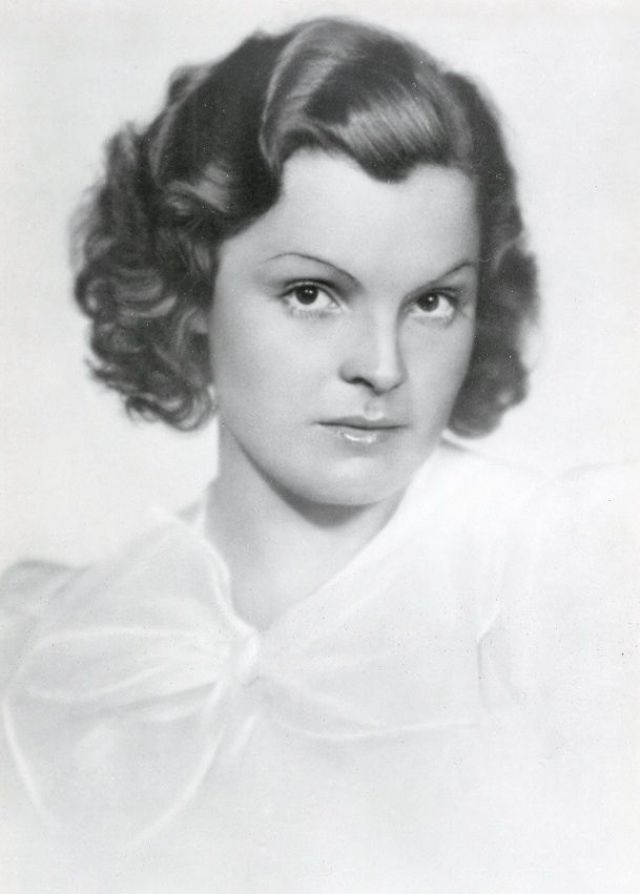


Magda Schneider was born in 1909 in Bavaria, Germany. She made her stage debut in Munich. In 1937 she married Austrian actor Wolf Albach-Retty . The following year she gave birth to her daughter Romy Schneider. She made her film debut in 1932 in “Tell Me Tonight”. In 1953 she made the film “When the White Lilacs Bloom Again”. She supported her daughter when Romy made the “Sissi” trilogy. Magda Schneider died in 1996. Magda Schneider’s obituary in “The New York Times” here.


Magda Schneider — career overview and critical analysis
Quick overview
Born 1909 in Austria (Klagenfurt), Magda Schneider became a popular German‑language film and stage actress from the late 1920s through the 1950s. She was one of the leading light, often in light comedies, operetta films and Heimat (homeland)‑style pictures.
Her career spans Weimar/early sound cinema, the Nazi era, and the postwar German/Austrian film industries. She is also widely remembered as the mother of actress Romy Schneider, with whom her personal and professional relationship later shaped parts of both their public images.
Schneider’s screen persona centered on charm, warmth and an uncomplicated, traditionally feminine appeal. She remained a bankable star in popular entertainment rather than a figure primarily associated with avant‑garde or politically challenging work.
Career phases and highlights
Early career (late 1920s–1930s): Trained for the stage, Schneider moved into film as German cinema transitioned to sound. She took roles in comedies and musicals that leveraged her singing and light acting skills.
1930s–1940s: Schneider consolidated popularity with roles in operetta and Heimat films that emphasized rural virtue, family, romance and scenic landscapes. During the Nazi period she continued to work in the German film industry; her films of the era were mostly apolitical entertainment, though she did appear in state‑sanctioned cinema environments like most working screen professionals in Germany at that time.
Postwar career (late 1940s–1950s): After the war Schneider successfully reestablished herself in the Heimat revival and family melodramas, often cast as a maternal, comforting presence. She also appeared in films with her daughter Romy Schneider, which extended her public profile into the 1950s.
Later years: Gradually reduced film work, appearing intermittently on stage, in television and public events; remained a recognizable figure in German‑language popular culture.
Notable films (representative, not exhaustive)
Operetta and light comedies of the 1930s and early 1940s that showcased her singing and affable screen manner.
Postwar Heimat films and family melodramas that played to her strengths as a reassuring, domestic presence.
Films with Romy Schneider in the 1950s, which attracted attention because of the real‑life mother‑daughter relationship.
Artistic strengths
Screen charisma and accessibility: Schneider projected an easy, friendly warmth—an anchor for mass‑appeal entertainment. Her presence suited the sentimental, pastoral and romantic genres that dominated much of German‑language popular cinema in her era.
Musicality and theatrical training: She handled light musical numbers and stage‑informed comic timing competently, making her a reliable leading woman in operetta films and comedies.
Maternal credibility: Later in her career Schneider convincingly embodied maternal roles, which broadened her repertoire and kept her relevant to postwar audiences seeking stability and domestic reassurance.
Limitations and criticisms
Typecasting and genre limits: Schneider’s greatest commercial success came in formulaic, conservative genres (operetta, Heimat) that emphasized conventional gender roles. This limited her opportunities to pursue challenging, modernist or politically engaged work.
Political context and ambiguity: Working steadily in the German film industry during the Nazi period creates unavoidable ethical and historical questions. Schneider’s filmography from the 1930s–1945 is primarily entertainment rather than propaganda, but like many contemporaries she benefited from a system controlled by the regime. Critics and historians sometimes debate the degree to which entertainers during this era bear responsibility for cultural normalization.
Artistic range: While skilled and dependable, Schneider is generally not assessed as a deep character actress in the tradition of more psychologically intense screen performers. Her strengths were surface charm, musicality and an ability to fit the expectations of popular genres.
Cultural and historical impact
Popular culture figure: Schneider helped define the feminine ideal of a significant portion of German‑language popular cinema between the 1930s and 1950s—cheerful, dutiful, maternal and rooted in domestic or regional values.
Mother of Romy Schneider: Her relationship with Romy amplified her legacy; the combination of Magda’s established, conservative persona and Romy’s later international, sometimes rebellious star image has been a recurring theme in film histories and biographies.
Heimat genre and postwar restoration: In the immediate postwar years audiences sought films that offered escapism and comforting visions of home. Schneider’s continued casting in these films made her part of the cultural recovery and the reshaping of national moods through cinema.
Overall appraisal Magda Schneider should be seen as a prominent star of mainstream German‑language popular cinema rather than as an artist who pushed cinematic or theatrical boundaries. Her talents—musical ability, affable screen presence and reliability—made her valuable to the commercial studios and well suited to the tastes of broad audiences across politically fraught and recovering decades. Critically, her career raises familiar tensions: she was an effective interpreter of conservative, sentimental genres and a widely loved screen figure, but her work is constrained by typecasting and the compromises inherent in working within state‑dominated film systems in the 1930s–40s. Her historical importance is thus cultural and sociological as much as strictly artistic: she helped embody and transmit the popular ideals and consolations of her time.