



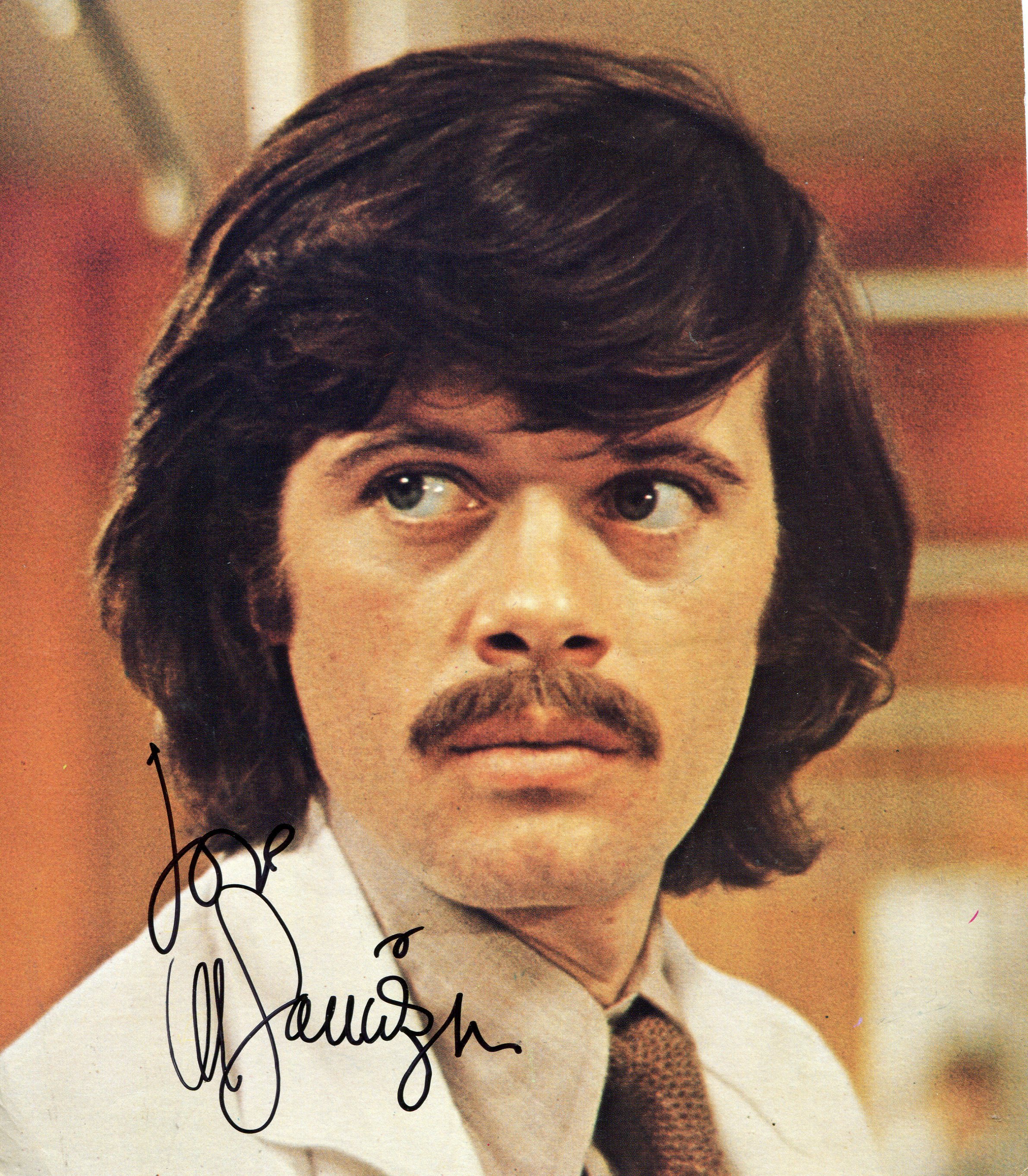
The guardian obituary in 2011.
The Canadian-born actor Michael Sarrazin, who has died of cancer aged 70, was so visible in Hollywood movies from 1967 to 1977 that one may wonder what happened to his subsequent career. A facetious answer might be that he moved back to Canada and made Canadian movies. Another answer might be that his sensitive, gently rebellious, flower-child persona and his lanky, boyish looks, with his long hair and soulful eyes, were no longer appropriate to the roles he took as he got older.
However, during the decade of his stardom, Sarrazin seemed to fit the anti-hero ethos of the era, often playing rootless characters, typically in his most celebrated role as the ex-farmboy drifter in Sydney Pollack’s They Shoot Horses, Don’t They? (1969). Sarrazin, idealistically willing to let fate take a hand, is paired with an embittered Jane Fonda in a dance marathon that is supposed to be a microcosm of the Depression. It is Sarrazin who gets to speak the rhetorical question of the title after he helps Fonda commit suicide
You could have paid me a dollar a week to work on that film,” Sarrazin explained. “It hits you bolt upright. I still get really intense when I watch it. We stayed up around the clock for three or four days. Pollack said we should work until we showed signs of exhaustion.” Perhaps it was a blessing in disguise when Universal refused to lend Sarrazin out for the Jon Voight part in John Schlesinger’s Midnight Cowboy.
He was born Jacques Michel André Sarrazin in Quebec City, but was brought up in Montreal, where he went to eight different schools before dropping out. In fact, he was only interested in the few chances he got to act at school. While still in his teens, Sarrazin went to Toronto, where he soon got work as an actor. After starring opposite Geneviève Bujold in a TV production of Romeo and Juliet, and appearing in two shorts for the National Film Board of Canada, in one of which he played a troubled youth who steals a motorcycle, he was offered a contract by Universal Studios, making him one of the last actors to come up through the old studio system.
Sarrazin’s first film for the studio was Gunfight in Abilene (1967), a drama set at the end of the American civil war, in which the teen idol Bobby Darin was miscast as a sheriff. Sarrazin made an impression as a young cowhand who gets whipped (shirtless) by a villainous hired gun. This was followed in the same year by his first leading role, in the enjoyable comedy-drama The Flim-Flam Man as an army deserter, a corruptible innocent, taken on as a protege of a rural conman (George C Scott).
More contemporary was Sarrazin’s role in The Sweet Ride (1968) as a convincing beach bum in Malibu who tells his girlfriend Jacqueline Bisset that all he wants out of life is the surf and can only marry her when he has got the beatnik life out of his system. After making the sweet ride on his surf board, he walks away, leaving the board in the sand, having realised that there is more to life than escapism. Thus began his 14-year relationship with Bisset in real life. They were to appear together in two further films: Believe in Me (1971), in which they are stoned most of the time, and as husband and wife in John Huston’s The Life and Times of Judge Roy Bean (1972), with Paul Newman in the title role.
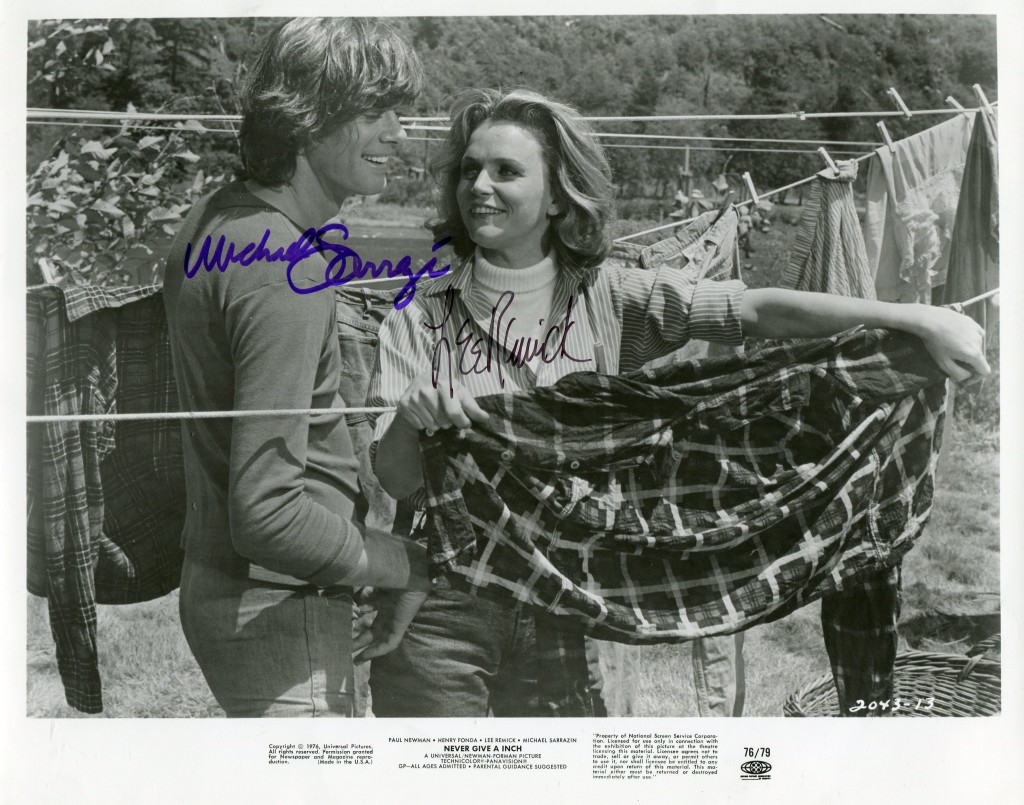
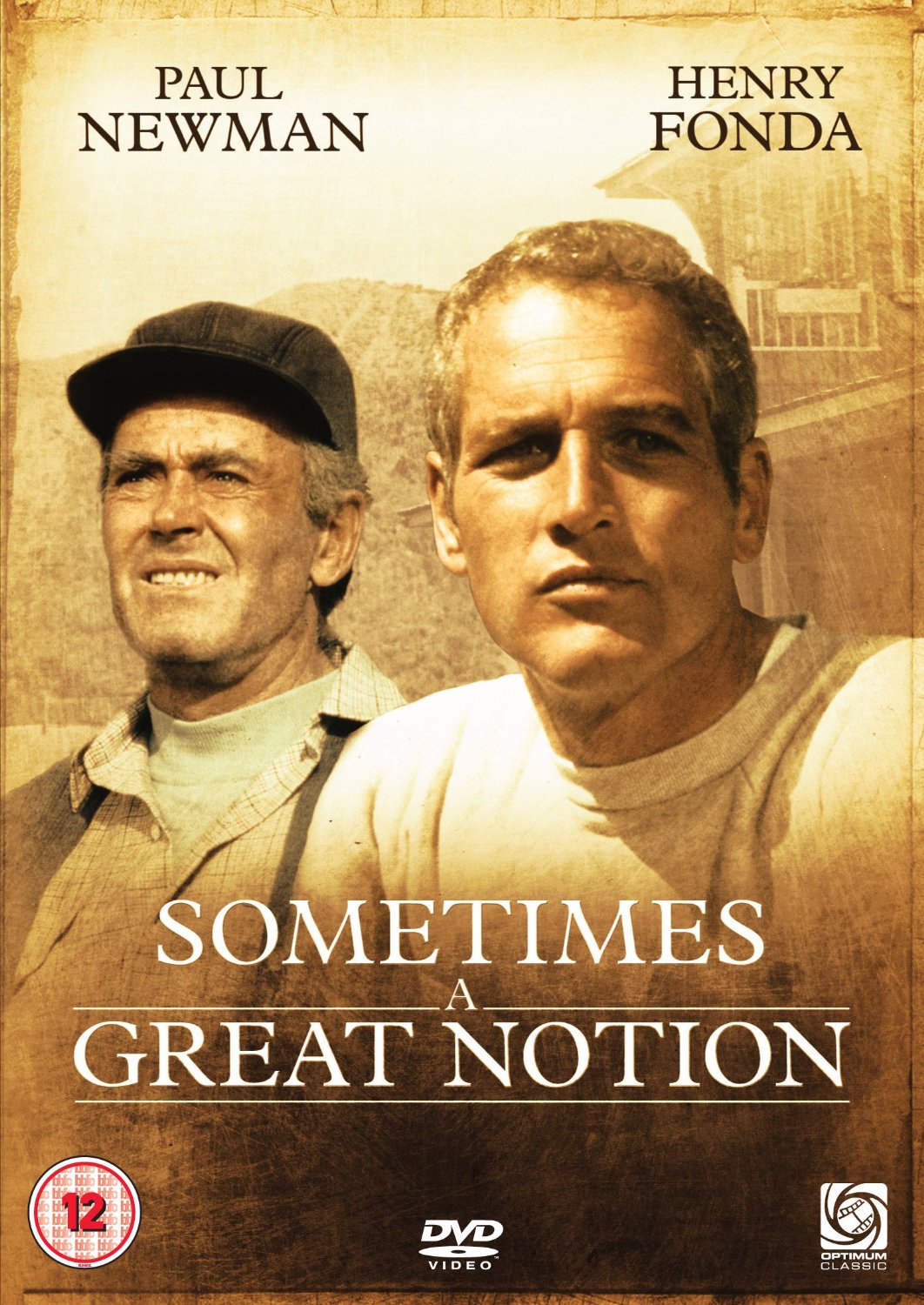
Newman had cast Sarrazin in Sometimes a Great Notion (first released in the UK as Never Give an Inch, 1970), the second of the five films he directed. Sarrazin has the most sympathetic role as the youngest of a family of lumberjacks who is the butt of his elders’ jokes on his hippy hairstyle and liberal views.
Among his other roles was in Robert Mulligan’s The Pursuit of Happiness (1971), as an anti-Vietnam war student who finds his hippy lifestyle put on trial rather than his accidental running over of an old lady in his car. In Harry in Your Pocket (1973), he portrayed an apprentice to master pickpocket James Coburn, and in Peter Yates’s romantic comedy For Pete’s Sake (1974) he was Barbra Streisand’s impecunious cab-driving husband. At the same time, he was appearing on television, notably as a relatively handsome and articulate “Creature” in Frankenstein: The True Story (1973), co-adapted by Christopher Isherwood from Mary Shelley’s novel.
The majority of films Sarrazin made in the 1980s and 90s were Canadian productions, few of which rose above the mediocre. An exception was La Florida (1993), a French-Canadian film produced by his brother Pierre Sarrazin, in which he played a lounge singer called Romeo Laflamme. “I asked Michael to act in French, which was difficult for him as he’d been so long in LA,” said Pierre, “but it all came back to him. After all, we’d grown up in east-end Montreal.”
Sarrazin’s final, brief, appearance will be in Walter Salles’s upcoming screen adaptation of Jack Kerouac’s On the Road. He is survived by his two daughters, and his brother and sister.





Career Overview:
- Michael Sarrazin (born Michel Sarrazin; March 22, 1940 – April 17, 2011) was a Canadian film and television actor who became well known in the late 1960s and 1970s as a handsome, introspective leading man. He began in television, moved into U.S. feature films, and later worked steadily in TV movies and supporting film roles.
Career trajectory and highlights
- Early years and TV: Sarrazin started with Canadian and American television work in the early-to-mid 1960s, building a screen presence that led to feature opportunities.
- Breakthrough and peak (late 1960s–1970s): He achieved his highest profile with films like The Sweet Ride (1968) and especially They Shoot Horses, Don’t They? (1969), where his portrayal of the sympathetic young drifter Robert brought him critical attention. During this period he was cast as the moody, romantic, often damaged young male lead in melodramas and thrillers.
- Middle period (1970s): Sarrazin headlined a string of genre and mainstream projects — for example The Reincarnation of Peter Proud (1975) — and continued to alternate between theatrical releases and television movies. He remained a recognizable face but never became an A-list star.
- Later career (1980s–2000s): As leading-man roles declined, Sarrazin worked more often in TV movies, miniseries, and as a supporting actor in films. He continued acting into the 2000s, though with much lower profile than his peak years.
Acting style and screen persona
- Typecasting: Sarrazin was frequently cast as the brooding, vulnerable, romantic male lead. His looks and demeanor fit the late-60s/70s countercultural, sensitive-hero archetype.
- Strengths: Naturalistic screen presence, an ability to convey quiet desperation or wounded sensitivity, and an emotional accessibility that made him effective opposite stronger or more flamboyant co-stars. In ensemble pieces he could be a steady center.
- Limitations: Critics and viewers sometimes found him limited in range—he rarely transformed into radically different character types. At times his performances read as too understated or passive for the demands of a script that needed greater dynamism.
Critical reception and commercial fortunes
- Critics praised Sarrazin most when material matched his strengths: roles that required nuance, melancholy, or romantic tension. They Shoot Horses, Don’t They? remains the most cited example where his empathy and restraint served the film well.
- Commercially, Sarrazin never became a bankable superstar. He benefited from the 1960s–70s film climate that favored young, reflective leads, but as studio tastes shifted in the late 1970s and 1980s toward different archetypes, his career momentum slowed.
- His move into television work was typical of many film actors whose box-office draw diminished; it kept him working but also signaled the end of his peak film-era visibility.
Legacy and historical placement
- Sarrazin is often remembered as one of the emblematic late-60s/early-70s “sensitive” leading men—handsome, slightly enigmatic, and best in roles that privileged interior life over action. He never attained marquee stardom, but his presence in a handful of notable films secures him a modest place in film-history discussions about that era’s male archetypes.
- For contemporary viewers and film historians, his best work offers a window into how Hollywood responded to changing youth culture and film aesthetics around 1970: more ambiguity, moral unease, and psychological realism.
Critical synthesis — strengths, weaknesses, and verdict
- Strengths: A believable, intimate screen presence; skillful at underplayed emotion; effective in roles that required empathy rather than spectacle.
- Weaknesses: Limited range and charisma compared with top-tier stars; difficulty finding vehicles that fully expanded his talents; career affected by industry shifts away from the kind of roles that suited him.
- Verdict: Michael Sarrazin was a solidly effective actor whose best performances still resonate for their quiet intensity. He’s best appreciated within the context of the late-60s/70s film scene: not a major star, but a memorable one when matched with the right material.
Michael Sarrazin (1940–2011) was the quintessential “sensitive drifter” of the New Hollywood era. With his strikingly large, soulful eyes and a lanky, almost fragile physicality, Sarrazin became the face of a specific brand of 1960s and 70s alienation. While he never attained the blockbuster longevity of contemporaries like Dustin Hoffman or Al Pacino, a critical analysis of his work reveals an actor of intense internal empathy who excelled at playing characters crushed by systems they couldn’t understand.
1. The “Beautiful Loser” and Altman (1967–1968)
Sarrazin’s early career was defined by his “innocent abroad” quality, which directors used to highlight the cynicism of the world around him.
The Flim-Flam Man (1967): Playing Curley, the reluctant protege to George C. Scott’s con man.
Critical Analysis: Critics immediately noted Sarrazin’s “reactive magnetism.” Opposite the volcanic Scott, Sarrazin provided a quiet, moral baseline. He didn’t need much dialogue; his face acted as a mirror for the audience’s own conscience.
The Sweet Ride (1968): * Analysis: This film solidified his status as a counter-culture heartthrob. Critics praised his “understated vulnerability,” a stark contrast to the hyper-masculine leading men of the previous decade. He represented a new, softer version of the American male.
2. The Masterpiece: They Shoot Horses, Don’t They? (1969)
Sarrazin’s performance as Robert Syverton in Sydney Pollack’s Great Depression drama is the definitive work of his career.
The Role: A struggling dreamer trapped in a grueling, soul-destroying dance marathon.
Detailed Critical Analysis: Critics view Sarrazin as the emotional anchor of this nihilistic masterpiece.
The “Passive” Power: While Jane Fonda’s character was the fiery, cynical engine of the film, Sarrazin played Robert with a haunting passivity. He captured the “thousand-yard stare” of a man watching his hope evaporate in real-time.
Technique: His performance is a study in physical exhaustion. As the marathon progresses, Sarrazin’s movements become heavier and his gaze more vacant. Critics lauded the way he portrayed “mercy” in the film’s shocking climax—not as a violent act, but as a tragic, inevitable release.
3. The Genre Specialist and Dystopian Lead (1970–1977)
In the 1970s, Sarrazin moved into high-concept thrillers and horror, where his “wide-eyed” look was used to convey mounting dread.
The Reincarnation of Peter Proud (1975): * Analysis: As a man haunted by past-life visions, Sarrazin utilized his signature “intellectual anxiety.” Critics noted he was uniquely gifted at playing characters who were “unravelling” from the inside out. He made the supernatural premise feel grounded through his sheer, panicked sincerity.
The Gumball Rally (1976): * Critical Note: A rare comedic turn for Sarrazin. While the film was a lighthearted race movie, critics appreciated his “relaxed charm,” proving he could handle mainstream leading-man duties without the heavy weight of his earlier “doomed” roles.
4. The “Venerable” Later Years (1980s–2000s)
As the New Hollywood era faded, Sarrazin’s sharp features aged into a distinguished, slightly weary elegance.
Joshua Then and Now (1985):
Analysis: Returning to his Canadian roots, Sarrazin gave a nuanced performance that critics praised for its “mature restraint.” He moved away from the “drifter” archetype and began playing men of history and substance.
The Groundstar Conspiracy (1972) / La Scorta (1993):
Analysis: Throughout his later career, he remained a favorite for international directors who required an actor with “European soulfulness.” He became a respected figure in Canadian cinema, often serving as a mentor to younger actors.
Detailed Critical Analysis: Style and Persona
The “Liquid Eye” Technique
Sarrazin’s most powerful tool was his eyes. Critics frequently referred to them as “liquid” or “haunted.” He understood that in a close-up, the eyes do the heavy lifting. This allowed him to play non-verbal characterswith immense clarity. He was an actor of “reception”—taking in the world and letting the audience see the cost on his face.
The “Lanky” Aesthetic
His physicality was essential to his “drifter” persona. He often looked slightly uncomfortable in his own skin, which translated on screen as a lack of predatory intent. In an era of “macho” action stars, Sarrazin was the “anti-alpha,” making him the perfect protagonist for the cynical, post-Vietnam landscape.
The Architect of “Quiet Despair”
Critically, Sarrazin is studied as the “poet of the marginalized.” He rarely played winners. His characters were often victims of circumstance, and he brought a specific dignity to failure. He proved that an actor didn’t need to shout to be powerful; sometimes, the most memorable performance is the one that simply refuses to look away from the tragedy.
Key Career Milestones
| Work | Year | Role | Significance |
| The Flim-Flam Man | 1967 | Curley | His major Hollywood introduction. |
| They Shoot Horses… | 1969 | Robert Syverton | His definitive artistic achievement. |
| The Groundstar Conspiracy | 1972 | John Wells | Established his “Paranoid Thriller” credentials. |
| Frankenstein: The True Story | 1973 | The Creature | A landmark “Sympathetic Monster” performance. |
| The Reincarnation of Peter Proud | 1975 | Peter Proud | Cult status in the psychological horror genre. |
Legacy Summary: Michael Sarrazin was the “Vulnerable Face of the Sixties.” He captured a moment in time when the American dream felt like a marathon no one could win. He remains a critical favorite for his intellectual honesty and physical grace, an actor who proved that the most “beautiful” thing a performer can show is the truth of their own fragility