

YOKO TANI (WIKIPEDIA)
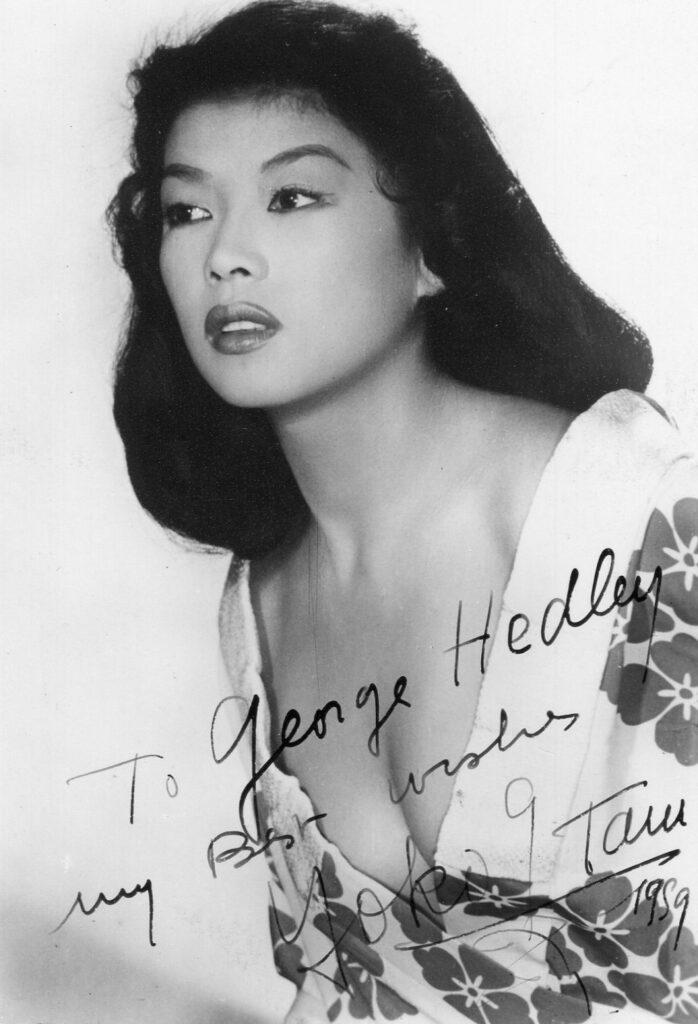
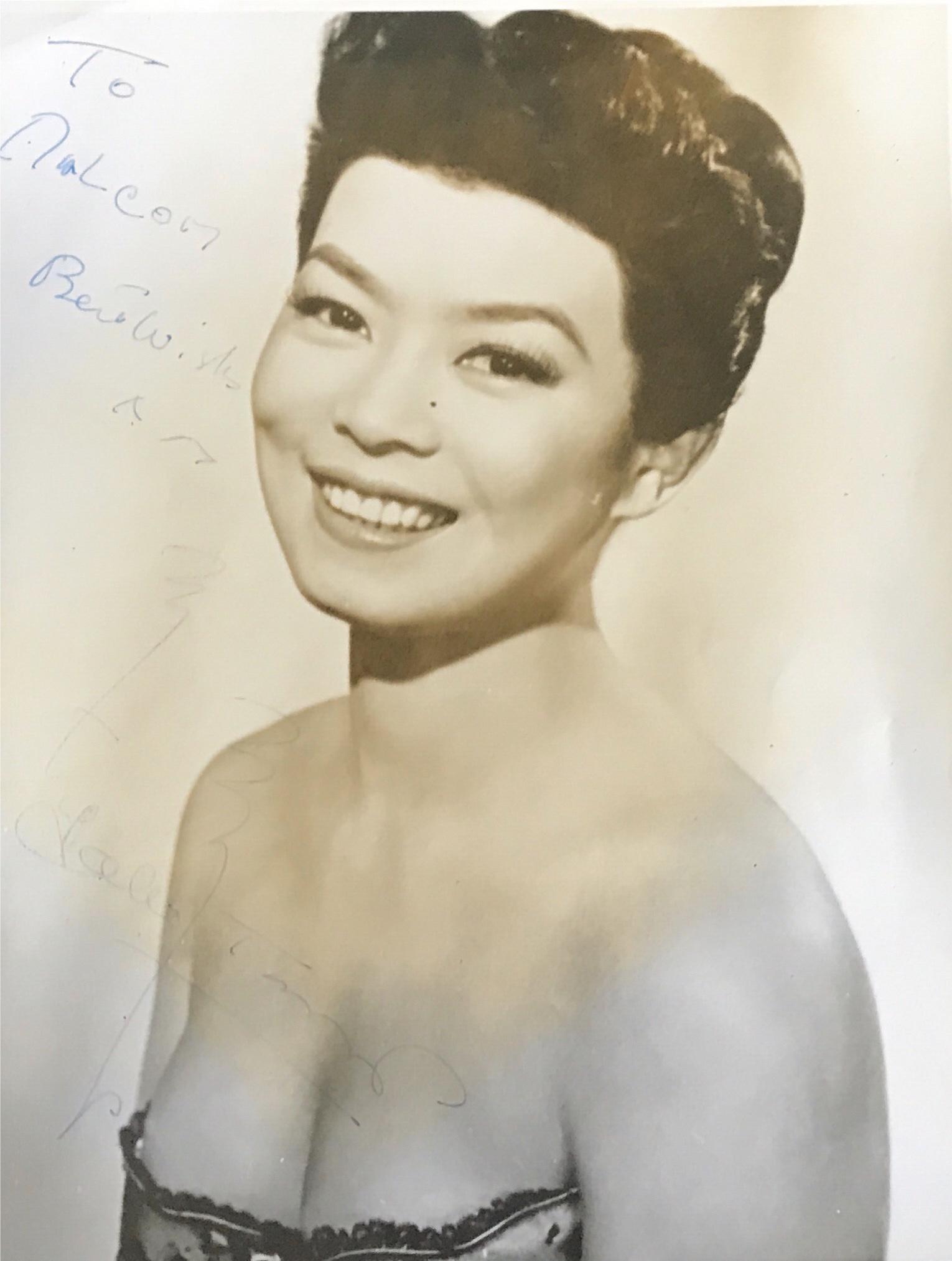
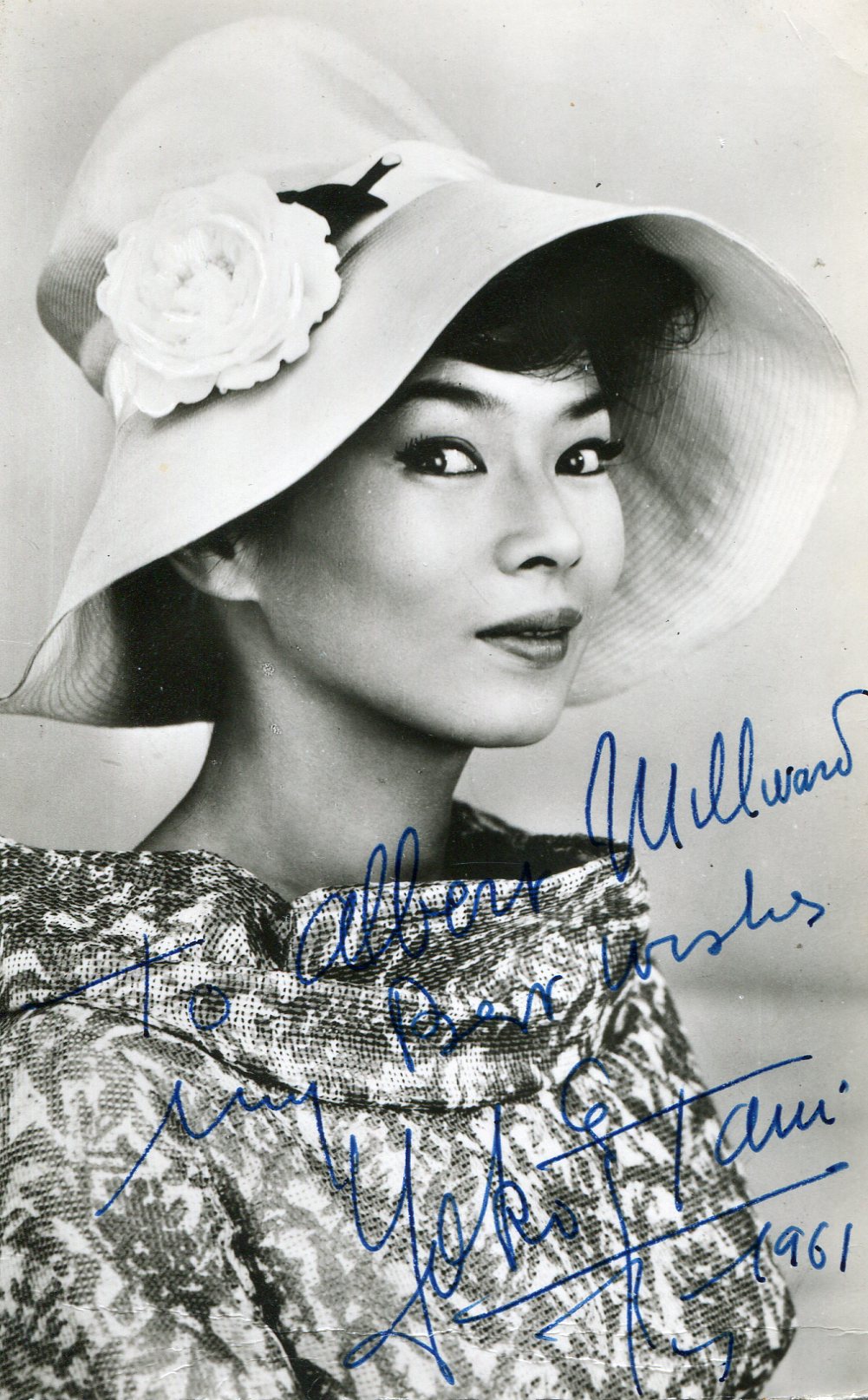
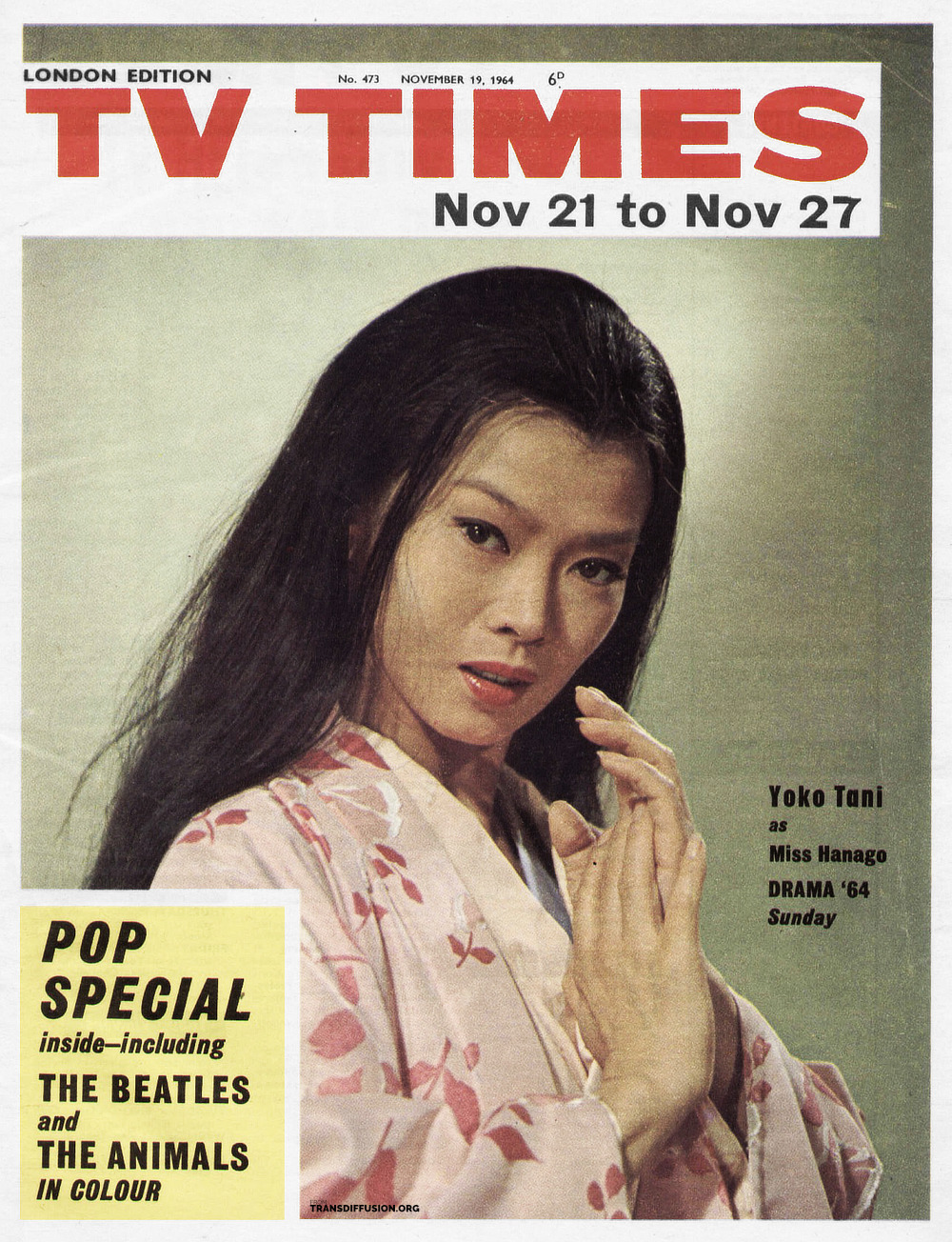
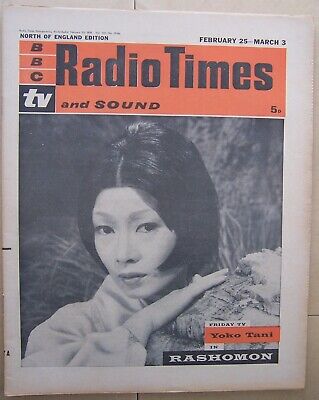
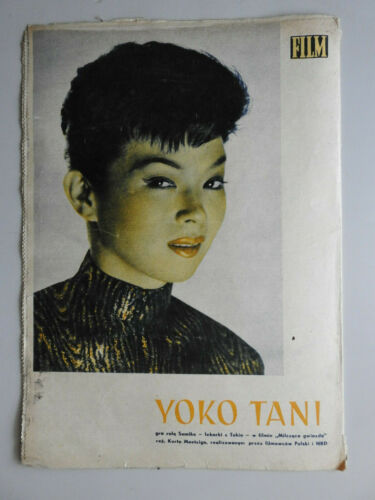
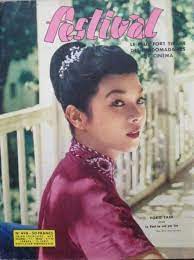
Diminutive, graceful, porcelain pretty Japanese actress Yoko Tani was born and raised in France and was making a living as a Parisienne dancer when opportunities for film came her way in the mid-1950s.
Appearing in a number of minor Eurasian parts in such French films as Women Without Shame (1954) [Nights of Shame], Ali Baba and the Forty Thieves (1954) [Ali Baba and the Forty Thieves], and Mannequins of Paris (1956) [Mannequins of Paris], she was also featured in a couple of Japanese productions before branching out internationally.
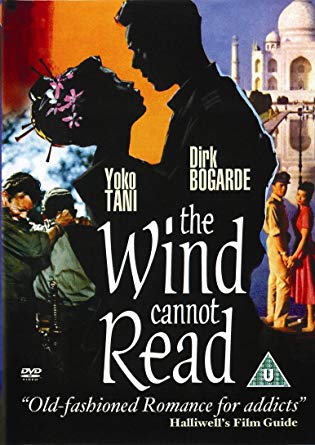
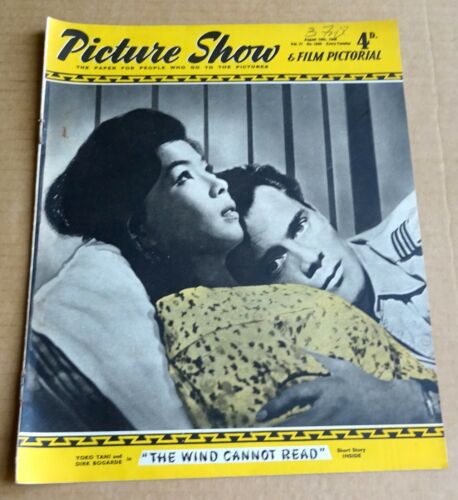
The cameras displayed a lovely, quiet beauty in the 1950s and she was absolutely beguiling opposite Dirk Bogarde in the “Sayonara”-like WW2 film The Wind Cannot Read(1958) with Bogarde portraying a British POW in a Japanese camp who flees in order to locate his ill wife [Ms. Tani] who initially was his language teacher.
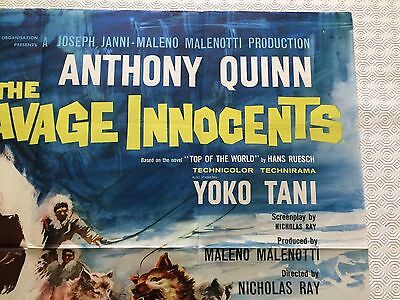
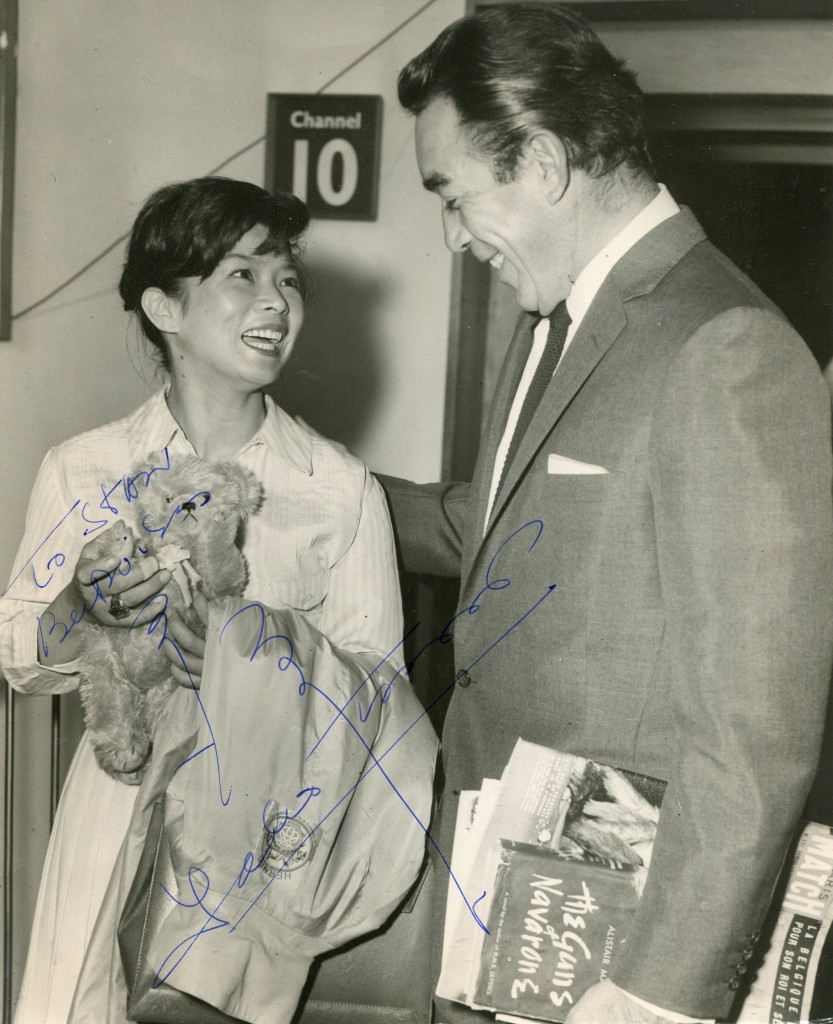
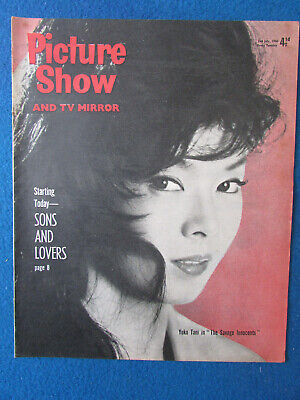
She also was quite appealing in another film that dealt with turbulent ethnic themes. The Italian/French/British co-production of The Savage Innocents (1960) co-starred Tani as the wife of Eskimo Anthony Quinn in a culture clash between Eskimos and Canadians that leads to murder. While fetching to the eye, the actress was rather modest in talent and was soon relegated to “B” and “C” level movies.
In the 1960s she became a customary player of meek princess-in-distress types in such costumed adventures as Marco Polo(1962), Maciste at the Court of the Great Khan (1961) [Maciste at the Court of the Great Khan] and Tartar Invasion (1961) [The Tartar Invasion], which co-starred her one-time husband, French actor Roland Lesaffre.
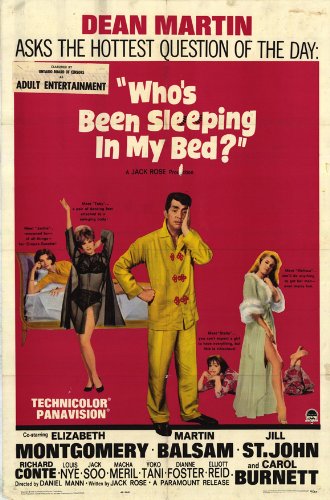
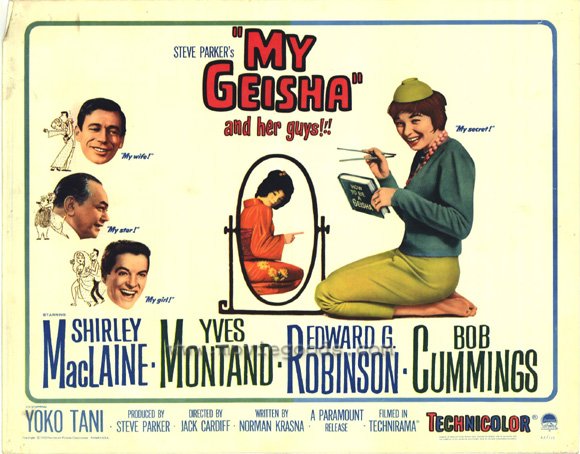
She was under-utilized in Hollywood as well in her few attempts. Minor supporting roles in My Geisha (1962) and Who’s Been Sleeping in My Bed? (1963) left her deep in the shadows of leading ladies Shirley MacLaine and Elizabeth Montgomery, respectively.
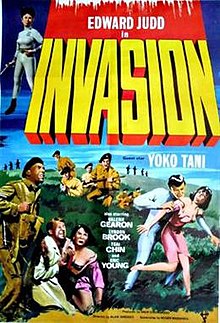
Left to playing a dribbling of femme leads in such lowgrade spy intrigue and sci-fi, she was little seen after the late 1960s. W
In later years she enjoyed painting and was devoted to her religion and her dog that she named “Toto”. Yoko Tani died in her native Paris of cancer at the age of 67.
– IMDb Mini Biography By: Gary Brumburgh / gr-home@pacbell.net
Career overview
Yōko Tani (谷洋子, 1928 – 1999) was a French‑born Japanese actress and dancer whose transnational career in the 1950s and 1960s made her one of the few East Asian performers to attain sustained visibility in European commercial cinema. Working across Japan, France, Britain, Italy, Germany, and occasionally Hollywood, she brought unusual cosmopolitanism and intelligence to roles that often reflected the industry’s simultaneous fascination with and stereotyping of “Oriental” femininity.
Early life and emergence in France
Tani was born Yōko Itani in Paris to Japanese parents employed at the Japanese embassy; her name means “ocean child,” marking her birth during her parents’ voyage to Europe ( ). Raised partly in Tokyo, she returned to France in 1950 on a Catholic scholarship to study aesthetics at the Sorbonne. University life bored her, but Paris’s nightlife did not: she left academia for cabaret performance, developing a nightclub act that mixed Japanese dance imagery with the heady sensuality of postwar Paris cabaret culture .
Her success in nightclubs led to discovery by filmmaker Marcel Carné, introductions to French studio circles, and early supporting roles as the archetypal “exotic” Asian in low‑budget French productions. Despite crude stereotyping, she immediately stood out for her self‑possession and rhythmic grace.
Breakthrough and international recognition (mid‑1950s–early 1960s)
Tani’s international breakthrough came when MGM cast her in Joseph L. Mankiewicz’s The Quiet American (1958), shot in Rome but set in Saigon. Her role as a francophone Vietnamese hostess was small but noticed, and she parlayed the exposure into more substantial parts.
- The Wind Cannot Read (1958) – starring opposite Dirk Bogarde in a Japan‑set wartime romance, Tani played a Japanese language teacher who falls in love with a British officer. Her performance, dignified and emotionally delicate, earned praise in Britain for sincerity and restraint, rare qualities in Western depictions of Asian women.
- The Savage Innocents (1960) – directed by Nicholas Ray, with Anthony Quinn, she portrayed an Inuit woman, proving her versatility but also Hollywood’s readiness to cast her ethnically “pan‑Asian.”
- Samson and the Seven Miracles of the World (1961) and First Spaceship on Venus (1960, East German/Polish production) showed her attraction to colorful international co‑productions where she often served as the sole Asian lead amongst multinational casts .
- My Geisha (1962) and Who’s Been Sleeping in My Bed (1963) gave her entry into Hollywood proper, although the former notoriously starred Shirley MacLaine in yellowface—ironically demonstrating both Tani’s credibility as a “real” Japanese performer and Hollywood’s reluctance to cast her in more substantial parts.
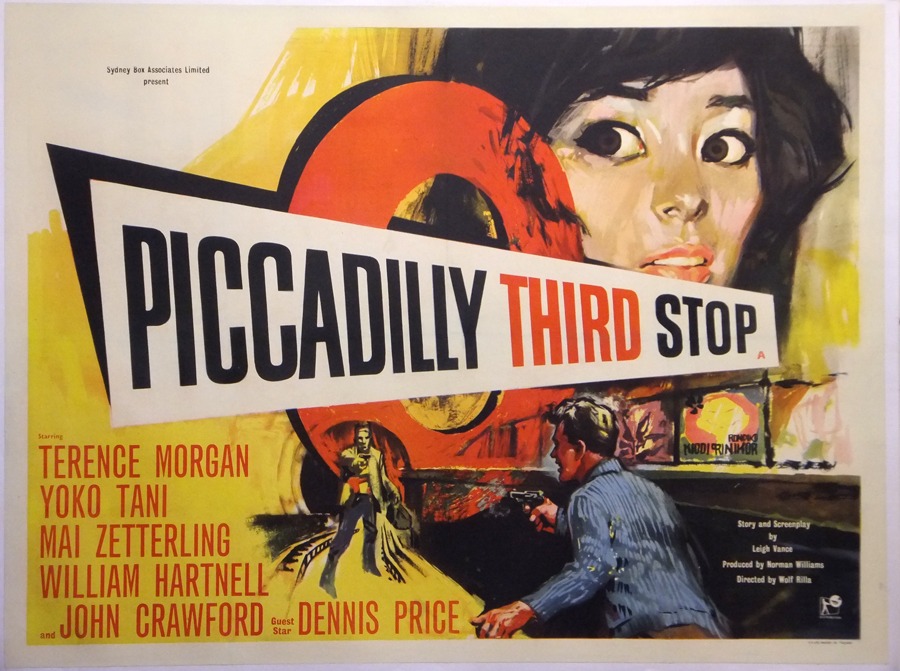
By the early 1960s she had become Europe’s most visible Japanese actress, dividing her time between British thrillers (Piccadilly Third Stop, 1960), Italian muscle epics, and French studio fare.
Later years and diversification
After 1963 her career emphasized European television and B‑movies. Typecasting limited her film choices, yet she managed to inject dignity and humor into ephemeral projects. She continued performing cabaret acts in Paris and London and cultivated a reputation as an elegant, cosmopolitan hostess within expatriate circles . She briefly married French actor Roland Lesaffre (1956–62) and later Roger Laforet, maintaining strong ties to both Japan and France until her death in Paris in 1999 .
Acting style and screen persona
- Physical and musical expressiveness: Tani’s early ballet and cabaret background shaped an acting style built on poise and gesture rather than speech; she often communicated inner life through stillness and eye movement.
- Ambiguous exoticism: Western scripts alternately fetishized and domesticated her image. She negotiated that ambivalence with subtle irony, suggesting emotional depth beyond the stereotypes surrounding her characters.
- Languid intelligence: While many roles typecast her as ornamental, critics occasionally noted her “melancholy poise”—a quality lending realism to films otherwise mired in fantasy or colonial cliché.
- Linguistic versatility: Fluent in Japanese, French, and English, she comfortably crossed linguistic markets, an uncommon feat among Asian actors of her era.
Critical assessment
Strengths: graceful presence, professionalism, and ability to convey dignity within limiting material. Limitations: systemic; European and American studios reduced her to “exotic” types, denying her sustained leading‑lady development. Her best work came when allowed emotional nuance (The Wind Cannot Read) or philosophical melancholy (The Savage Innocents).
Her career mirrors the contradictions of post‑war Western fascination with Asia: she was celebrated precisely for being “different,” yet confined to that difference. Historians now recognize her as a precursor to later transnational Asian performers—proof that cross‑cultural stardom was possible, if precarious.
Legacy
Yōko Tani’s long, nomadic résumé—spanning French art cinema, British war dramas, Eastern‑bloc science fiction, Italian adventure, and Hollywood spectacle—makes her a fascinating emblem of mid‑century globalization in film. She brought cosmopolitan intelligence to work that often asked merely for décor, and in doing so she quietly subverted the stereotypes she was hired to embody. Re‑evaluated today, she stands as an early example of a genuinely international Asian star: worldly, self‑conscious, and, despite the industry’s limitations, unmistakably herself