

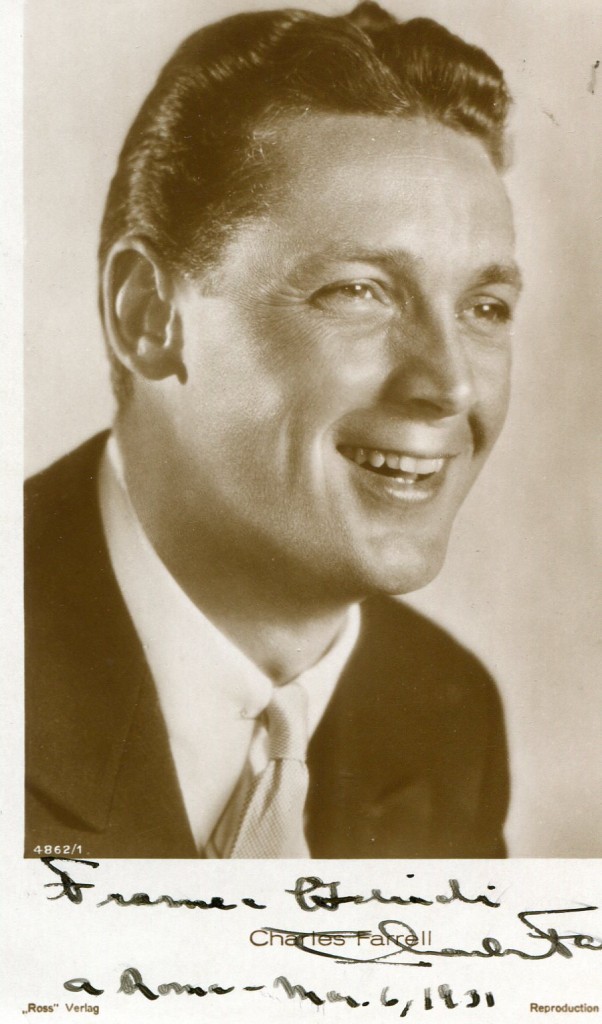
Charles Farrell was born in 1901 in Walpole, Massachusetts. He is best knpwn to-day for a series of films he made with Janet Gaynor. He was long married to actress Virginia Valli. After retiring from films in the 1950’s be became involved in community projects in Palm Springs. He died in 1990.
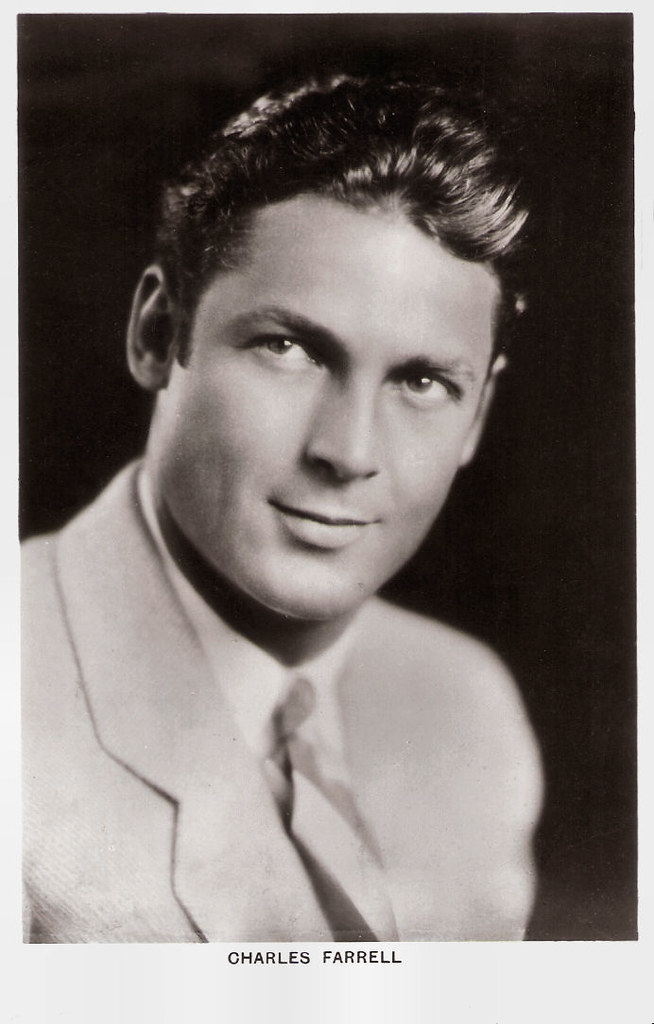
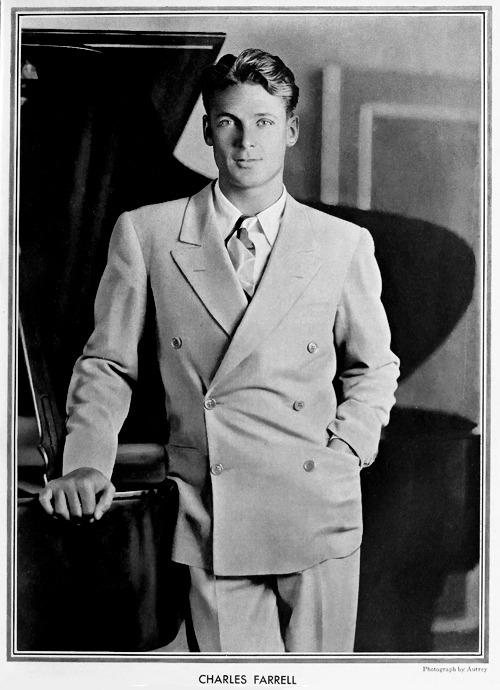
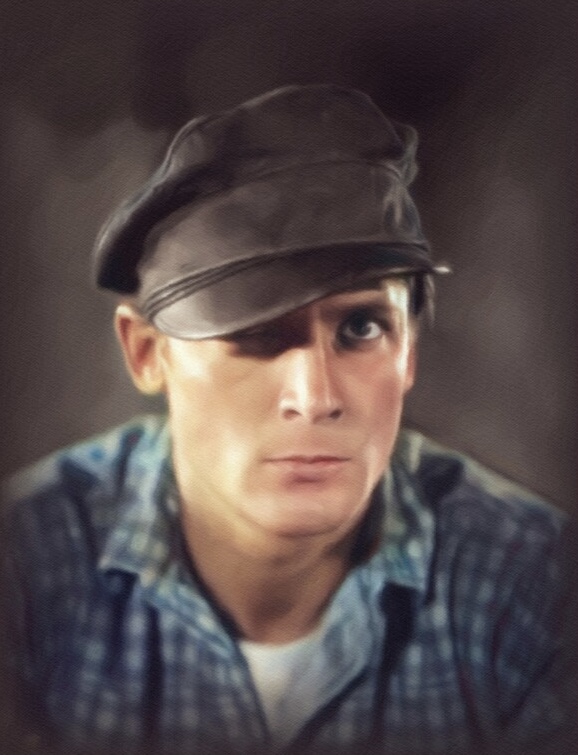
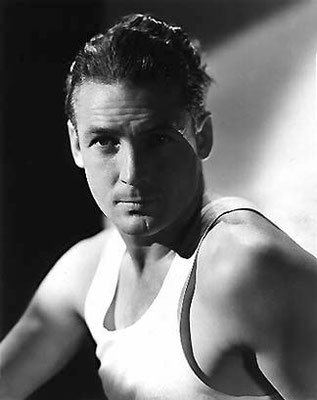
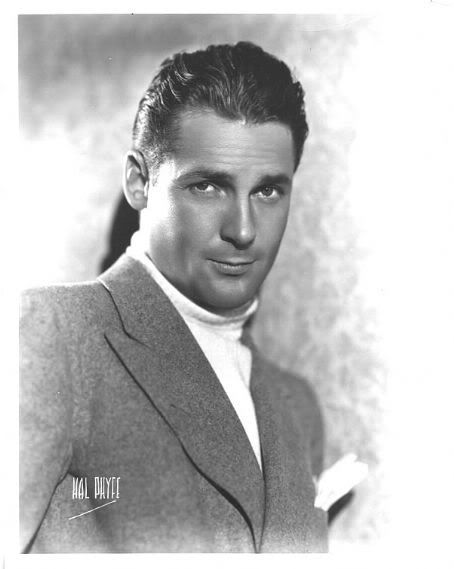
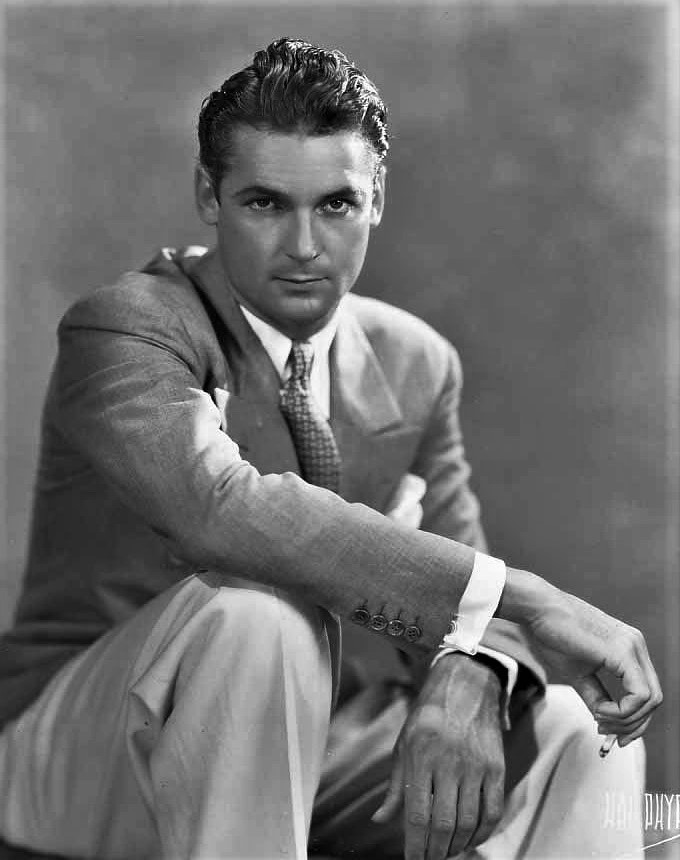
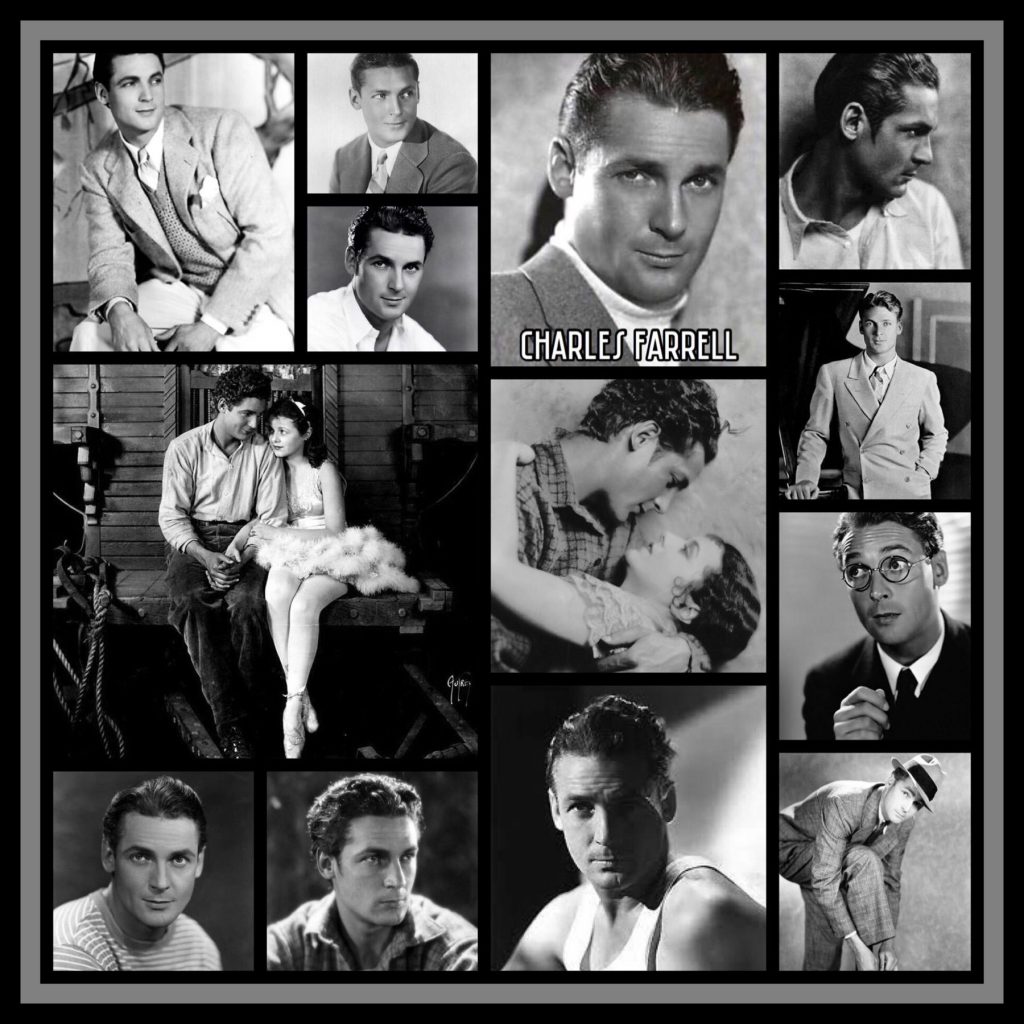
New York Times obituary in 1990:
Charles Farrell, the gentle-mannered actor whose career spanned four decades, ranging from silent films to talkies to the 1950’s television series ”My Little Margie,” died on Sunday at his home in Palm Springs, Calif. He was 88 years old.
Mr. Farrell was so durable as a performer that Bob Hope is said to have referred to him once as a ”19th-century Fox star.”
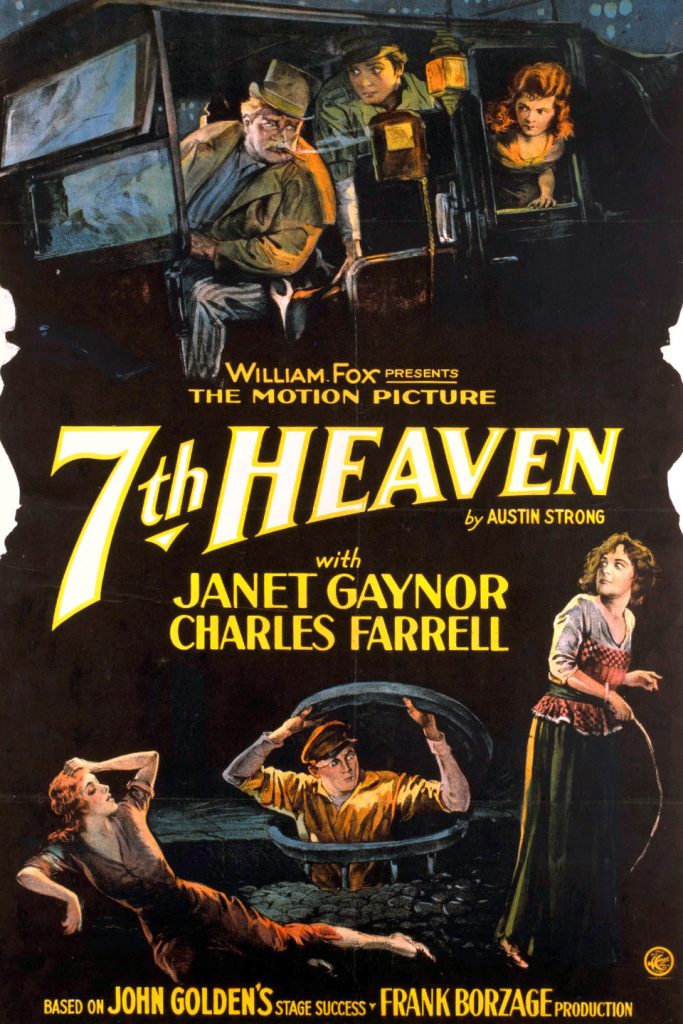
An athletic six-footer, he gained fame as the romantic lead in ”Seventh Heaven” (1927). The Times critic Mordaunt Hall said that he was ”splendid” in that role, playing opposite Janet Gaynor.
”Sometimes he may seem to be a little too swaggering, but what of it?” Mr. Hall observed. ”The actions suit the young man’s agreeable bombast. You find that you like him.”
The Seventh Heaven in the silent film was the walk-up Parisian garret where Mr. Farrell, playing an impecunious laborer, made his home.
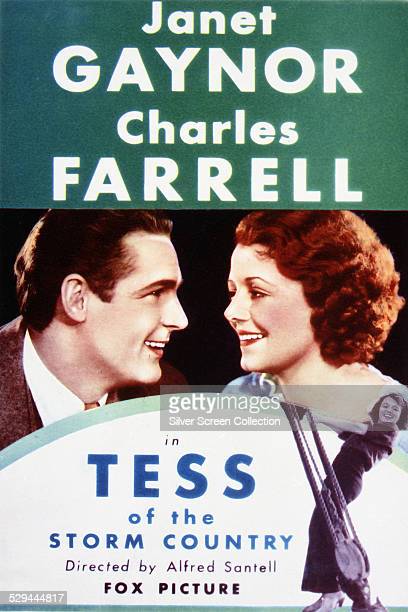
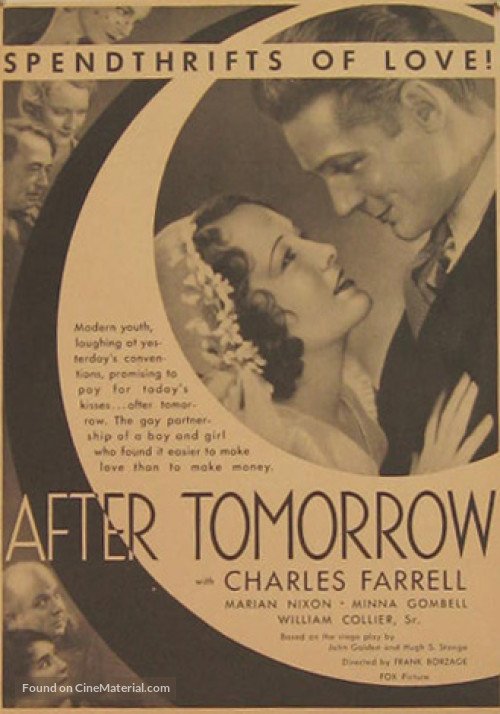
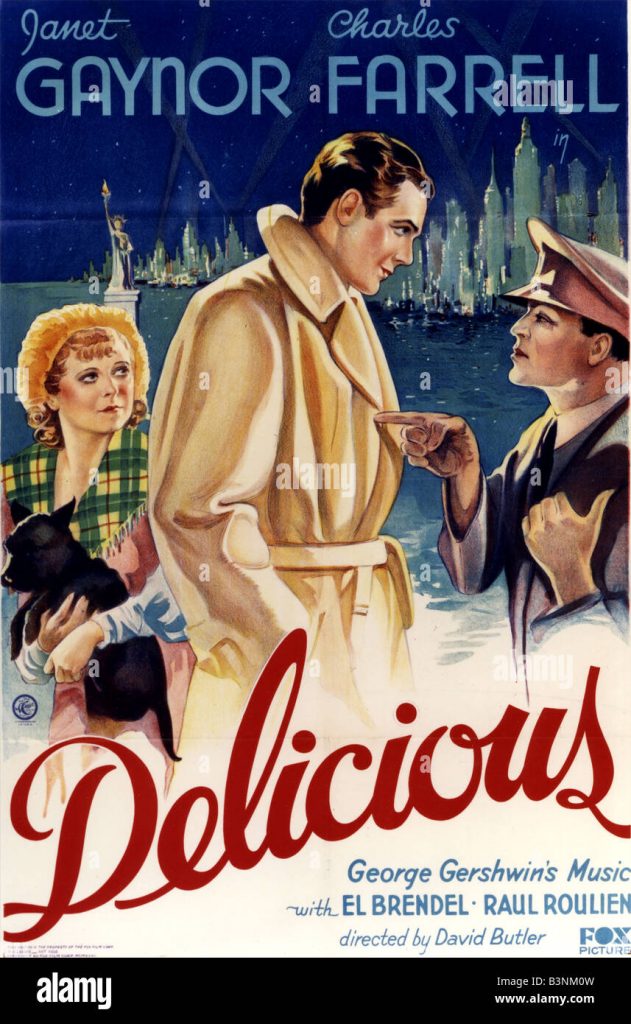
Mr. Farrell and Miss Gaynor then co-starred in a series of other film romances. For seven years they were movieland’s leading on-screen romantic couple. Then his movie career waned.
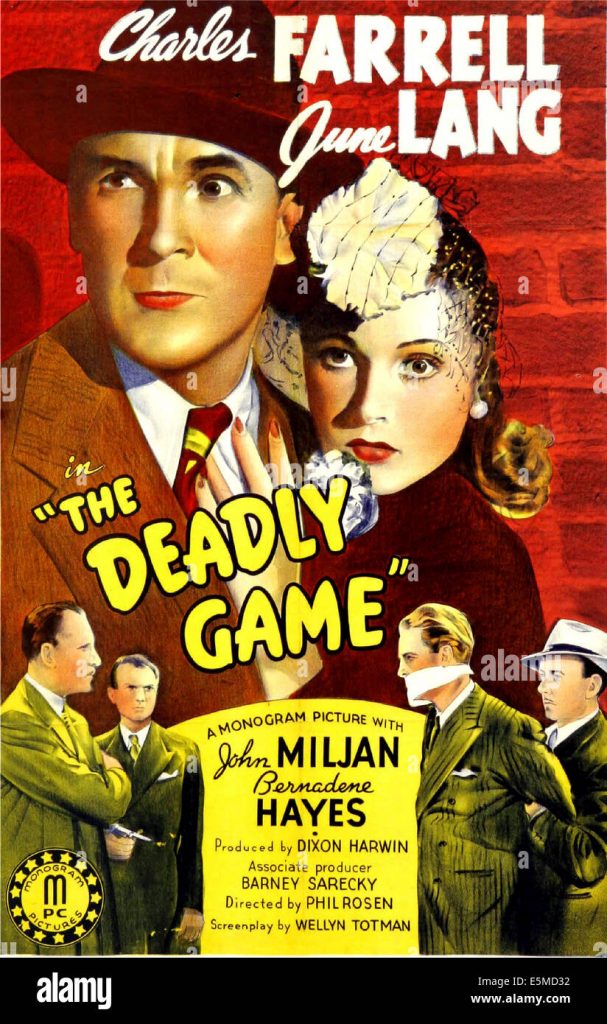
His film work included serious as well as romantic roles in such films as ”Wings of Youth” (1925), ”Sandy” (1926), ”The Rough Riders” (1927), ”Aggie Appleby” (1933), ”Fighting Youth” (1935) and ”The Deadly Game” (1942). He retired from films in the 1940’s.
In television he turned to comedy, starring as a widowed father in more than 100 installments of ”My Little Margie,” which was widely popular.
Began as Extra
Charles Farrell was born Aug. 9, 1901 in Onset Bay, Mass., and attended Boston University. He played some stage roles and broke into films as an extra in ”The Cheat” (1923). He then had various supporting parts before ”Seventh Heaven,” which opened in New York at the old Sam H. Harris Theater and remained his best-known movie.
Recalling his movie work in a 1954 interview Mr. Farrell, still handsome and wavy-haired, said: ”They wouldn’t accept my voice. They said I didn’t have diction. When the talkies came in, a lot of stage people came to Hollywood from New York and I knew that I didn’t talk like them, but my voice was me and that’s all there was to it.”
”One fellow kept needling me about improving my diction until I finally sat on him – but good,” he added. ”My life was made miserable. There were other complicating factors, and I decided to move on.”
Resort Hotel Manager
He served in the Navy in World War II and prospered in a new career as a manager and host of the Racquet Club, a private resort hotel in Palm Springs, where he lived with his wife, the former silent film star Virginia Valli, whom he married in 1932; she died in 1968.
Mr. Farrell served as mayor of Palm Springs for several years in the 1940’s and 50’s. He sold the Racquet Club in 1959.
His television career, mainly in the 1950’s, included the starring role in the ”The Charlie Farrell Show” in addition to ”My Little Margie,” in which he played the father of a prankish unmarried daughter, portrayed by Gale Storm.
”I took the part because I’m a ham,” Mr. Farrell said in the 1954 interview. ”The work is not exactly the same as making pictures, but it’s pretty close

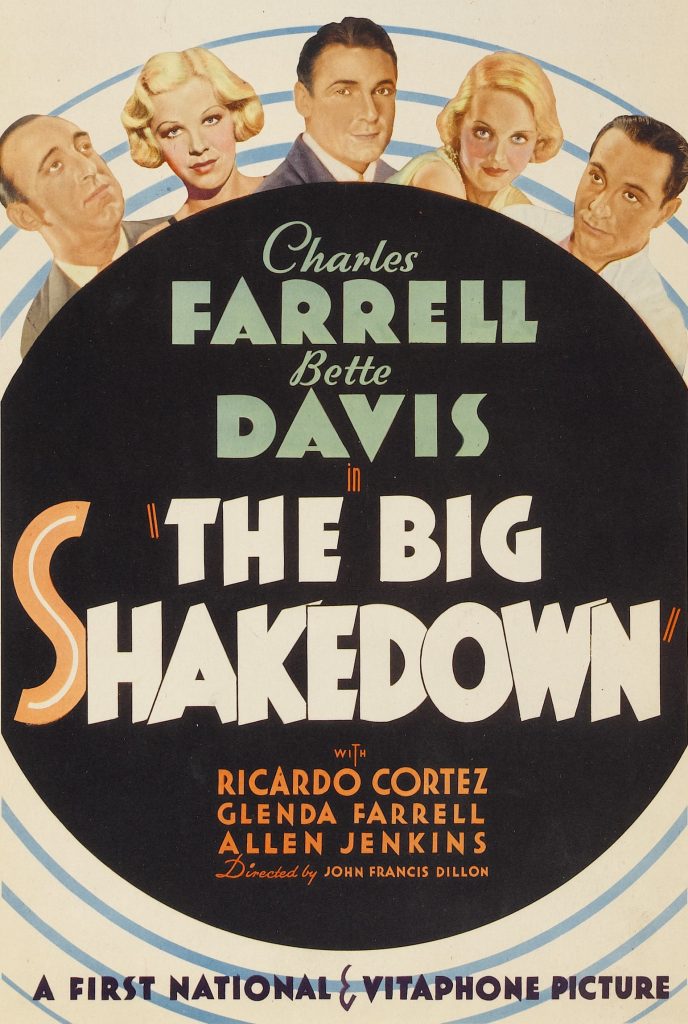
Career Overview: The Gentle Giant of the Screen
Charles Farrell (1901–1990) occupies a unique space in Hollywood history as one half of the most beloved screen duo of the silent era. Standing at a rugged 6’2″, he provided a protective, masculine contrast to the ethereal Janet Gaynor. His career is a fascinating bridge between the heightened romanticism of the 1920sand the domesticated sitcom comfort of the 1950s.
1. The Borzage Masterpieces (1927–1929)
Farrell’s legacy is inextricably linked to director Frank Borzage. Together with Janet Gaynor, they formed “The Lucky Stars,” creating a trilogy of films that are considered the pinnacle of silent romanticism.
-
7th Heaven (1927): As Chico, the Parisian sewer cleaner.
-
Critical Analysis: Farrell introduced a “transcendental masculinity.” While his character was a manual laborer, Farrell played him with a shimmering, spiritual vulnerability.
-
Technique: He mastered the “aspiration gaze.” Borzage often lit Farrell from above, and Farrell used his height to create a protective “arch” over Gaynor, a visual shorthand for a love that could survive even the trenches of WWI.
-
-
Street Angel (1928) & Lucky Star (1929):
-
Detailed Analysis: In Lucky Star, Farrell plays a soldier who returns from war paralyzed. This is perhaps his most technically challenging silent role.
-
The “Stationary Presence”: Stripped of his athletic movement, Farrell relied on facial micro-gestures and a “heavy-limbed” stillness to convey a devastating mix of pride and longing. Critics lauded his ability to remain a “leading man” while portraying physical helplessness with deep dignity.
-
2. The Sound Transition and “The Lucky Stars” (1929–1934)
Unlike many silent idols whose careers ended with the arrival of “Talkies,” Farrell’s voice was an asset.
-
Technique: The Conversational Baritone
-
Farrell possessed a sturdy, unpretentious baritone that matched his physical frame. He avoided the theatrical affectations of many stage-trained actors, opting for a naturalistic, modern deliverythat resonated with audiences seeking “realism” in the early 1930s.
-
-
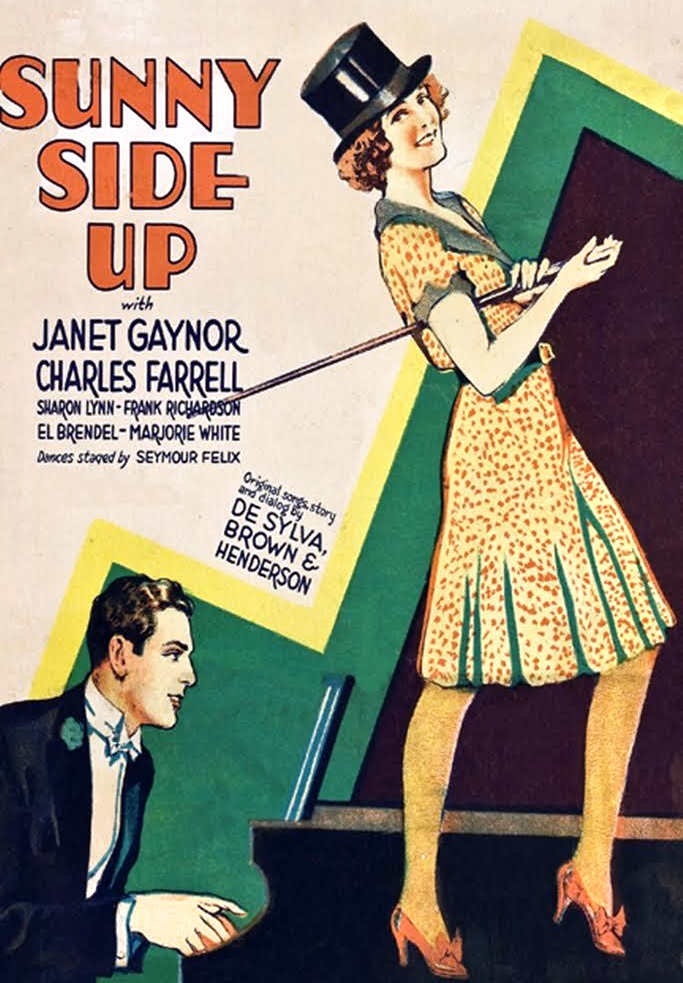
Sunny Side Up (1929):
-
This film proved he could sing and handle dialogue. It shifted the “Gaynor-Farrell” dynamic from high tragedy to breezy musical charm, showcasing Farrell’s versatility as a light comedian.
-
3. The Second Act: My Little Margie (1952–1955)
After a decade-long hiatus where he became a prominent businessman (founding the Palm Springs Racquet Club), Farrell returned to achieve massive fame on television.
-
The Role: Vern Albright, the wealthy, long-suffering father.
-
Critical Analysis: The “Rhythmic Exasperation”
-
Farrell successfully reinvented himself as the definitive “Father Figure.” He replaced his youthful romanticism with a dry, comedic deadpan.
-
Technique: He mastered the “dignified double-take.” He used his physical stature to anchor the show’s screwball energy, playing the “straight man” to Gale Storm’s antics with a weary, melodic authority that bridged the gap between the silent era and the “Baby Boomer” sitcom.
-
Detailed Critical Analysis: Style and Technique
The “Un-Theatrical” Naturalism
Critically, Farrell is studied for his lack of artifice. In an era where many actors “indicated” emotion with grand gestures, Farrell was an early practitioner of internalized emotion. He understood that his large frame and expressive eyes did the work for him, allowing him to play “smaller” and more effectively for the camera.
The Protective Physicality
Farrell’s acting was inherently spatial. He understood how to use his 6’2″ height to frame his co-stars. This “Physical Enveloping”—where he would lean in toward a co-star—became a hallmark of his romantic style, suggesting a man who was both a warrior and a sanctuary.
The Sovereign of Sincerity
His greatest “technical” skill was his unshakeable sincerity. Critics often noted that Farrell never seemed to be “performing” goodness; he inhabited it. This made him the perfect avatar for the pre-Depression American ideal: a man of honest labor, deep devotion, and quiet strength.
Key Milestones
| Work | Year | Role | Significance |
| 7th Heaven | 1927 | Chico | Established him as a global romantic icon. |
| Street Angel | 1928 | Gino | A masterpiece of “Silent Romanticism.” |
| Lucky Star | 1929 | Timothy Osborn | His most profound dramatic performance. |
| Sunny Side Up | 1929 | Jack Cromwell | Successfully launched his career into the Sound era. |
| My Little Margie | 1952 | Vern Albright | Redefined him as a beloved TV father for a new generation. |