

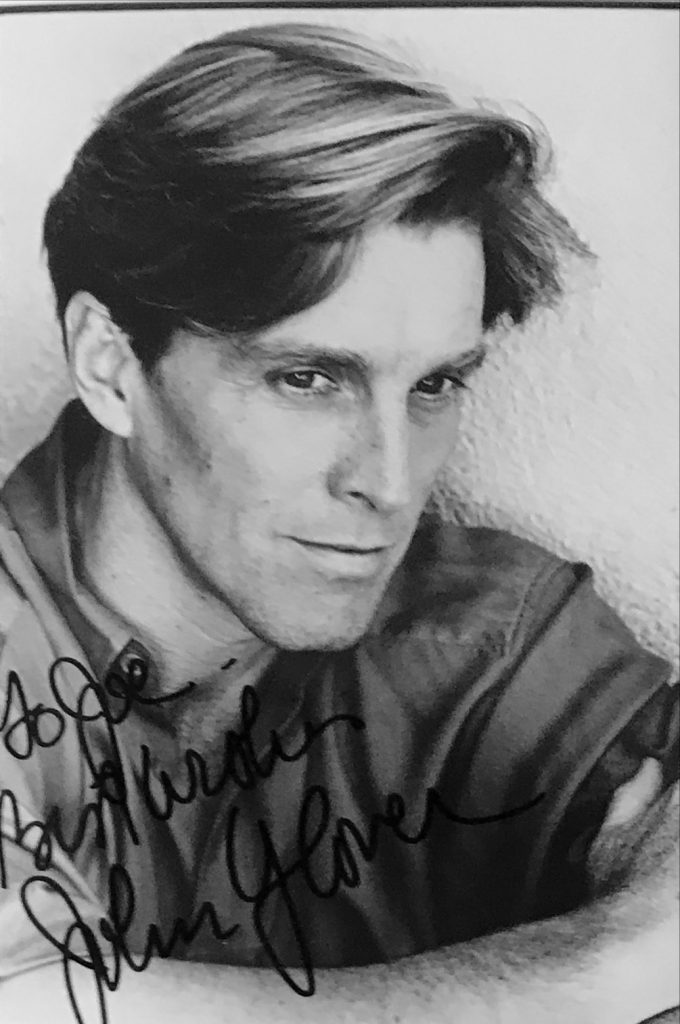
John Glover

John Glover
 

John Glover was born in 1944 in Kingston, New York.   His films include “White Nights” in 1987, “52-Pick-Up” and “Payback”.   He starred with Aidan Quinn, Ben Gazzara and Gena Rowlands in “An Early Frost”.

TCM Overview:

A prolific character actor of stage, screen and TV, John Glover exhibited a knack for playing all manner of smarmy villains; notably a drunken lout in “Julia” (1977), a sleazy pornographer in “52 Pick-Up” (1986), Lee Remick’s ingratiating sidekick in “Nutcracker: Money, Madness and Murder” (CBS, 1987) and a campy, manipulative heavy in the TV remake of “What Ever Happened to Baby Jane?” (ABC, 1991). Glover also made an indelible impression in “Annie Hall” (1977), as the actor boyfriend of Diane Keaton who wants her to touch his heart–with her foot!–and as the young man dying of AIDS in “An Early Frost” (NBC, 1985), for which he earned an Emmy nomination.

The Maryland native made his stage debut as Eugene Gant in a 1963 production of “Look Homeward, Angel” at the Barter Theatre in Abingdon, Virginia. He toyed with the idea of becoming an English professor, but decided, instead, to give New York theatre a try and migrated to Manhattan in 1967. Roles in regional theater followed before he made his Off-Broadway debut in “A Scent of Flowers” (1969). Glover won a Drama Desk Award for his work in “The Great God Brown” (1972) and that same year, he made his Broadway debut in “The Selling of the President”. Since then, he has performed on stage in between a busy TV and film career, appearing both in New York and Los Angeles as well as frequently at the Long Wharf Theatre and Yale Rep. In 1994, Glover originated the dual role of John and James Jeckyll, gay twin brothers, one with AIDS, in Terrence McNally’s “Love! Valour! Compassion!”, a role that earned him a Tony Award (and which he recreated in the 1997 film version) Glover was back on the New York stage in the spring of 1996 playing a religious hypocrite in “Tartuff: Born Again” at the Circle in the Square Theatre, an adaptation of the Moliere comedy.

His film career began in 1973 with a small role in “Shamus”. Glover received a lot of attention for his one scene in “Julia”, in which Jane Fonda pushes a table over on top of him after he suggests that she and the title character are lesbian lovers. Since then, Glover has most frequently been cast as cold sons-of-bitches, such as in “52 Pick-Up” (1986). Other similar roles followed: the sly CIA agent in “White Knights” (1985); an opportunistic TV executive in “Scrooged” (1988); a murderous stepfather in “Masquerade” (1988); and an intelligent manipulator in “The Chocolate War” (1989). Even in a comedic turn in “Gremlins 2: The New Batch” (1990), he was a sleazy, greedy real estate baron. Glover was also a hired killer in “Night of the Hit Man” (1994).

TV roles have not offered sweet guys, either. Glover made his TV-movie debut in “The Face of Rage” (ABC, 1983). He displayed his versatility as a man dying of AIDS who befriends Aidan Quinn in “An Early Frost”. While the role was sympathetic, the character also had a vicious, cutting wit. Even as General Charles Lee in the 1984 ABC miniseries “George Washington”, Glover could not be trusted to follow orders. He starred with Corbin Bernsen in “Breaking Point” (TNT, 1989), playing a genius–but a Nazi genius. In perhaps his most psychotic role to date, Glover was Charles Rothenberg, the man who burns his own son practically to death rather than let his mother have him in “David” (ABC, 1988). For Showtime, Glover was a military prosecutor who sets out to prove that an African American West Point cadet tried to harm himself and was not attacked by racist whites in “Assault at West Point” (1994). In 1996, he made a guest appearance on “Remember WENN”, the first sitcom from American Movie Classics. Glover also cut a marvelously sinister presence as the devil in the short-lived Fox drama “Brimstone” (1998-99).
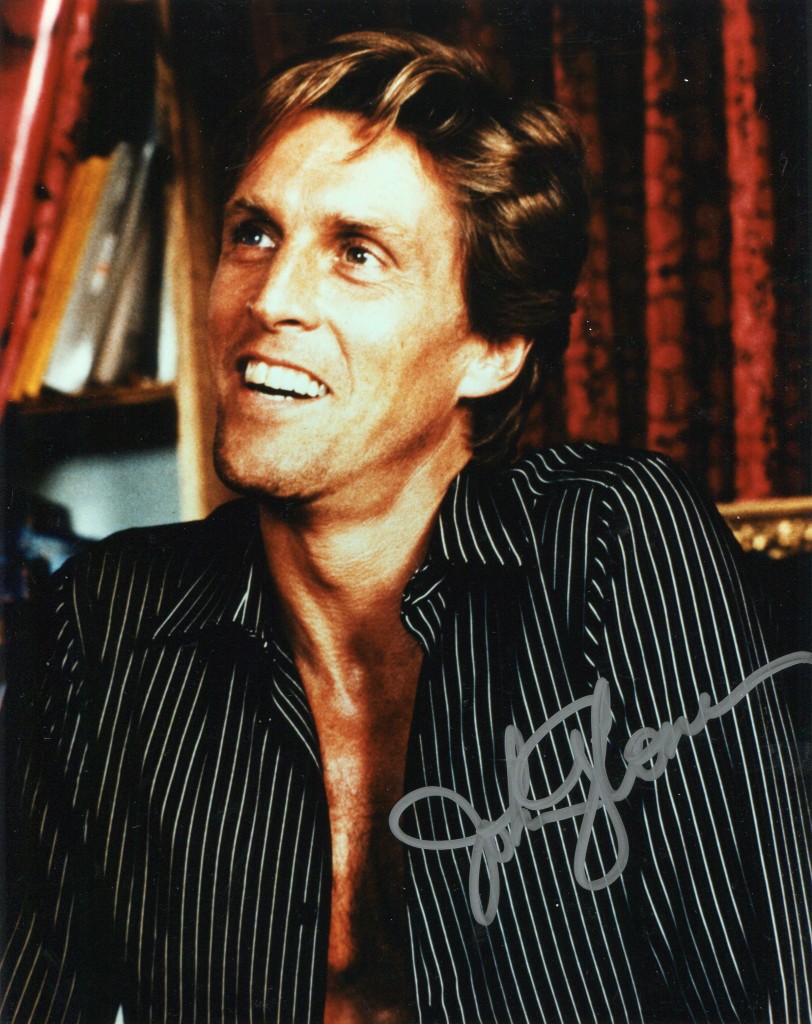
 The above TCM overview can also be accessed online here.
John Glover
John Glover

John Glover (born 1944) is the quintessential “Actor’s Actor”—a performer of high-wire intensity, technical precision, and a unique ability to find the humanity in the grotesque. While many character actors find a “niche,” Glover has spent five decades effortlessly gliding between the avant-garde stage, big-budget blockbusters, and iconic television roles.

He is defined by a specific mercurial energy; he can shift from a whisper to a manic shriek in a single breath, making him one of the most unpredictable and watchable actors of his generation.


Career Overview: From the Boards to the Billionaires

1. The Stage Foundation (1960s–1970s)

Glover began his career in the theatre, a discipline that remains his artistic home. He became a staple of the New York stage, eventually winning a Tony Award for his dual role in Love! Valour! Compassion! (1995). His stage work is characterized by a “physical bravery”—a willingness to use his tall, lean frame to express profound vulnerability or sharp-edged malice.

2. The Villainous “Yuppie” (1980s)

In the 1980s, Glover became the face of the “unscrupulous executive.” He delivered a chillingly realistic performance in 52 Pick-Up (1986) and a brilliantly comedic turn as the eccentric Daniel Clamp in Gremlins 2: The New Batch (1990). He represented the “excess” of the decade with a manic, intellectual twist.

3. The Definitive “Bad Father”: Smallville (2001–2011)

Glover reached a new level of cultural fame as Lionel Luthor. Over ten seasons, he transformed a secondary villain into a Shakespearian figure of tragic proportions. His portrayal of Lex Luthor’s father redefined the “Super-Villain” archetype for the 21st century.

4. The Voice and the Genre Icon

Glover’s distinctive, raspy voice made him the definitive Riddler in Batman: The Animated Series. He has continued to be a favorite in the superhero and horror genres, recently appearing as the villainous Dr. Sivana’s father in Shazam! (2019).


Detailed Critical Analysis: The “Elegant Manic”

1. The Mastery of the “Double-Edge”

Glover’s greatest strength is his ability to play simultaneous contradictions.

  • Analysis: In Love! Valour! Compassion!, he played twin brothers—one dying of AIDS, the other a bitter, healthy cynic. Critics hailed his ability to differentiate the two not through prosthetics, but through micro-gestures and vocal placement. He can be terrifying and hilarious in the same scene, a technique he used to ground the absurdity of Gremlins 2. He doesn’t play “evil”; he plays “obsession,” which is far more frightening.

2. The “Lionel Luthor” Evolution

In Smallville, Glover faced the challenge of playing a character who was originally meant to be a one-note antagonist.

  • Critical Insight: Glover utilized a “Machiavellian Stillness.” He moved away from the “yelling villain” trope, choosing instead to use precise, aristocratic movements. Critics noted that Glover made Lionel’s eventual “redemption” arc believable because he had always played the character with a hidden layer of profound loneliness. He turned a comic book show into a study of paternal toxicity.

3. The “Physicality of Neurosis”

Glover uses his body as a calibrated instrument.

  • Technical Analysis: In his role as the Riddler or in films like In the Mouth of Madness, Glover employs asymmetrical movement. He often tilts his head or gestures in a way that suggests a mind that is “off-kilter.” This physical choice creates an immediate sense of unease in the audience. He is a master of the “theatrical flourish”—using a prop (like Lionel’s cane or Daniel Clamp’s blueprints) to define the character’s entire world-view.

4. Vulnerability in the Grotesque

Glover is one of the few actors who can play a “monster” and make the audience weep for them.

  • Critical View: In his guest appearances (such as The Good Wife or Evil), he often plays characters with physical or mental ailments. He avoids the “clichés of disability,” focusing instead on the dignity of the sufferer. Critics have often pointed out that Glover’s eyes are his most expressive feature; they often project a weary kindness that contrasts with the “sharpness” of his dialogue.


Key Credits & Critical Milestones

Year Title Role Significance
1986 52 Pick-Up Alan Raimy A landmark performance in “Sleazy Noir.”
1990 Gremlins 2 Daniel Clamp A brilliant satire of 80s corporate ego.
1992–94 Batman: TAS The Riddler (Voice) Defined the intellectual “Edward Nygma” for a generation.
1995 Love! Valour!… John/James Jeckyll Won the Tony Award for Best Featured Actor.
2001–11 Smallville Lionel Luthor His most famous and influential television role.

John Glover brings a high-art sensibility to every project, whether it’s a Broadway play or a superhero procedural. His legacy is one of uncompromising boldness; he is an actor who is never afraid to be “too much,” because he has the technical skill to make “too much” feel exactly right. He remains a reminder that the most interesting characters are often found in the shadows, and that even the coldest villain has a heart that beats with a recognizable rhythm

Leave a Reply

Your email address will not be published. Required fields are marked *