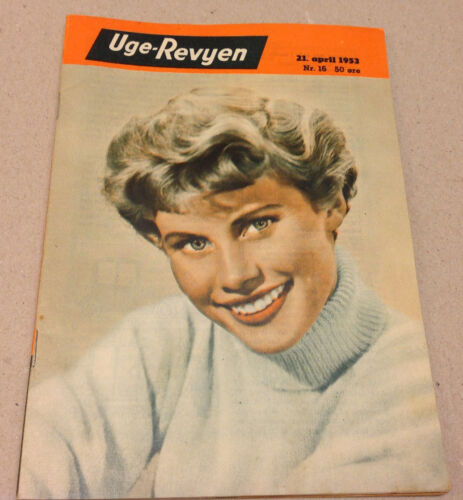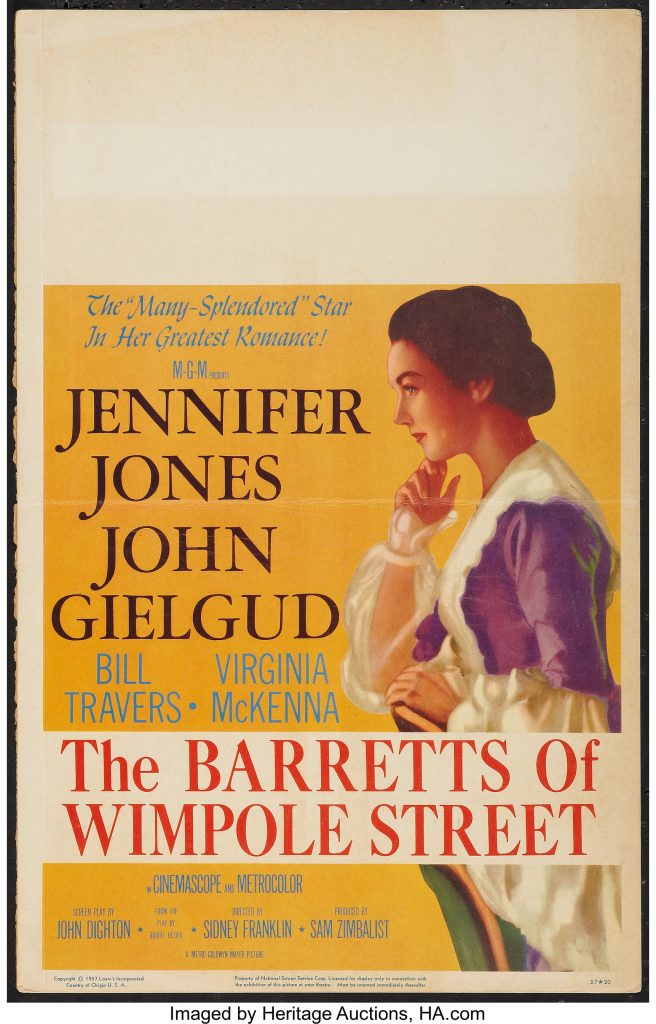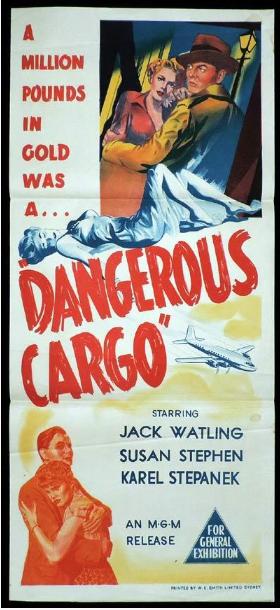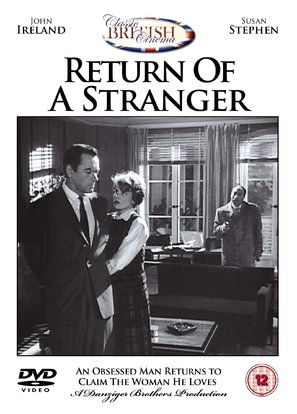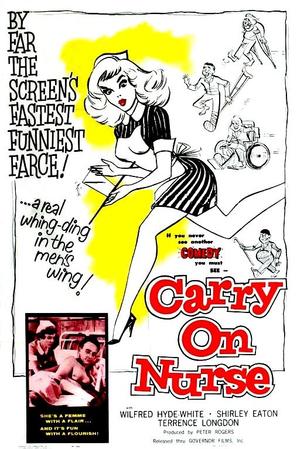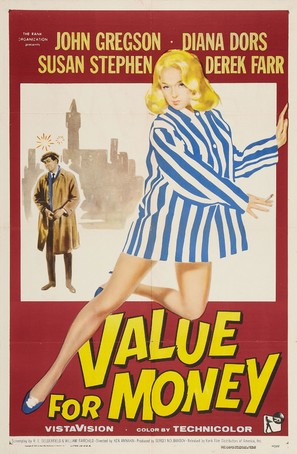

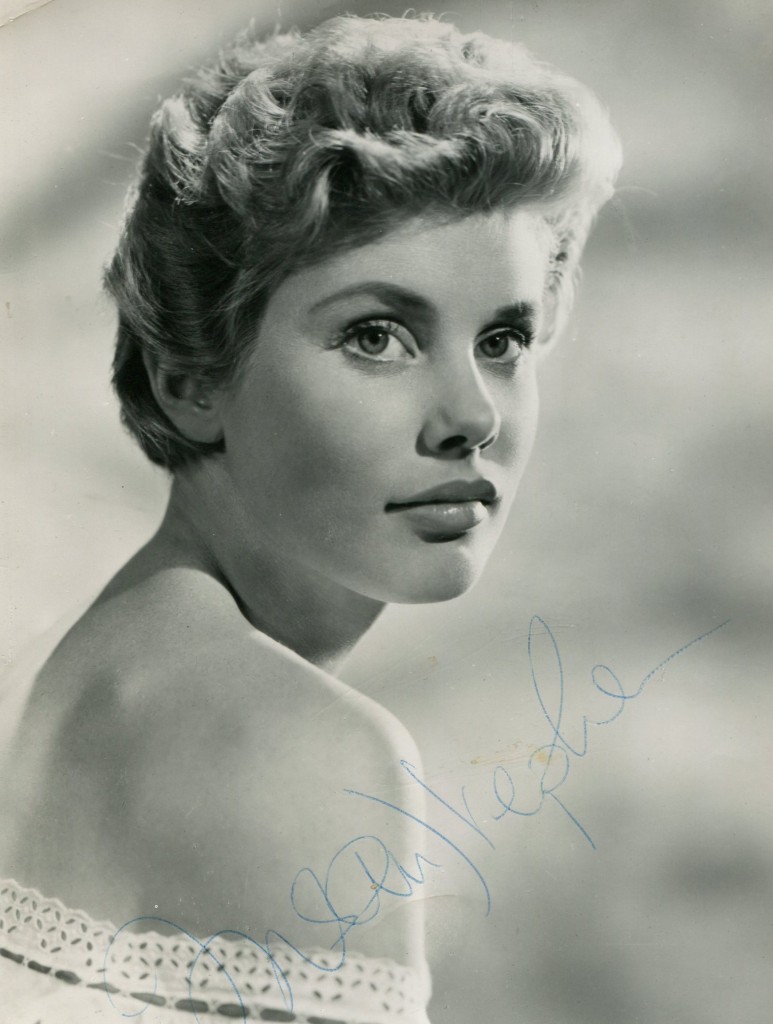
Susan Stephen was born in 1931 in London. Her film debut was in 1952 in “His Excellency”. She starred with Diana Dors in “Value for Money” in 1955, “The Barretts of Wimpole Street” with Jennifer Jones and “Carry on Nurse” with Shirley Eaton in 1959. She was at one time married to the film director Nicholas Roeg. She died in 2000.
Her “Independent” obituary:
A WIDE-EYED beauty with a demure yet lively personality, Susan Stephen was a star of British cinema in the Fifties, appearing as leading lady to such stars as Alan Ladd and Dirk Bogarde. Though her career diminished towards the end of the decade, she provided a welcome dash of sparkle and vivacity to the films in which she appeared.
Born in London in 1931, she was the daughter of the civil engineer Major Frederick Stephen, MC, who built railroads in South America and bridges across the Blue Nile – he was given the Order of the Nile by King Farouk. Susan’s mother died when she was very young, and she was raised by her father (plus nannies and housekeepers). She spent much of her childhood in Egypt, where her father was working, and on their estate in Scotland, but returned to England to study at Moira House in Eastbourne.
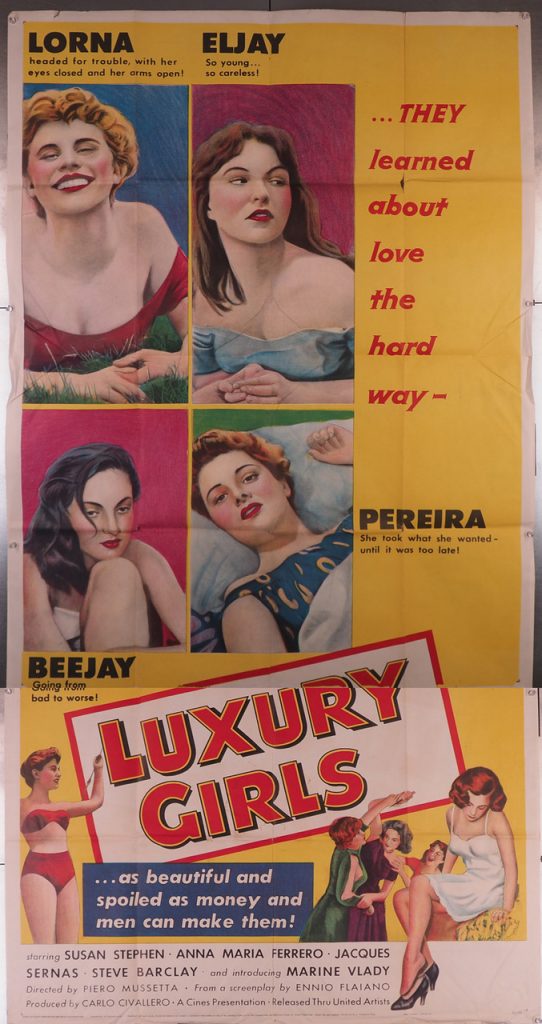
She then trained at Rada in London, and when appearing in a graduate class show was discovered by Cecil Madden, then controller of BBC television. He cast her in a television adaptation of Little Women in 1950 (the Laurie was David Jacobs) and other television shows, which led to her being signed in 1951 to make a movie in Italy, Fanciulle di lusso (Luxury Girls), the story of four girls from different countries at a finishing school – Marina Vlady was the French girl. Also in the cast was the handsome actor Lawrence Ward, who became Stephen’s first husband. Later, he was successful (as Michael Ward) in a second career as a photographer for the Sunday Times.
Her first British film was His Excellency (1951), an adaptation of a West End hit starring Eric Portman as a former union leader who is appointed governor of a British island colony. Stephen played Portman’s daughter, and though the film was not very successful, she attracted favourable comment.
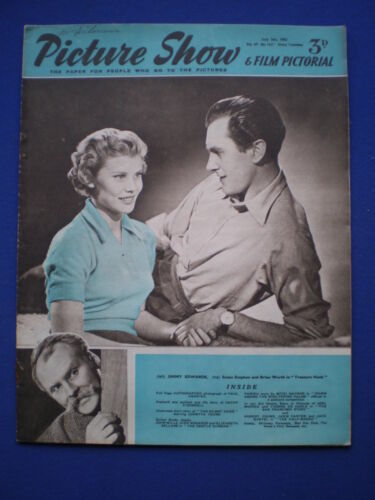
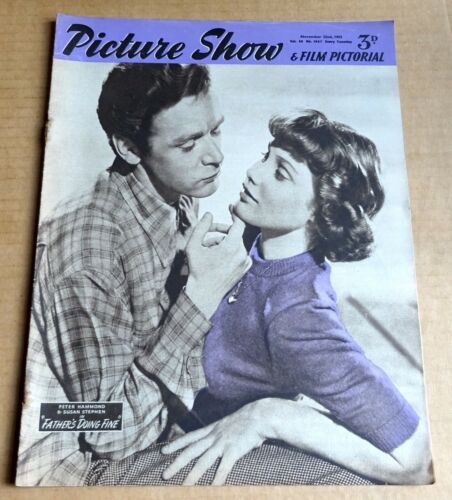
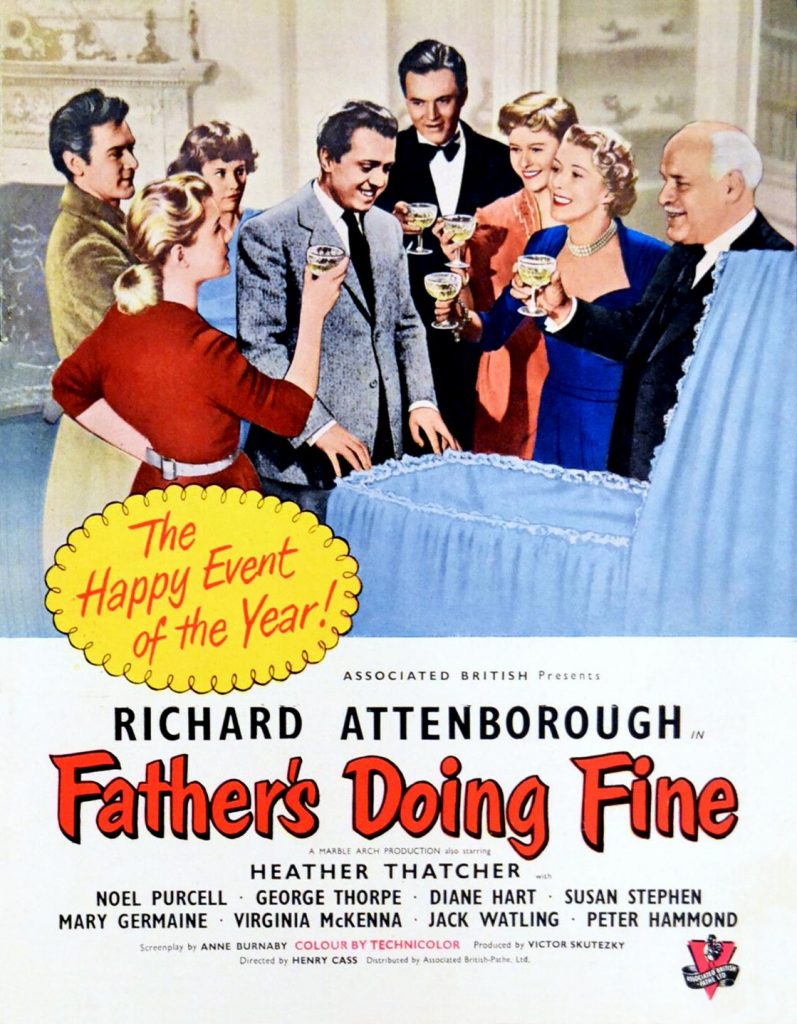
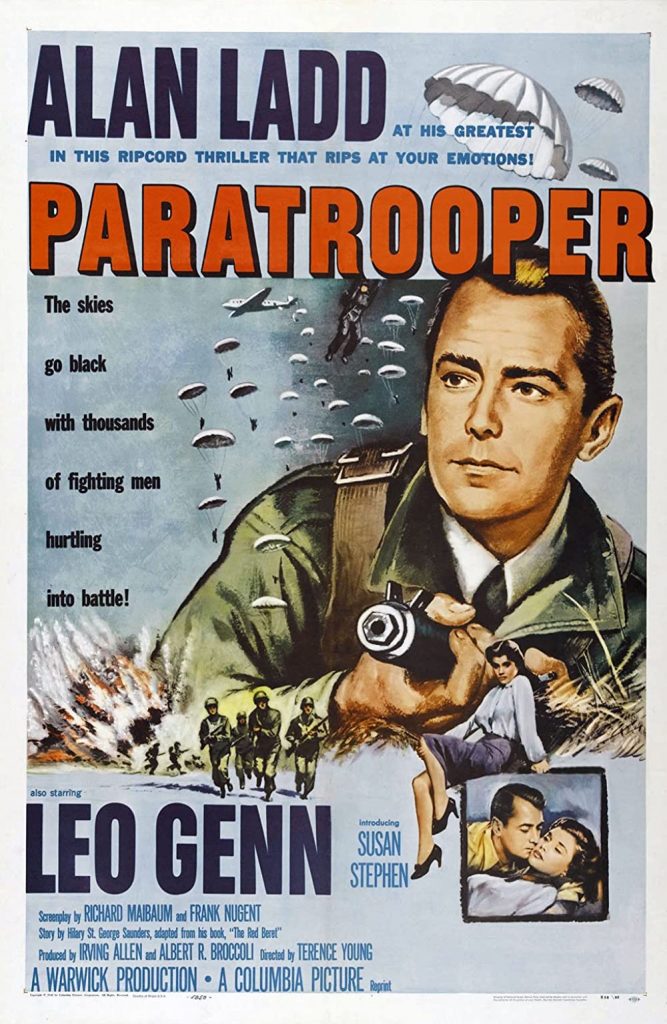
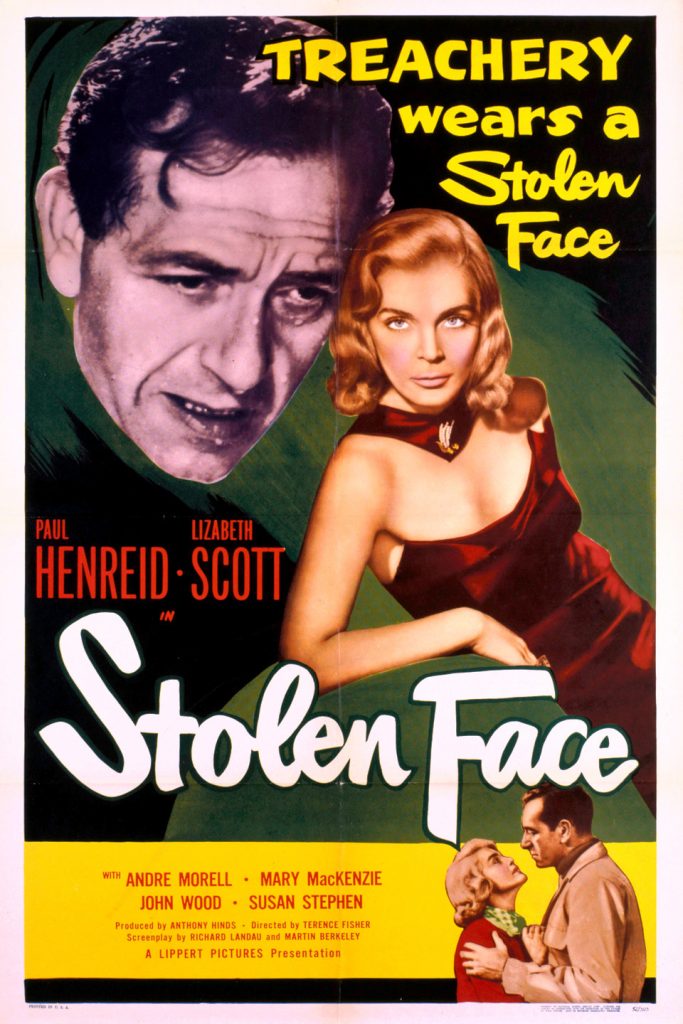
After supporting roles in the melodrama Stolen Face (1952) with two Hollywood stars, Paul Henried and Lizabeth Scott, and two more stage adaptations, Treasure Hunt (1952) and Father’s Doing Fine (1952), Stephen was given the part of a parachute-packer who provides romance for a paratrooper (Alan Ladd) in The Red Beret (1953). The film was produced by Irving Allen and Albert Broccoli, and Stephen used to laugh in later years about the advertising they devised which put the drawing of a voluptuous body underneath her face on the posters.
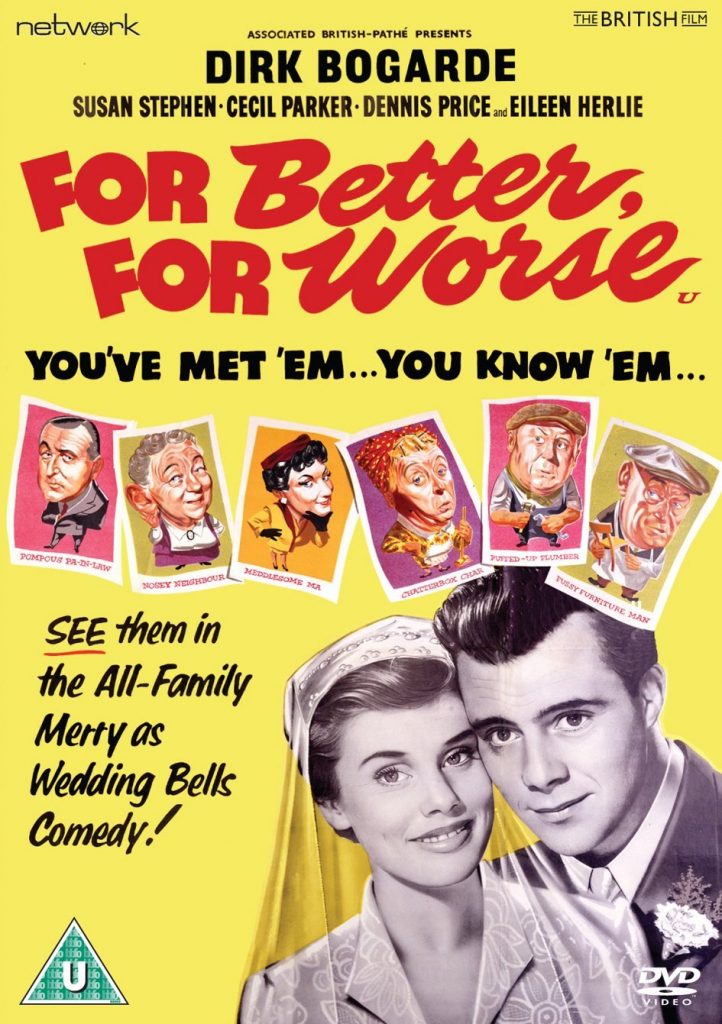
The following year Stephen had one of her best roles, as a young girl who marries a jobless university graduate (Dirk Bogarde) to the dismay of her parents (Cecil Parker and Eileen Herlie) in For Better, For Worse. It was a charming domestic comedy with accomplished performances from its fine cast (which also included Athene Seyler, Dennis Price and Thora Hird). Stephen and Bogarde became firm friends, and in later years she would be a frequent guest at his home in the South of France.
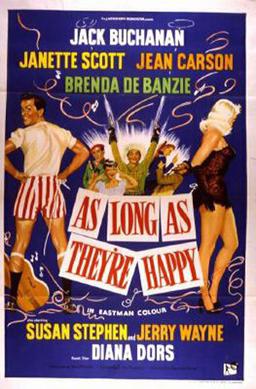
In As Long As They’re Happy (1955), a satire on the teenage hysteria for the “crying” singer Johnnie Ray, Stephen was one of Jack Buchanan’s three daughters who were all mad about an American crooner, and in Value For Money (1955) she was a North Country lass whose rag millionaire boy- friend (John Gregson) goes off for a fling in London after they quarrel.
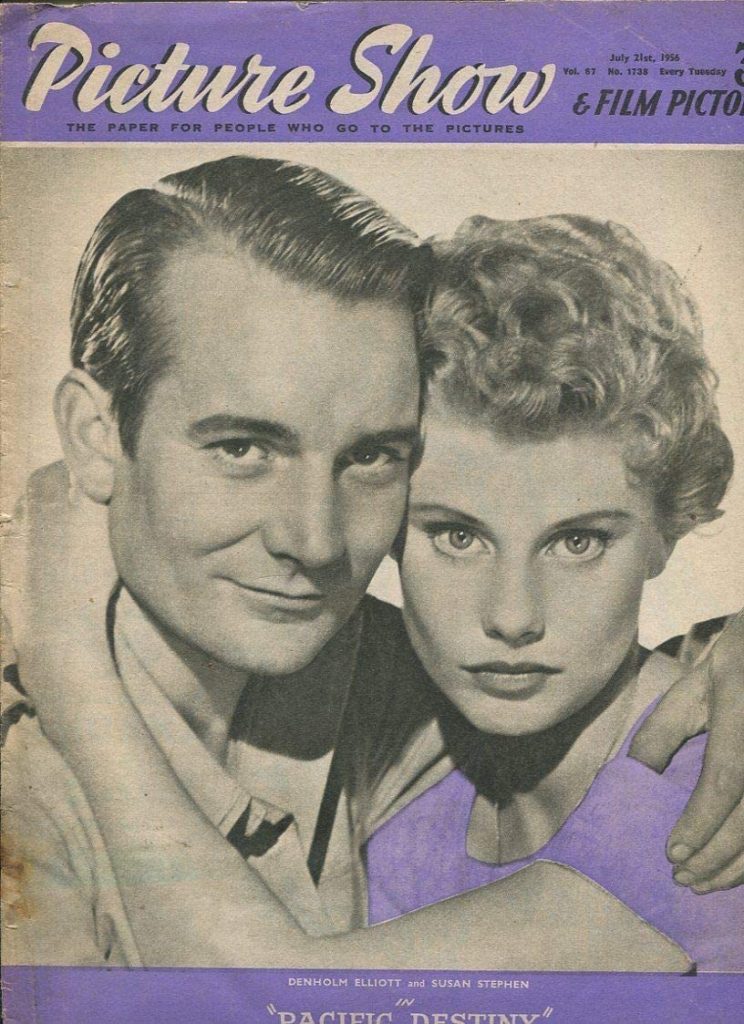
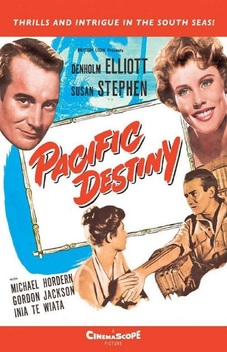
Stephen’s last good starring role was in Pacific Destiny (1956), based on Sir Arthur Grimble’s book A Pattern of Islands, which recounted his early experiences of serving in the South Seas. Stephen played Grimble’s wife, who starts a baby clinic for the natives. One of her co-stars, Michael Hordern, later suggested that the book’s more specific title might have given the excellent film the popularity it deserved.
Shot in Samoa, it was later cited by Stephen as her favourite film, possibly because during its making she fell in love with the assistant cameraman, Nicholas Roeg, who later became a film director. In 1957 she and Roeg were married. Stephen and Roeg had four sons during their 20- year marriage, and though they divorced in 1977 because, said Roeg, of professional pressures and the long periods spent apart, they remained close friends and would usually spend Christmas together with their children.
After Pacific Destiny Stephen had good roles as the flirtatious Belle in The Barretts of Wimpole Street (1957) and as an enterprising nurse who makes audacious use of a daffodil in Carry On Nurse (1959), but they were supporting parts, and her leading roles were in B movies such as The Court Martial of Major Keller and Return of the Stranger (both 1961) produced by the low- budget specialists the Danziger Brothers. Stephen told the historian Jim Simpson, “That was about as low as you could go, so I decided to retire from films.”
Though she had a town house, she loved country life and spent most of her time in Sussex, where she raised her children, kept four dogs and indulged a passion for riding – she was a fine horsewoman. When I mentioned to Nicholas Roeg that Michael Hordern once confessed that during the shooting of Pacific Destiny, he had developed a hopeless passion for Stephen, Roeg commented, “Everybody fell in love with Susan. She was hugely popular within the profession and charmed everybody who came into contact with her.”
Susan Stephen, actress: born London 16 July 1931; married first Lawrence Ward (marriage dissolved), second 1957 Nicholas Roeg (fours sons; marriage dissolved 1977); died 24 May 2000.
Tom Vallance The Independent 29 May 2000
Gary Brumburgh’s entry:
Born 1931 in London, 50s film actress Susan Stephen made her film debut with His Excellency (1952). Her demure, slightly elfin loveliness seemed to coincide with the duteous daughters and/or faithful wives she played. Although mainly confined to “B” level films, Susan’s more noticeable co-star roles occurred with Cocktails in the Kitchen(1954) and Value for Money (1955). Her movie career took a back seat in 1957 following her marriage to director Nicolas Roeg in 1957, which gently phased itself out within a few years. The couple later divorced in 1977 and he subsequently married Hollywood actressTheresa Russell. Susan died in England in 2000.
– IMDb Mini Biography By: Gary Brumburgh / gr-home@pacbell.net