

Milo O’Shea

Milo O'Shea
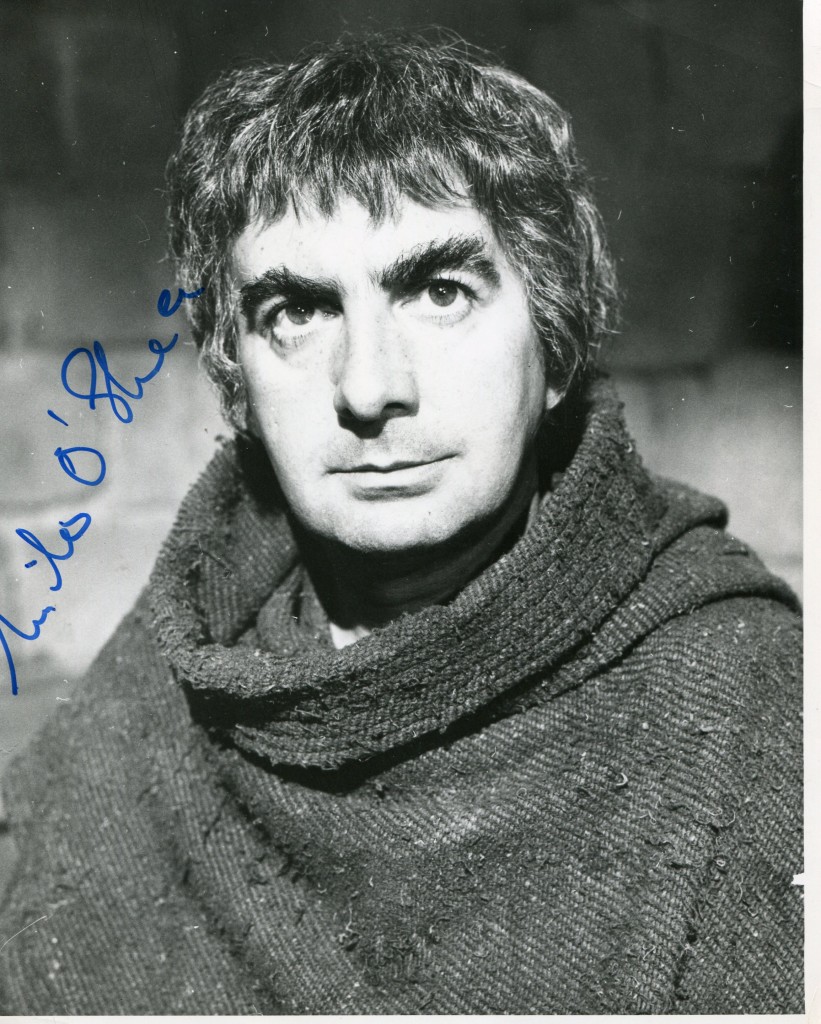
Milo O’Shea
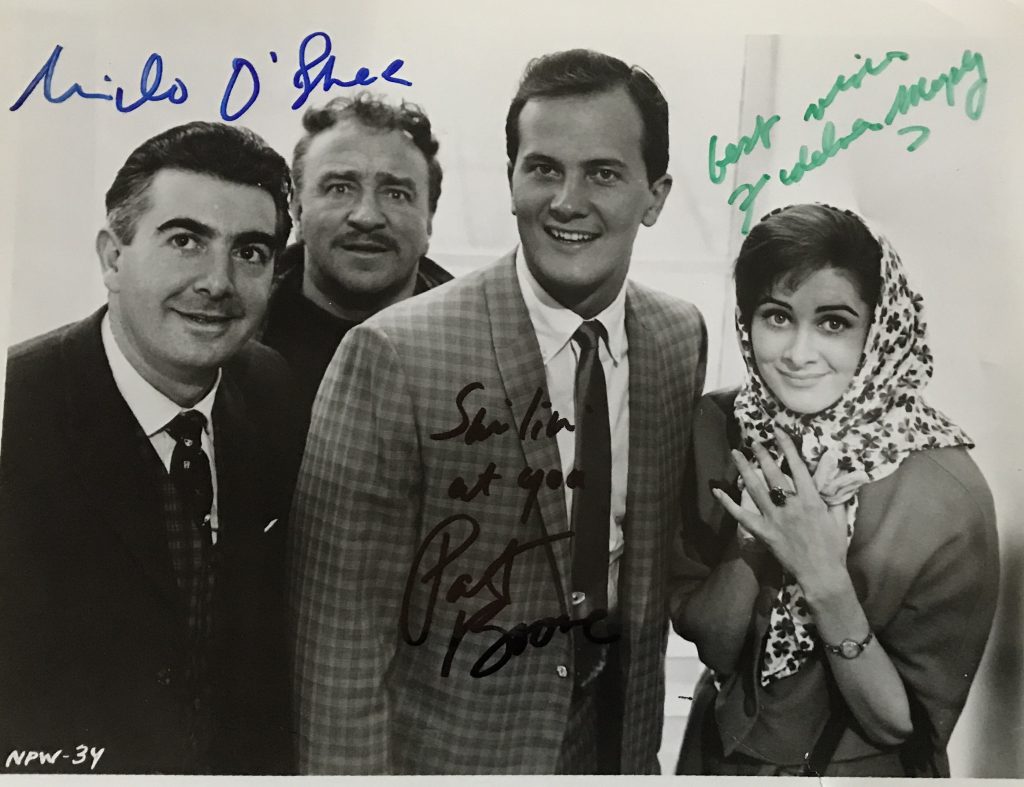
Milo O’Shea, Pat Boone & Fidelma Murphy
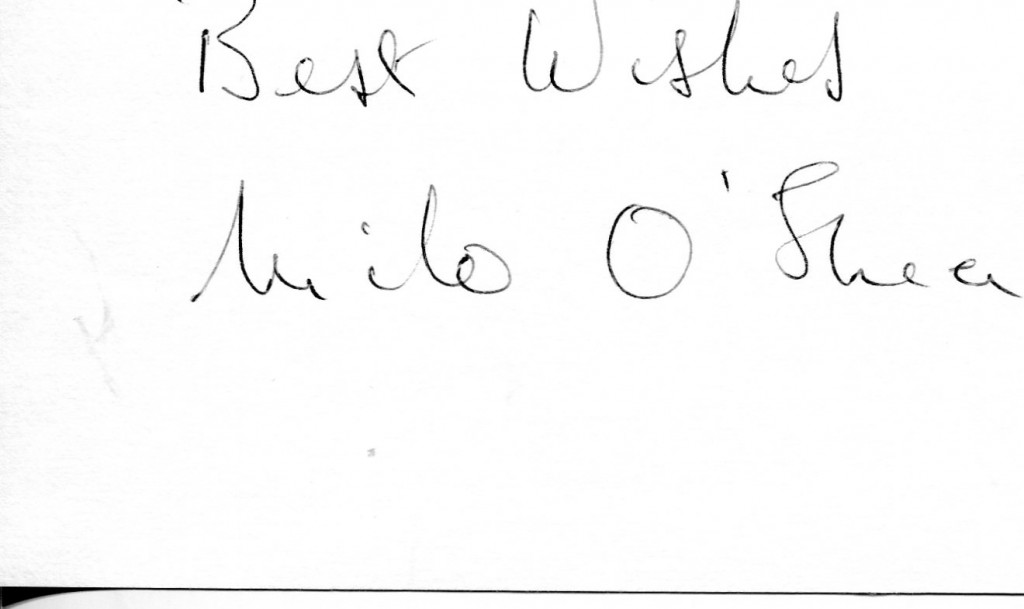
Milo O'Shea
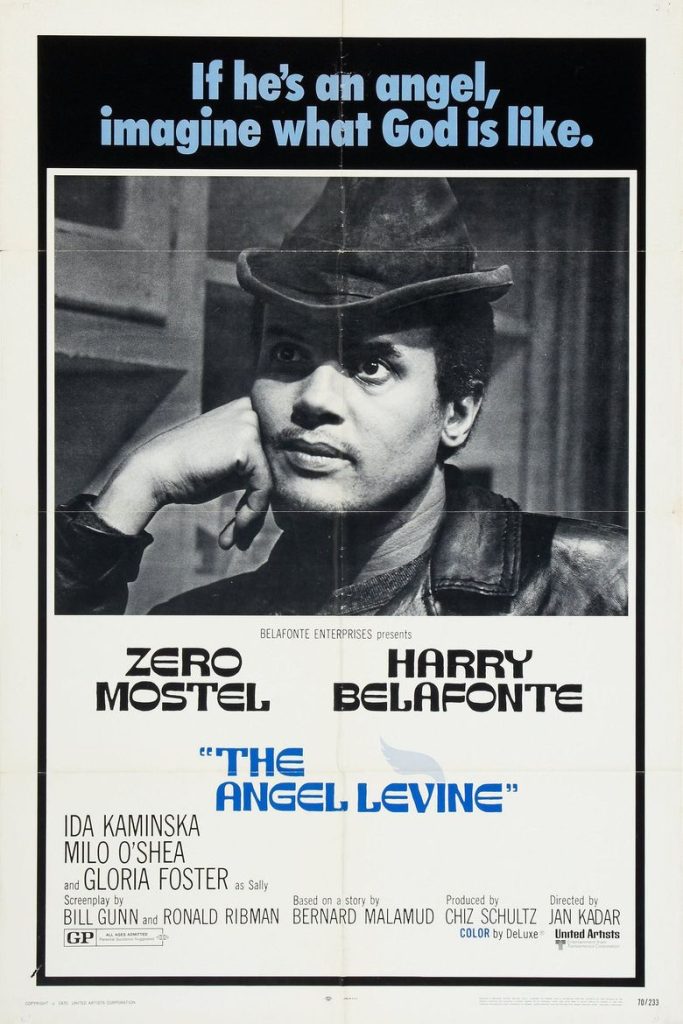
Milo O’Shea

Milo O’Shea obituary in “The Guardian” in 2013.

Great Irish character actor who starred as Leopold Bloom in Joseph Strick’s adapatation of James Joyce’s “Ulysses” and as ‘Friar Laurence’ in the 1968 film version of “Romeo and Juliet”.   He also starred with Paul Newman, James Mason and Charlotte Rampling in “The Verdict”.   He moved to the U.S. and died in New York in 2013.

Michael Coveney’s obituary in “The Guardian”:

For a performer of such fame and versatility, the distinguished Irish character actor Milo O’Shea, who has died aged 86, is not associated with any role in particular, or indeed any clutch of them. He was chiefly associated with his own expressive dark eyes, bushy eyebrows, outstanding mimetic talents and distinctive Dublin brogue.

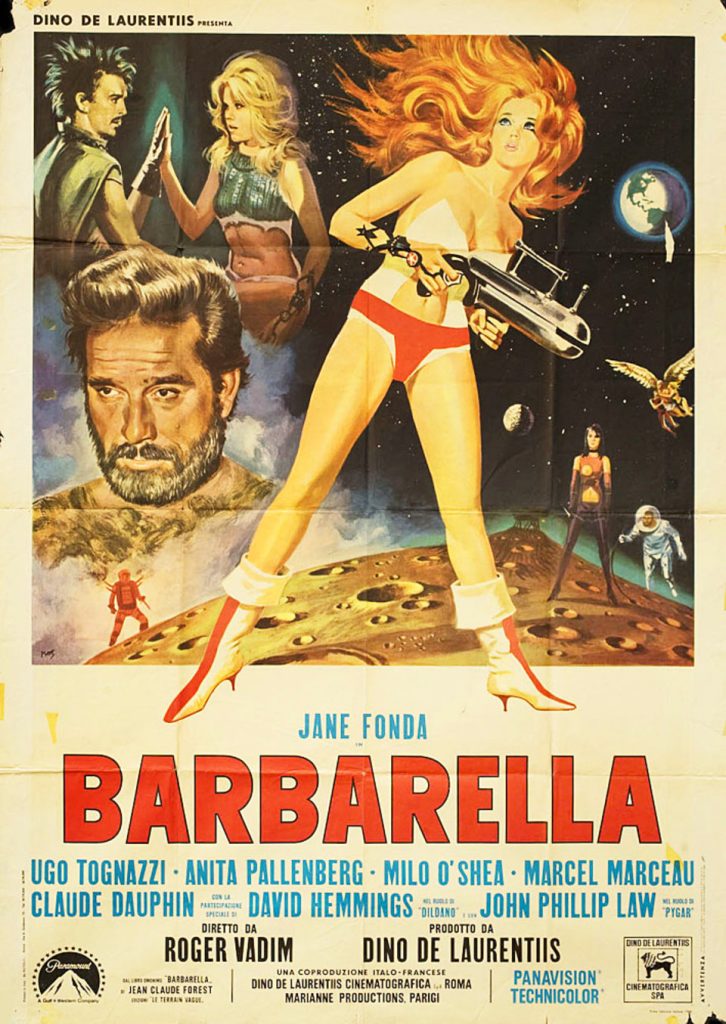
His impish presence irradiated countless fine movies – including Joseph Strick‘s Ulysses (1967), Roger Vadim‘s Barbarella (1968) and Sidney Lumet‘s The Verdict (1982) – and many top-drawer American television series, from Cheers, The Golden Girls and Frasier, right through to The West Wing (2003-04), in which he played the chief justice Roy Ashland.

He had settled in New York in 1976 with his second wife, Kitty Sullivan, in order to be equidistant from his own main bases of operation, Hollywood and London. The couple maintained a penthouse apartment overlooking Central Park by the Dakota building, and formed a spontaneous welcoming committee for any Irish actors or plays turning up on Broadway.

Although he had worked for Hilton Edwards and Micheál MacLiammóir at the Gate theatre in Dublin, and returned there in 1996 to appear in a revival of Neil Simon’s The Sunshine Boys opposite his great friendDavid Kelly, his Irish theatre connections belonged to the city of his youth, and he preferred it that way.

His father was a singer and his mother a ballet teacher, so it was inevitable, perhaps, that Milo gravitated towards the stage. He was just 12 when he appeared in Shaw’s Caesar and Cleopatra at the Gate. He completed his education with the Christian Brothers at the Synge Street school (where the actor Donal Donnelly was a classmate) and took a degree in music and drama at the Guildhall School in London; he remained a superb pianist all his life and could – and usually did – sit down at the keyboard and play more or less anything.

He made a London debut in 1949 as a pantry boy in Molly Farrell and John Perry’s Treasure Hunt at the Apollo, appearing in John Gielgud‘s production of the jewellery-theft potboiler alongside Sybil Thorndike, Marie Lohr and Alan Webb. When Queen Mary came backstage, she asked O’Shea where the gems had gone. “Don’t tell her,” whispered Thorndike, “or she won’t come back after the interval.”

Back in Dublin, he appeared in revues at the 37 Theatre Club on Lower O’Connell Street and was part of a group including Maureen Toal, whom he married in 1952, Norman Rodway and Godfrey Quigley at the Globe, as well as appearing at the Pike. He toured America with Louis D’Alton’s company and played a season at Lucille Lortel’s White Barn theatre in Westport, Connecticut.

The 1960s started inauspiciously with a brief run at the Adelphi in London in Mary Rodgers’s Once Upon a Mattress, which lasted just 38 performances. But Brendan Behan had seen and loved Fergus Linehan’s musical Glory Be! and recommended it to Joan Littlewood, who presented it for a season at the Theatre Royal, Stratford East, in 1961. O’Shea was a hit, leading a cast of young Dublin actors including Kelly and Rosaleen Linehan. Some critics mistook youthful buoyancy for amateurism and likened the show to Salad Days, suggesting it be renamed “Mayonnaise”.

By the end of the decade, O’Shea was fully established on Broadway, winning a 1968 Tony nomination as one of Charles Dyer’s two gay hairdressers in Staircase (the other one was Eli Wallach) and appearing opposite Angela Lansbury as the sewerman in Jerry Herman’s Dear World in the following season.

Around the same time, two major movie performances, following Strick’s admirable but unsatisfactory Ulysses (O’Shea was Leopold Bloom), confirmed his status: as the mad scientist Durand Durand (inspirational name for Simon Le Bon’s pop group Duran Duran), he was seen gibbering ecstatically as he tried to destroy Jane Fonda’s Barbarella with simulated lust waves in his Excessive Machine; and as Friar Laurence in Franco Zeffirelli’s Romeo and Juliet (1968) he brought brief hope and humour to the carnally doomed coupling of Leonard Whiting and Olivia Hussey.

And in 1969 he struck sitcom gold in the BBC’s Me Mammy, scripted by Hugh Leonard, in which he played bachelor Bunjy Kennefick, a West End executive with a luxury flat in Regent’s Park and a mountainous mum, played by Anna Manahan, with her apron strings tied round his neck. The show ran for three series to 1971, and O’Shea was now a household face on both sides of the Atlantic.

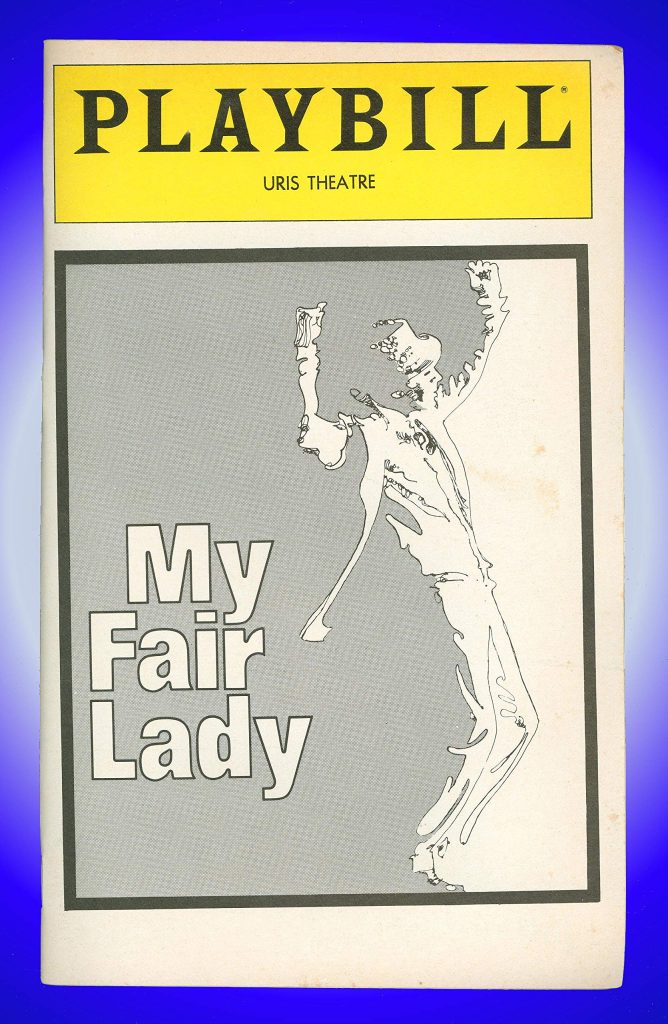
After the move to Manhattan, he appeared on Broadway as Eddie Waters, the failed old comedian, in Mike Nichols’s production of Trevor Griffiths’s Comedians; as James Cregan in Eugene O’Neill’s extraordinary A Touch of the Poet, with Jason Robards and Geraldine Fitzgerald; and as Alfred Doolittle in a 1981 revival of My Fair Lady, once again starring Rex Harrison.

But he won his second Tony nomination for his luxury-lifestyle-loving Catholic priest, Father Tim Farley, in Bill C Davis’s debut Broadway play, Mass Appeal in 1982. The critic Frank Rich applauded his comic mischievousness and timing, and noted how the mask slipped on the sham of a life of this lost alcoholic soul who was inducting a rebellious young seminarian; the play was finally about secular and religious love, not the Catholic church at all.

Unfortunately, O’Shea did not return to London with Mass Appeal, but with Gerald Moon’s Corpse! at the Apollo in 1984. He played an Irish war veteran trapped in a basement with Keith Baxter; Baxter was playing a pair of effete twins who each wanted to kill the other (without success, alas). The play was as moribund as its title.

O’Shea will survive, though, whenever we catch a glimpse of him in Silvio Narizzano‘s odd version of Joe Orton’s Loot (1970), or as yet another priest in Neil Jordan’s weird and wonderful The Butcher Boy (1997), or as an incredulous inspector in Douglas Hickox’s critic-baiting Theatre of Blood (1973), or holding the ring between Paul Newman and James Mason, his hair slightly longer than usual, as the trial judge in The Verdict (1982).

His last stage appearance was a homecoming of sorts as Fluther Good in Sean O’Casey’s tremendous tenement tragedy The Plough and the Stars 12 years ago at the Guthrie Theatre in Minneapolis, directed by Joe Dowling, with Linehan as Bessie Burgess.

He is survived by Kitty and by his two sons, Colm and Steven, from his first marriage, which ended in divorce in 1974.

• Milo O’Shea, actor, born 2 June 1926; died 2 April 2013

His Guardian obituary can be accessed  here

Milo O’Shea (1926–2013) was an actor of boundless warmth and twinkly-eyed mischief who became one of Ireland’s most beloved international exports. While his expressive, bushy eyebrows and “cherubic” face often led to him being cast as lovable clerics or eccentric uncles, O’Shea was a rigorous technician of the Dublin stage who could pivot from broad comedy to chilling dramatic intensity with deceptive ease.

Career Overview

O’Shea’s journey took him from the intimate theaters of Dublin to the heights of Broadway and the surrealist landscapes of 1960s cinema.

  • The Dublin Foundations (1940s–1950s): Raised in Dublin and educated by the Christian Brothers, O’Shea cut his teeth with the Abbey and Gate Theatres. He was a staple of the Dublin stage, known for his musicality and a specific brand of “Dublin wit” that made him a local favorite before international fame beckoned.

  • The “Ulysses” Breakthrough (1967): O’Shea achieved global cinematic recognition for his portrayal of Leopold Bloom in Joseph Strick’s film adaptation of James Joyce’s Ulysses. Playing one of literature’s most complex characters, he proved he had the “interiority” to handle high-concept modernism.

  • The Hollywood & Cult Era (1968–1980s): He became a versatile character actor in major productions, notably playing Friar Laurence in Franco Zeffirelli’s Romeo and Juliet (1968) and the villainous Durand Durand in the cult classic Barbarella (1968).

  • Broadway and “Mass Appeal”: O’Shea was a two-time Tony nominee, first for Staircase (1968)—where he played one of the first sympathetic gay leads on Broadway—and later for Mass Appeal (1982). He remained active in television and film well into his 80s, appearing in The West Wing and The Verdict.


Detailed Critical Analysis

1. The “Everyman” Leopold Bloom

Critically, O’Shea’s performance in Ulysses is considered a landmark in Irish cinema.

  • Humanizing the Abstract: Joyce’s Bloom is a character of infinite internal thought. O’Shea used his “ordinary” physicality to ground the character. Critics praised his ability to convey Bloom’s quiet dignity and profound loneliness through small, sad smiles and a weary gait.

  • The “Cuckold” Dignity: He avoided the trap of making Bloom a figure of fun. Instead, he presented a man navigating a city that felt both intimate and hostile, creating a definitive visual template for the character that persists today.

2. Subverting the “Cuddly” Persona

O’Shea’s most interesting critical work happened when he played against his natural warmth.

  • The Villainous Durand Durand: In Barbarella, he played a mad scientist with a sadistic streak. Critics noted that by using his naturally friendly face to deliver threats of torture, he created a “cognitive dissonance” that was far more unsettling than a traditional “scary” villain.

  • The Corruption of Authority: In The Verdict (1982), playing Judge Hoyle, O’Shea stripped away the “twinkle.” He portrayed a man of the law who was fundamentally biased and cynical. This performance is often cited as a masterclass in “quiet corruption”—he didn’t snarl; he simply used his geniality as a weapon of institutional power.

3. The Master of the “Double-Act”

O’Shea was a legendary ensemble player who understood the mechanics of chemistry.

  • Staircase (1968): Starring opposite Eli Wallach as a pair of aging barbers, O’Shea delivered a performance that was revolutionary for its time. He avoided the “camp” stereotypes of the era, playing the role with a domestic, bickering realism that humanized the LGBTQ+ experience for a mainstream Broadway audience.

  • Comic Timing: His roots in Irish “panto” and music hall gave him a surgical sense of timing. He knew exactly how to “hold” for a laugh without ever appearing to be waiting for one.

4. The Clerical Archetype

O’Shea played priests so frequently (from Romeo and Juliet to Mass Appeal) that he became the industry’s “cleric-in-chief.”

  • The “Human” Priest: Critically, he is credited with moving the cinematic priest away from the “pious statue” and toward the “struggling man.” In Mass Appeal, he played a comfortable, wine-loving priest challenged by a younger idealistic deacon. He showcased the tragedy of a man who has traded his fire for comfort, a theme that resonated deeply in a changing Ireland.


Major Awards & Notable Credits

Project Role Significance
Ulysses (1967) Leopold Bloom The definitive screen portrayal of Joyce’s protagonist.
Barbarella (1968) Durand Durand A cult-classic turn as a campy, eccentric villain.
Romeo and Juliet(1968) Friar Laurence Brought a “grandfatherly” warmth to Zeffirelli’s masterpiece.
Mass Appeal Father Tim Farley Earned him a Tony nomination and critical acclaim for dramatic depth.
The West Wing Chief Justice Ashland A late-career role that showcased his enduring gravitas.

The reception of Staircase in 1968 was a watershed moment for Broadway. Critics were forced to grapple with a play that presented a gay couple not as “freakish” or “glamorous,” but as a pair of bickering, middle-aged barbers trapped in a co-dependent, “old married” dynamic.

The Critical Reaction to O’Shea’s Harry Leeds

When the play opened at the Biltmore Theatre, the consensus was that O’Shea had performed a minor miracle of empathy.

  • The “Domestic” Reality: Clive Barnes of The New York Times noted that O’Shea and his co-star Eli Wallach avoided the “screaming-queen” caricatures typical of the era. Critics praised O’Shea for his “shambling, fussy vulnerability.” He played Harry as a man deeply terrified of aging and loneliness, making the character’s sexuality secondary to his humanity.

  • The Physical Transformation: O’Shea, who was naturally quite robust and “cherubic,” adopted a “collapsed” posture for the role. Critics analyzed this as a physical manifestation of a man who had spent his life hiding.

  • The Lack of “Camp”: In a 1968 context, “camp” was the standard shorthand for gay characters. O’Shea’s refusal to lean into it was seen by more progressive critics as a radical act of naturalism. He played the “sadness of the ordinary,” which made the play’s tragic-comic ending far more potent.


Leopold Bloom: A Legacy Analysis

Because you are interested in his critical standing, it is worth revisiting his work in Ulysses (1967), as it remains the performance by which Irish actors are often measured when tackling Joyce.

  • The Internalized Performance: Strick’s film used voice-over for the “stream of consciousness” segments. Critics noted that O’Shea’s face was the perfect “screen” for these thoughts. He didn’t over-indicate; he allowed his eyes to wander with the same curiosity and melancholy as Joyce’s prose.

  • The “Everyman” vs. The “Intellectual”: Some purist critics initially felt O’Shea was “too comic” for Bloom, but the lasting critical consensus is that he was the only actor who could capture Bloom’s essential kindness. He made the “odyssey” of a single day in Dublin feel monumental precisely because he played it so small.

Dictionary of Irish Biography –

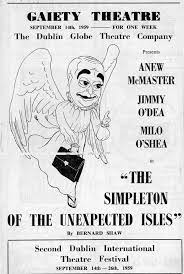
O’Shea, Milo Donal (1926–2013), actor, was born on 2 June 1926 at 15 Fitzwilliam Terrace, Dublin, one of three children (two boys and a girl) of Daniel J. (‘Con’) O’Shea, a civil servant, and Nellie O’Shea (née O’Flanagan). His father was a semi-professional singer and his mother a harpist and ballet teacher; both performed with the Rathmines and Rathgar Musical Society. Milo was educated at Synge Street CBS, Dublin, which had a strong tradition of school drama, and appeared in several school plays, sometimes with his friend Donal Donnelly (qv). He also attended drama and elocution classes at Ena Mary Burke’s Kildare Street studios, and from the age of nine regularly won prizes in various feiseanna. In November 1941 he was invited by Micheál MacLiammóir (qv) to play the part of the boy-king Ptolemy in G. B. Shaw‘s (qv) ‘Caesar and Cleopatra’ at the Gaiety Theatre. Intent on becoming a professional actor, he studied music and drama at the Guildhall School in London, and worked with the touring companies of Louis D’Alton (qv) and Anew McMaster (qv). From 1946 he appeared regularly in drama on Radio Éireann and in several Longford productions at the Gate; his portrayal of the uninvited guest Gunner in Shaw’s ‘Misalliance’ at the Gate in September 1947 brought the house down. He was noticed by John Gielgud who cast him in ‘Treasure hunt’ at the London Apollo in August 1949, which ran for a year. On returning to Dublin, he worked in most of the city’s theatres in everything from variety to Shakespeare.

In June 1951 he married the actress Maureen Toal (qv). Rather than going on honeymoon, the cash-strapped couple joined Ronald Ibbs’s company on a US tour, and stayed there to work in radio drama and off Broadway productions. When theatre work dried up O’Shea worked as an elevator operator at the Waldorf-Astoria hotel in New York, and even sold his blood to make ends meet. The couple returned to Ireland in November 1953 and soon became involved with the recently opened experimental Pike Theatre in Herbert Lane, and the local Globe Theatre Company. O’Shea appeared in the first late-night Pike revue, and in all but one of the six twice-yearly revues that followed. In 1954 he played the lead in Tennessee Williams’s ‘Summer and smoke’ at the Pike, and was acclaimed for his leading role in Godfrey Quigley‘s (qv) production of George Axelrod’s ‘The seven year itch’ at the Gaiety, which allowed him exercise his considerable talent for mime. This often formed an important part of his performances, and even drew praise from the great French mime artist Marcel Marceau. He could also sing and dance (and was a fine pianist) and continued to work with the Globe and other companies. Within a couple of years, he was a sure draw on the Dublin stage, excelling in musicals and comic roles. From 1962 he also worked regularly in London and on Broadway.

From the early 1960s he began to take advantage of opportunities to appear on British television in ITV Playhouse productions such as The moment of Milo (June 1960) and Night school (21 July 1960), the latter specially written for him by Harold Pinter. One of his most notable performances was in Silent song, a play written by Frank O’Connor (qv) and Hugh Leonard (qv), in which O’Shea and Jack MacGowran (qv) gave free rein to their miming abilities by playing monks in a Trappist monastery. O’Shea became a well-known figure in England when he appeared alongside Anna Manahan (qv) as an Irish mammy’s boy in Leonard’s popular BBC comedy Me Mammy (1968–71; 21 episodes). This was followed by Leonard’s Tales from the Lazy Acre (BBC, 1972; 7 episodes), a less successful collection of comedy playlets based in Dublin.

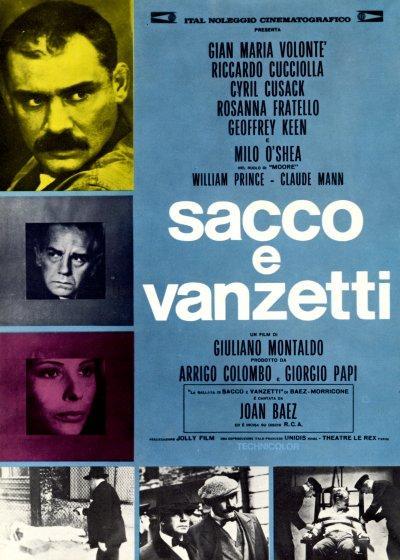
O’Shea had some minor roles in minor films in the 1950s and early 1960s, including Carry on cabby (1963). Having appeared as Leopold Bloom in BBC TV’s Bloomsday (1964), he was chosen by Joseph Strick to play the same role in his film adaptation of James Joyce‘s (qv) Ulysses (1967). His performance was one of the film’s main strengths, skilfully combining the comic elements of Bloom’s character with an appealing humanity and gentleness. This was followed by two more significant film parts: as the understanding Friar Lawrence in Franco Zeffirelli’s Romeo and Juliet (1968) and as the mad scientist Dr Durand Durand in Roger Vadim’s Barbarella (1968) which starred Jane Fonda. During the early 1970s he appeared in several undistinguished films, the best of which were probably Sacco & Vanzetti (1971) and Theater of blood (1973).

In March 1968 he appeared with Eli Wallach in ‘Staircase’ at the Biltmore Theatre, one of Broadway’s earliest attempts to depict gay men in a serious way. For this he was awarded a Broadway Season award, and his first Tony award nomination in 1969. By this time he and Toal (who had adopted a son) had separated after her affair in the early 1960s with the actor Norman Rodway(qv); they divorced in December 1973. At Epping Registry office in London on 27 March 1974, O’Shea married Kitty O’Sullivan, an actress and singer originally from St Louis, Missouri; they had one son. In 1976 they moved to New York, which would be home for the rest of his life, settling in an apartment on 72nd Street overlooking Central Park where they often entertained visiting Irish actors. Always keen to maintain his links with Ireland, O’Shea was a key figure in the Irish Repertory Theatre founded in Manhattan in 1988.

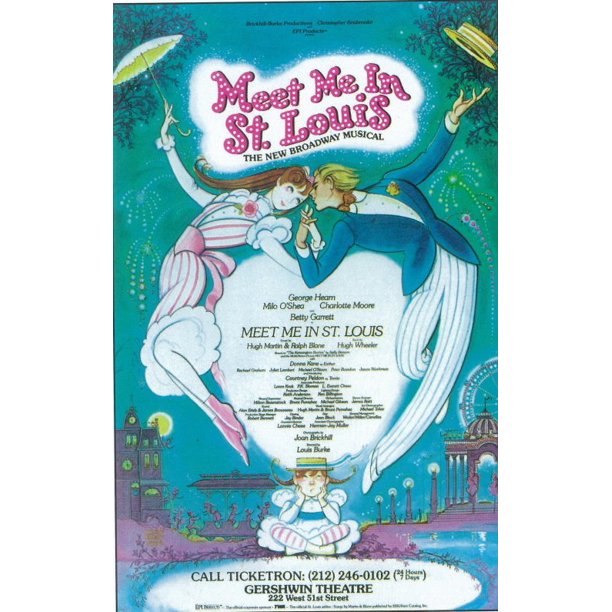
His performances on the New York stage in Trevor Griffith’s ‘The comedians’ (1976–7) (directed by Mike Nichols), Eugene O’Neill’s ‘A touch of the poet’ (1977) and as Lucky in ‘Waiting for Godot’ (1978) were acclaimed by New York critics. He received another Tony award nomination and a Drama Desk award for his part in ‘Mass appeal’ (1983) and also appeared in the musical ‘Meet me in St Louis’ (1989) which ran on Broadway for over a year.

His film career continued, with a notable performance as a judge in The verdict (1982) opposite Paul Newman. He rated this along with Barberella and Romeo and Juliet as his favourite film part. He was well known as a versatile and reliable character actor, but such was his expertise and presence that he regularly stole scenes from better-known stars (his expressive black bushy eyebrows were invaluable in this regard). Like his hero Jimmy O’Dea (qv), his comic timing was impeccable and he could employ restraint and subtlety when required. The directors who most impressed him were Gielgud, Zeffirelli, Nichols and José Quintero. Other notable film roles were in Woody Allen’s The purple rose of Cairo (1985) and Neil Jordan’s The butcher boy (1997). To avoid being cast as a stage Irishman, he tried to play as many non-Irish parts as possible. He attributed his career longevity to his versatility and readiness to take work whenever it was available. When not working – which was rare – he enjoyed playing the piano, watching sports on television or playing a round of golf.

O’Shea also had a significant career in American television, appearing in St Elsewhere (1986), The golden girls (1987), Cheers(1992), Spin city (1998) and The west wing (2003–4). His natural comic ability also ensured regular appearances on television variety and chat shows. Charming and witty on and off stage, he made a particular point of putting younger actors at their ease, and never stinted with praise or encouragement. While living in Ireland, he was a sympathetic and constructive adjudicator at feiseanna and drama contests for many years. After he left, he visited Ireland regularly but was happy living in New York. He believed that Ireland’s punitive tax regime prevented him returning and was saddened by the destruction of so much of the Dublin he knew, particularly its grand old theatres. In June 1996 he returned to the Gate to co-star with David Kelly (qv) in ‘The sunshine boys’, reprising a part he had played twenty-three years earlier.

His last stage appearance was in 2001 in a favourite role as Fluther Good in ‘The plough and the stars’ directed by Joe Dowling at the Guthrie Theater in Minneapolis. He was awarded an honorary doctorate of literature for his contribution to the arts by UCD in June 2007, and that month had his handprints taken for placing outside the Gaiety Theatre. In 2010 he also received an honorary degree from Quinnipaic University, Connecticut.

He died on 2 April 2013 in New York city and was cremated there. He was survived by his wife Kitty and sons Colm and Steven. His ashes were buried on 10 April in the family grave at Deansgrange cemetery, Dublin, after which tributes were paid by friends and colleagues from the stage of the Gate Theatre, scene of many of his most memorable performances.

Sources

GRO, birth cert.; Ir. Press, 7 Jan. 1941; 21 Oct. 1946; 10, 15 Sept. 1947; 11 July, 29 Aug. 1949; 23 June 1951; 12 Nov. 1953; 5 Oct. 1954; 12 June 1956; 5 Feb. 1966; 27 Mar. 1974; 31 Dec. 1977; 13 Jan. 1989; 8 May 1990; Ir. Independent, 14 Dec. 1955; 8 Jan. 1958; 18 Mar. 1959; 3 Feb. 1967; 25 Jan. 1968; 2 Oct. 1969; 12 July 1986; 18 June 1996; 16 June 2007; 4, 6 Apr. 2013; Ir. Times, 22 Mar. 1968; 1 June 1990; 6 Dec. 2003; 3, 4, 6, 11, 13 Apr. 2013; Phyllis Ryan, The company I kept(1996); Philip B. Ryan, The lost theatres of Dublin (1998); Guardian, 3 Apr. 2013; Independent (London), 4 Apr. 2013

Leave a Reply

Your email address will not be published. Required fields are marked *