

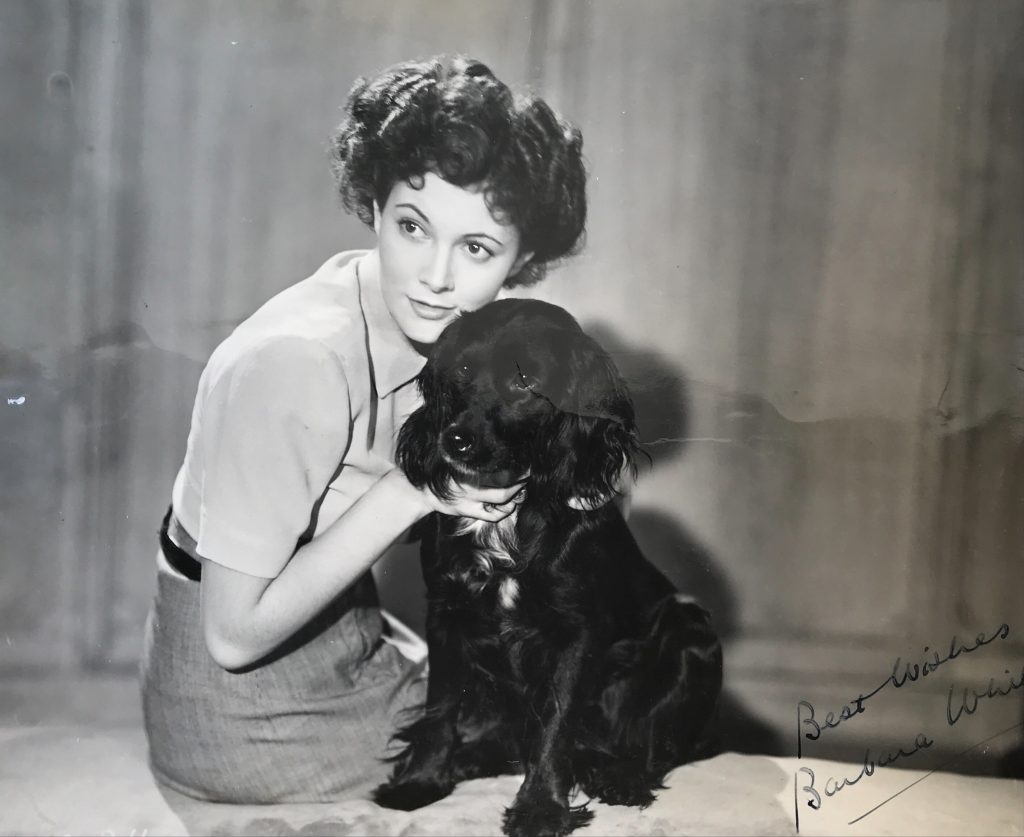
British actress Barbara White starred opposite Kieron Moore In “Mine Own Executioner” and married Kieron In 1947
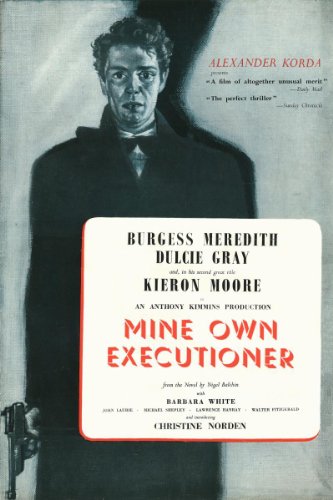
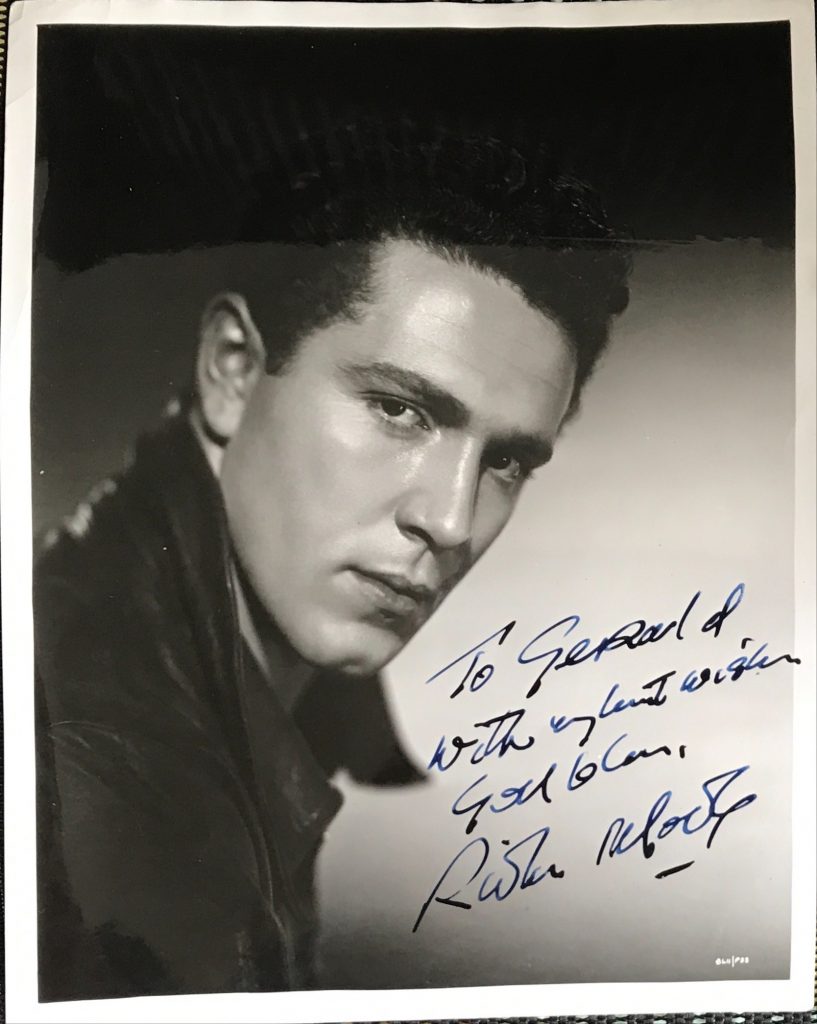
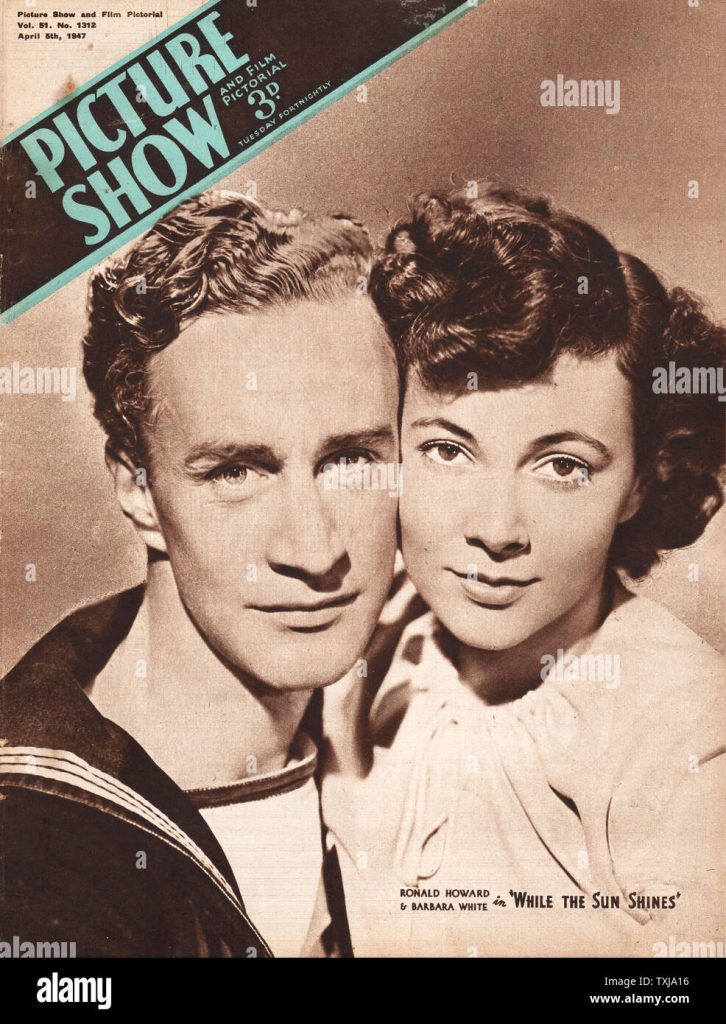
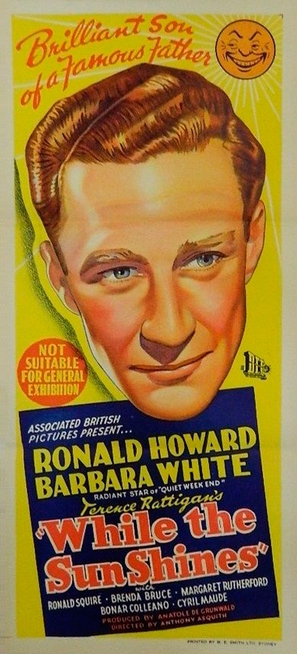
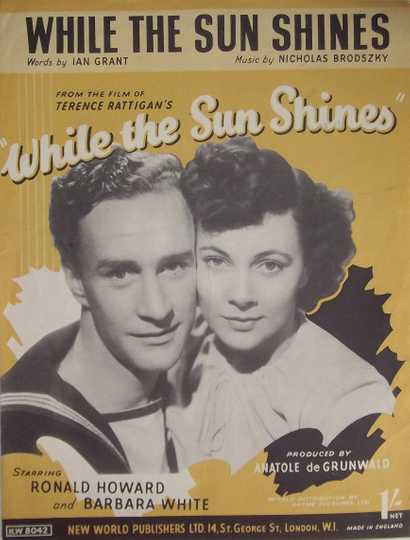
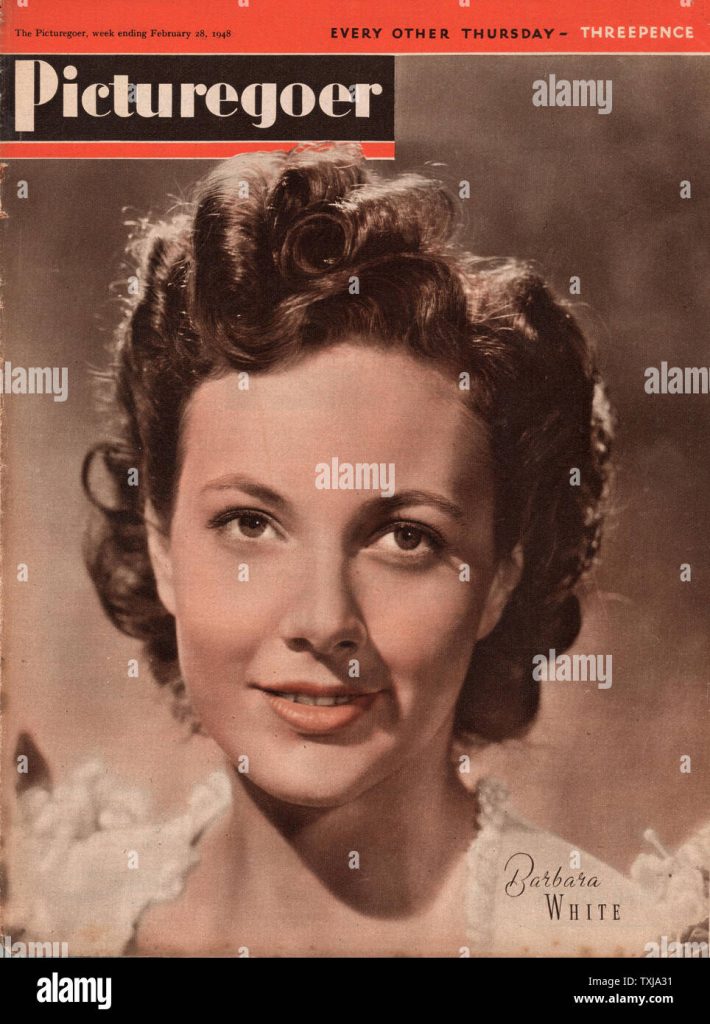
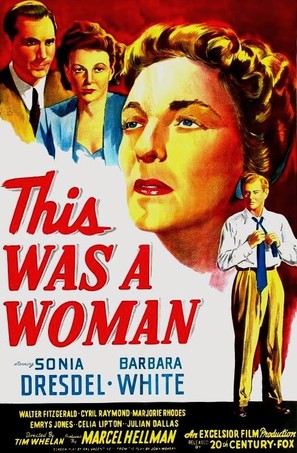
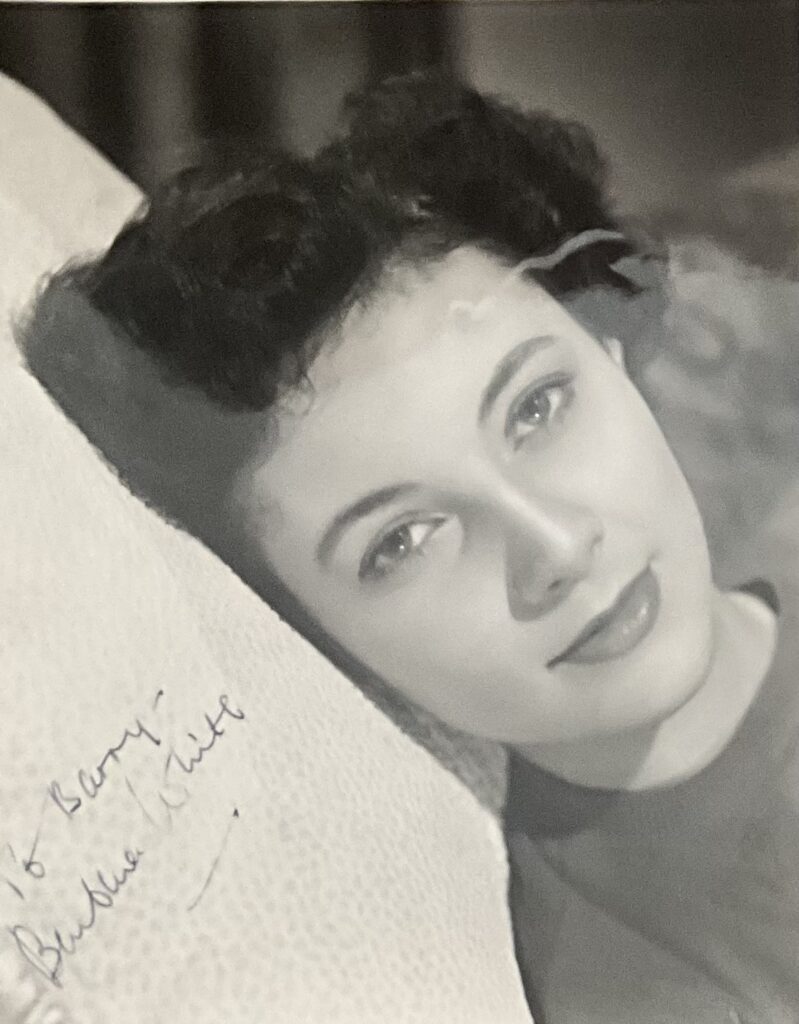
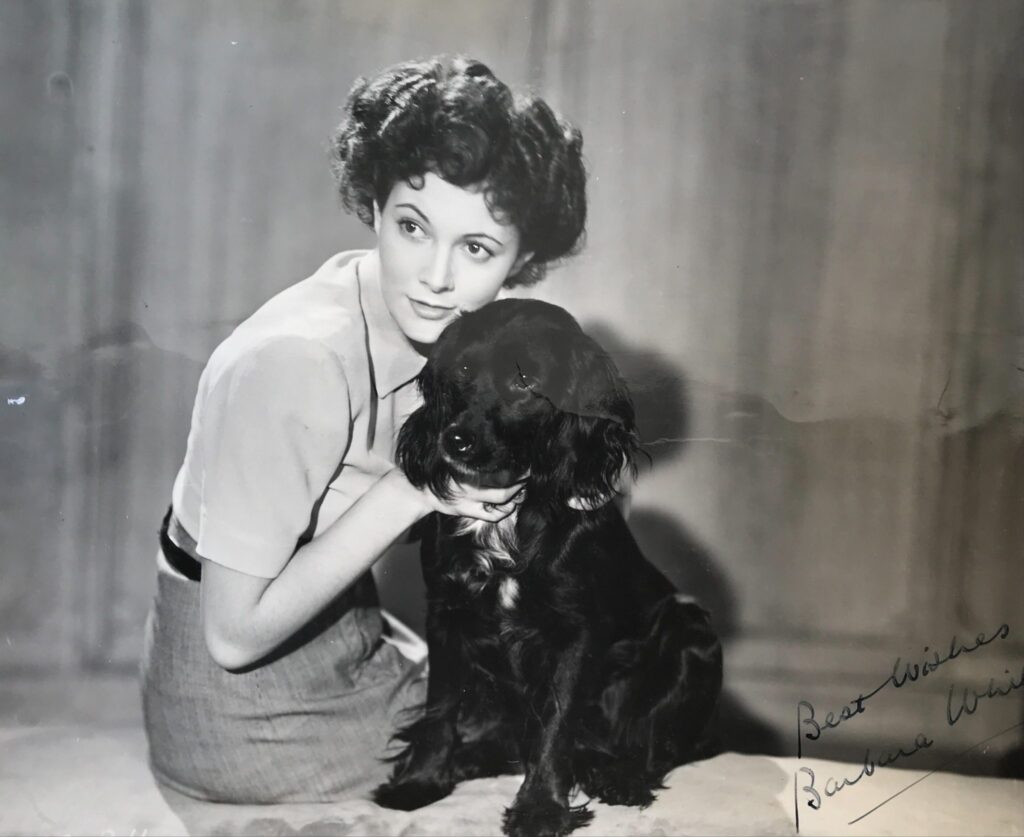
Barbara White (1923–2013) remains one of the most enigmatic figures of mid-century British cinema. Her career was a “shooting star” trajectory: a brief, intense period of stardom in the 1940s followed by a total withdrawal from the screen. Often cast as the “English Rose” with a hidden thorns, White’s work is characterized by a deceptive simplicity—she possessed a luminous, virginal quality that directors frequently used to mask characters of surprising psychological complexity.
1. Career Arc: The Post-War Ingenue
White’s career was inextricably linked to the British film industry’s attempt to create a homegrown answer to the Hollywood “Girl Next Door.”
-
The Discovery (1944): White was discovered by the influential producer and writer Robert Stolz and director Maurice Elvey. She was quickly positioned as a leading lady for the “people’s cinema”—films that appealed to the emotional and domestic sensibilities of a post-war British audience.
-
The Peak (1945–1948): In a span of just four years, she starred in several major productions, most notably It’s Hard to be Good and The Voice Within. She was frequently paired with actors who shared her “grounded” quality, such as Jimmy Hanley.
-
The Retirement (1950s): Unlike many of her contemporaries who fought to transition into mature roles, White chose to retire from acting following her marriage to the actor Kieron Moore. She pivoted her life toward family and supporting Moore’s later humanitarian efforts, effectively vanishing from the public eye.
2. Critical Analysis of Key Performances
Quiet Weekend (1946) – The Pastoral Ideal
This sequel to Quiet Wedding saw White playing Miranda Bute in a quintessentially British comedy of manners.
-
Analysis: White’s performance was a masterclass in understated charm. In a film that could easily have slipped into “twee” territory, she provided a necessary anchor of sincerity. She utilized her soft, melodic voice and expressive eyes to convey the anxieties of a young woman navigating the rigid social structures of the English countryside.
-
Critique: Critics of the time praised her for her “un-film-star-like” quality. She felt like someone the audience actually knew, which was her greatest asset. She represented the “reconstruction era” woman: sensible, resilient, and quietly optimistic.
The Voice Within (1946) – The Melodramatic Depth
Set in Ireland, this film cast White as a woman caught in a web of crime and conscience, involving a man and his dog (a plot more serious than it sounds).
-
Analysis: This role allowed White to break away from her “suburban” image. She displayed a capacity for simmering intensity and moral conflict. She played the role with a “hunted” quality, using her physicality to suggest a woman trapped by circumstances.
-
Critique: While the film itself received mixed reviews, White was singled out for her ability to elevate melodrama into something resembling tragedy. It proved that beneath her “English Rose” exterior was an actress of significant dramatic range.
It’s Hard to be Good (1948) – The Comedic Foil
Playing Mary Dawson opposite Anne Crawford and Jimmy Hanley.
-
Analysis: In this satirical look at post-war idealism, White showed a surprising gift for dry, observational comedy. She played the “straight woman” to the more eccentric characters, but her reactions—often just a subtle lift of an eyebrow or a small sigh—frequently garnered the biggest laughs.
-
Critique: This performance is often cited as proof that White was underutilized by the studio system. She had a “modern” sensibility that was perhaps a decade ahead of its time, favoring naturalism over the theatricality common in 1940s British films.
3. Style and Legacy: The “Luminous Ordinary”
Barbara White’s style was defined by a rejection of the “vamp” or “diva” archetypes of the era.
| Performance Attribute | Impact on the Audience |
| Transparency | She had a “readable” face; the audience always felt they knew exactly what her character was thinking. |
| Vocal Naturalism | She avoided the “received pronunciation” (RP) stiffness of many 1940s starlets, opting for a softer, more intimate delivery. |
| Domestic Authority | Even in her early 20s, she projected a sense of “home”—a stabilizing force in the chaotic post-war world. |
The “Kieron Moore” Partnership
Critical analysis of White’s career often focuses on her “sacrifice” of her own stardom for her husband’s. However, those close to her suggested it was a conscious choice to seek a “truer” life outside the artifice of the studio. Her legacy is that of a transitional figure: she represented the last of the “classic” ingenues while hinting at the more realistic, independent female characters that would emerge in the British New Wave of the late 1950s.
Critical Note: Barbara White remains a favorite of British film historians because she represents a specific, lost era of “gentle” cinema. She didn’t need to shout to be heard; her presence was a form of quiet, cinematic radiation