
Juliet Stevenson (Wikipedia)
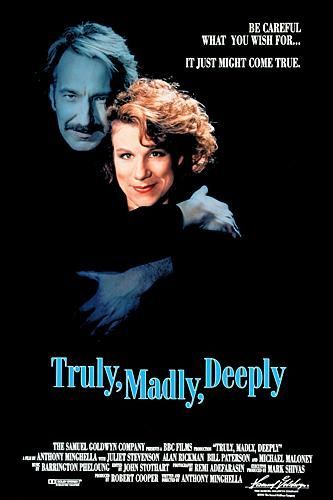
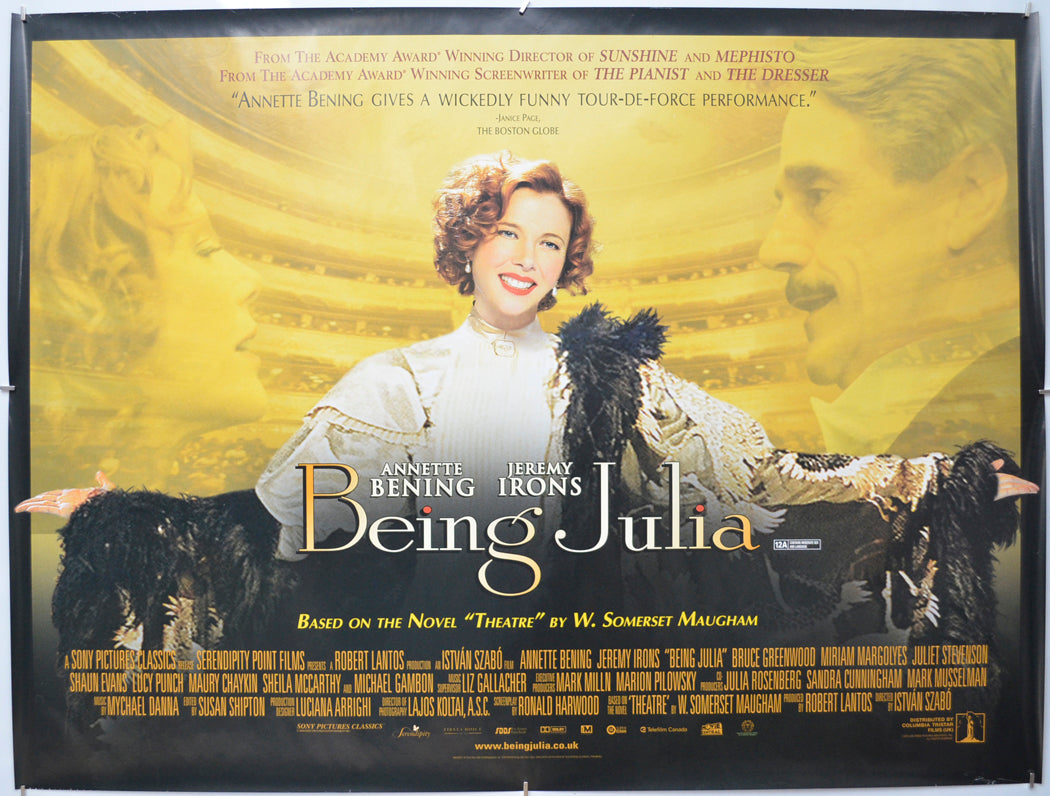
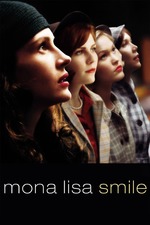
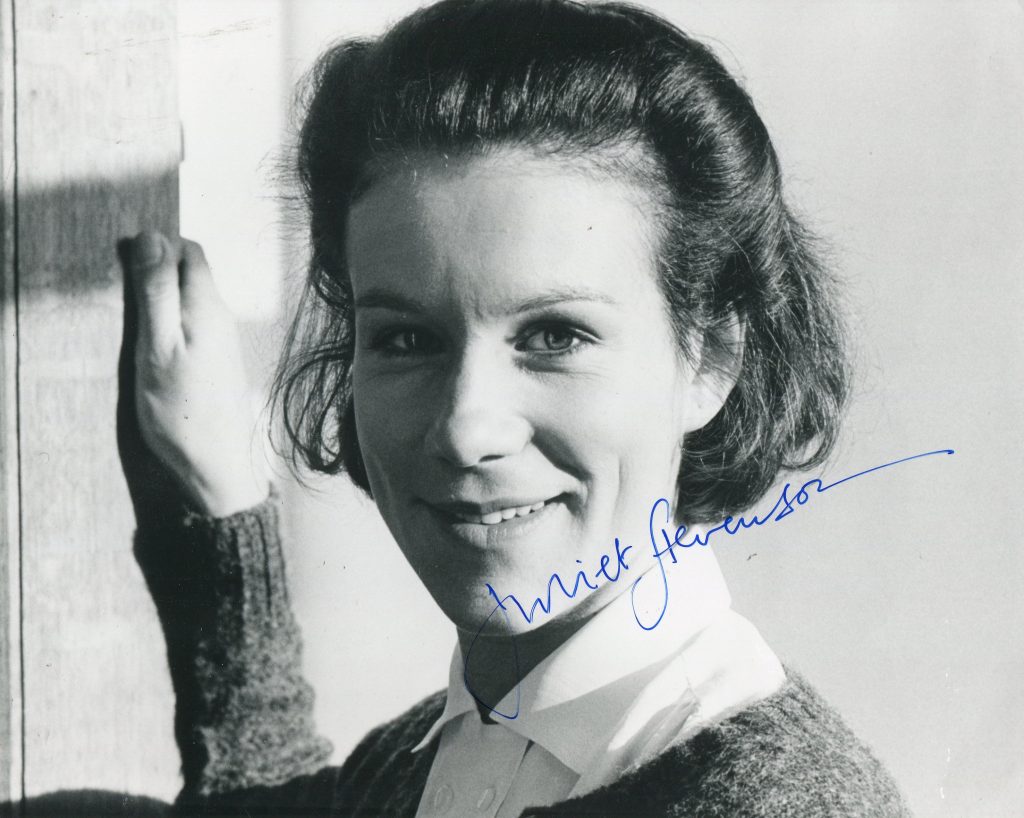
Juliet Stevenson was born in 1956 and is an English actress of stage and screen. She is known for her role in the film Truly, Madly, Deeply (1991), for which she was nominated for the BAFTA Award for Best Actress in a Leading Role. Her other film appearances include Emma (1996), Bend It Like Beckham (2002), Mona Lisa Smile (2003), Being Julia (2004), and Infamous (2006).
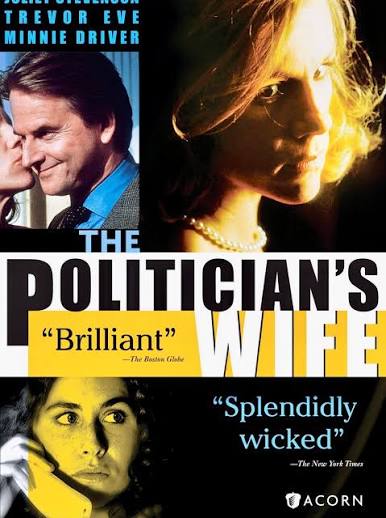
Stevenson has starred in numerous Royal Shakespeare Company and National Theatreproductions, including Olivier Award nominated roles in Measure for Measure (1984), Les Liaisons Dangereuses (1986), and Yerma (1987). For her role as Paulina in Death and the Maiden (1991–92), she won the 1992 Olivier Award for Best Actress. Her fifth Olivier nomination was for her work in the 2009 revival of Duet for One. She has also received three nominations for the BAFTA TV Award for Best Actress: for A Doll’s House(1992), The Politician’s Wife (1995) and Accused (2010). Other stage roles include The Heretic (2011) and Happy Days (2014).
Stevenson was born in Kelvedon, Essex, England, the daughter of Virginia Ruth (née Marshall), a teacher, and Michael Guy Stevenson, an army officer. Stevenson’s father was assigned a new posting every two and a half years. When Stevenson was nine, she attended Berkshire’s Hurst Lodge School, and she was later educated at the independent St Catherine’s School in Bramley, near Guildford in Surrey, and at the Royal Academy of Dramatic Art (RADA). Sevenson was part of the ‘new wave’ of actors to emerge from the Academy. Others included Jonathan Pryce, Bruce Payne, Alan Rickman, Anton Lesser, Kenneth Branagh, Imelda Staunton and Fiona Shaw. This led to a stage career starting in 1978 with the Royal Shakespeare Company.
Although she has gained fame through her television and film work, and has often undertaken roles for BBC Radio, she is known as a stage actress. Significant stage roles include her performances as Isabella in Measure for Measure, Madame de Tourvel in Les Liaisons Dangereuses, as Anna in the UK premiere of Burn This in 1990, and as Paulina in Death and the Maiden at the Royal Court theatre and the West End (1991–92). For the latter, she was awarded the 1992 Laurence Olivier Award for Best Actress.
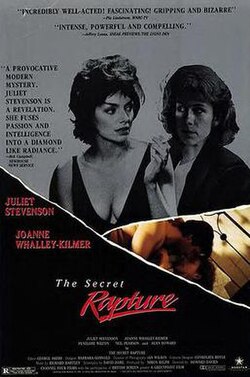
In the 1987 TV film Life Story, Stevenson played the part of scientist Rosalind Franklin, for which she won a Cable Ace award. She played the leading role in the Anthony Minghella film Truly, Madly, Deeply (1991) and her roles in The Secret Rapture (1993), Emma(1996), Bend It Like Beckham (2002) and Mona Lisa Smile (2003). She has more recently starred in Pierrepoint (2006), Infamous (2006) as Diana Vreeland and Breaking and Entering (2006) as Rosemary, the therapist. In 2003, she played the mother of an autistic child in the television film Hear the Silence, a film based on the now debunked claims of Andrew Wakefield that the MMR vaccine was responsible for autism.[7] The film and Stevenson were criticised for “trying to influence parents against MMR and dressing up science as entertainment.”
In 2009, she starred in ITV’s A Place of Execution. The role won her the Best Actress Dagger at the 2009 Crime Thriller Awards.[8] She performs as a book reader, and has recorded all of Jane Austen‘s novels as unabridged audiobooks, as well as a number of other novels, such as Lady Windermere’s Fan, Hedda Gabler, Stories from Shakespeare, and To the Lighthouse. She received lifetime achievement prize at Women In Film And TV awards.
Stevenson lives with anthropologist Hugh Brody, her partner since 1993. The couple live in Highgate, North London. They have two children, both born in Camden, London: Rosalind Hannah Brody (born 1994) and Gabriel Jonathan Brody (born late 2000/early 2001).
In 2008 she campaigned on behalf of refugee women with a reading of ‘Motherland’ at the Young Vic. She is patron of the UK registered charity LAM Action, which provides support, information and encouragement to patients with Lymphangioleiomyomatosis(LAM) and their families, and raises funds to advance research into LAM.
On 12 September 2016 Stevenson, as well as Cate Blanchett, Chiwetel Ejiofor, Peter Capaldi, Douglas Booth, Neil Gaiman, Keira Knightley, Jesse Eisenberg, Kit Harington and Stanley Tucci, featured in a video from the United Nations’ refugee agency UNHCR to help raise awareness of the global refugee crisis. The video, titled “What They Took With Them”, has the actors reading a poem, written by Jenifer Toksvig and inspired by primary accounts of refugees, and is part of UNHCR’s #WithRefugees campaign, which also includes a petition to governments to expand asylum to provide further shelter, integrating job opportunities and education.

Juliet Stevenson (born 1956) is widely regarded as one of the finest classical and contemporary actors of her generation. A “new wave” graduate of RADA, she has spent over four decades as a pillar of the British stage, particularly at the Royal Shakespeare Company and the National Theatre. Her career is characterized by an unflinching commitment to emotional truth, intellectual rigor, and a “toolbag of skills” that allows her to pivot seamlessly between high-stakes stage tragedy and nuanced screen realism.
I. Career Overview: The Stage as Foundation
1. The RSC and the Classical Ascent (1978–1989)
Joining the Royal Shakespeare Company shortly after drama school, Stevenson quickly established herself as a versatile lead.
-
Key Shakespearean Roles: Her performances as Isabella in Measure for Measure, Rosalind in As You Like It, and Cressida in Troilus and Cressida were hailed for their intellectual clarity. She didn’t just play the “ingenue”; she played women grappling with complex moral and political landscapes.
-
The “Liaisons” Breakout: She originated the role of Madame de Tourvel in the RSC’s production of Les Liaisons Dangereuses (1985), a performance that showcased her ability to portray the slow, agonizing erosion of virtue.
2. The Definitive 1990s: Truly, Madly, Deeply
While already a theater legend, 1991 made her a household name.
-
Truly, Madly, Deeply: (1991): In Anthony Minghella’s film, she played Nina, a woman grieving her dead lover (Alan Rickman). The performance is legendary for its raw, “ugly-crying” realism—a total rejection of “pretty” Hollywood grief.
-
Death and the Maiden: (1991–1992): Her role as Paulina, a torture survivor who confronts her former captor, won her the Laurence Olivier Award for Best Actress. It remains one of the most physically and emotionally demanding roles in modern British theater.
3. Mature Mastery and “The Doctor” (2010s–2026)
Stevenson has continued to dominate the London stage, often in collaboration with director Robert Icke.
-
The Doctor (2019–2022): Playing Professor Ruth Wolff, a Jewish doctor caught in a firestorm of identity politics and medical ethics, Stevenson delivered what many critics called the performance of her career.
-
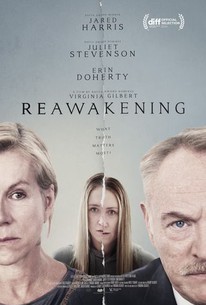
Recent Work (2024–2026): She recently starred in the domestic thriller film Reawakening (2024) and returned to the National Theatre in the historical drama The Land of the Living (2025), a resonant saga about displaced people after WWII.
II. Detailed Critical Analysis
1. The “Architecture of Grief”
Critically, Stevenson is the preeminent actress of psychological interiority.
-
The Nina Legacy: Analysts often contrast her performance in Truly, Madly, Deeply with the more stylized acting of the era. She brought a “visceral messiness” to the screen. Her ability to portray grief not as a quiet melancholy, but as a snot-nosed, gasping physical ailment, fundamentally changed how domestic tragedy was acted on film.
-
The “Waitress” of Emotion: She has often described herself as a “vessel” for the audience’s unresolved feelings, specializing in characters who are undergoing a “shattering of the self.”
2. Intellectual Ferocity
Stevenson’s acting is rarely “just” emotional; it is deeply analytical.
-
The Icke Collaborations: In plays like Mary Stuart (where she flipped a coin each night to decide if she played Elizabeth I or Mary, Queen of Scots) and The Doctor, she displayed a “surgical precision” in her dialogue. Critics note that her characters often use language as a weapon or a shield, and her delivery makes the audience feel they are watching the character “think in real-time.”
-
The Scientist/Scholar Archetype: This has made her the go-to actress for playing formidable professionals, such as her portrayal of Rosalind Franklin in Life Story (1987) and her numerous roles as therapists, scientists, and academics.
3. The Ethical Activist
A unique critical dimension of Stevenson’s career is the blurring of art and activism.
-
Role Selection: She famously rejects roles that she deems “reductive” or “two-dimensional” for women over 40.
-
The Voice of Conscience: Beyond acting, she is an outspoken activist for refugee rights and human rights. This “moral weight” carries over into her performances; there is an inherent gravity to her presence that directs the audience’s attention to the ethical core of a story.
Iconic Role Comparison
| Character | Work | Medium | Key Critical Element |
| Nina | Truly, Madly, Deeply | Film | Redefined the portrayal of grief in cinema. |
| Paulina | Death and the Maiden | Stage | A masterclass in trauma and righteous vengeance. |
| Prof. Ruth Wolff | The Doctor | Stage | Explored the complexities of identity with “clinical” intensity. |
| Mother Teresa | The Letters | Film | Subverted the saintly image by focusing on the “dark night of the soul.” |
| Mary | Reawakening(2024) | Film | A nuanced study of a mother’s desperate |