

Gregory Peck

Gregory Peck obituary in “The Guardian” in 2003.

Gregory Peck who has died aged 87, was an actor whose film career emphasised the importance of being earnest. Serious, restrained and intelligent, though never very exciting, he was one of Hollywood’s most enduring stars. 

At 6ft 3in tall, the lanky Peck was a pillar of moral rectitude standing up for decency and tolerance. In his most characteristic roles, his controlled baritone voice expressed sympathy and concern. This is the image that most cinema audiences had of him, engendered by performances such as his Oscar-winning portrayal of Atticus Finch, the white lawyer who defends a southern black man on a rape charge in To Kill A Mockingbird (1962) – Peck’s own favourite film. 

So strong is this image of Peck that his few honourable attempts at comedy, and his less successful portrayals of the baddie, are often forgotten. But he was there opposite Audrey Hepburn in Roman Holiday (1953), and Lauren Bacall in Designing Woman (1957); as he was, too, in Duel In The Sun (1946), as Captain Ahab in Moby Dick (1956) and as the Nazi Josef Mengele in The Boys From Brazil (1978). Perhaps his chiselled good looks worked against him, but Peck’s best roles were as more complex variations of his honest liberal persona. 

Director Henry King mined these characteristics best in 12 O’Clock High (1949), with Peck as a war-weary airforce officer, and in The Gunfighter (1950), in which, sporting a moustache for the first time, he played an ageing gunfighter who wants to renounce violence but whose past makes him a target for every young killer on the make. Alfred Hitchcock also used Peck effectively in Spellbound (1945), where his outward solidity masks a serious phobia. 

He was born Eldred Peck in La Jolla, California, the son of a chemist. His parents divorced when he was five, and he was brought up by his grandmother, who took him to the movies every week. Although he planned to become a doctor, and studied medicine at the University of California at Berkeley, he became more interested in acting for the stage. So, in 1939, at 23, he skipped graduation, and with $160 and a letter of introduction in his pocket, left for New York. 

There he enrolled at the Neighborhood Playhouse as Gregory Peck. “I never liked the name Eldred,” he recalled much later. “Since nobody knew me in New York, I just changed to my middle name.” 

At the Neighborhood Playhouse, he was taught movement by Martha Graham, who, he insisted, gave him the back injury that kept him out of uniform during the second world war. Later, 20th Century Fox claimed that the cause was a rowing injury. “In Hollywood, they didn’t think a dance class was macho enough, I guess. I’ve been trying to straighten out that story for years,” Peck explained. 

Gregory Peck
Gregory Peck

Years later, he made up for the story by playing military brass in Pork Chop Hill (1959), The Guns Of Navarone (1961), The Sea Wolves (1980) and, above all, the title role of [General Douglas] MacArthur (1977), though he played the flamboyant US officer as if expressing disgruntlement were enough. 

Peck made his Broadway debut as a young doctor in Emlyn Williams’s wartime drama The Morning Star (1942), with Gladys Cooper. The New York Times critic wrote, “Peck plays with considerable skill, also avoiding in his acting the romantic tosh of the writing.” 

A year later, he was in Hollywood, where he starred as a Russian partisan in Days Of Glory, a performance he preferred to forget. But he was nominated for an Oscar for his second film, The Keys Of The Kingdom (1944); based on the AJ Cronin novel, it gave Peck the chance to exude righteousness as a simple Catholic priest in China. 

Peck continued to define decency in The Valley Of Decision (1945), as the scion of a mine-owning family who marries the maid (Greer Garson) against his parents’ wishes, and as the stern, but loving, father in The Yearling (1946). In Gentleman’s Agreement (1947), he had the archetypal Peck role as a journalist posing as a Jew to investigate American anti-semitism. He is particularly good when his repressed anger surfaces at a hotel where there are apparently no rooms available. 

That same year, with Dorothy McGuire and Mel Ferrer, Peck founded the La Jolla Playhouse in southern California. There, he appeared in Patrick Hamilton’s thriller Angel Street, Elliott Nugent’s The Male Animal and Moss Hart’s Light Up The Sky, before his film schedule became increasingly demanding. 

Among his movies of the late 1940s and early 50s were two Hemingway adaptations, The Macomber Affair (1947), in which he was a white hunter resisting married Joan Bennett’s advances, and The Snows Of Kilimanjaro (1952), having his pick of Ava Gardner and Susan Hayward. He played opposite Hayward again in David And Bathsheba (1951), cast because Darryl F Zanuck thought he had “a biblical face”. 

But it was in westerns that Peck’s dour integrity showed itself best: unshaven and tough in Yellow Sky (1948); a dude learning to adapt to the west in The Big Country (1958); and obsessively after the men who raped and killed his wife in The Bravados (1958). 

In the swinging 1960s, Peck’s sober style seemed a little out of place, though he appeared in a couple of flashy Hitchcockian thrillers, Mirage (1965) and Arabesque (1966), and adapted to the new Hollywood as best he could, looking rather bothered as the father of a demon in The Omen (1976). 

Always a supporter of liberal causes, he was simultaneously outspoken against the Vietnam war, while remaining a patriotic supporter of his oldest son, Jonathan, who was fighting there. In 1972, he produced the film version of Philip Berrigan’s play, The Trial Of The Catonsville Nine, about the prosecution of a group of Vietnam protesters for civil disobedience. 

In the 1980s, Peck moved into television with the mini series The Blue And The Gray (1982), in which he played Abraham Lincoln. Still handsome into old age, with animated black eyebrows under a grey mane, in 1995 he started touring in a show of film clips and reminiscences, anwering questions from the audience, a task he continued for a further seven years. “I don’t lecture and I don’t grind any axes. I just want to entertain,” Peck remarked. 

He is survived by his second wife, the French journalist Veronique Passani, whom he married in 1955, their son and daughter, and by the younger of the two sons of his first marriage. The older son, Jonathan, killed himself with a shotgun in 1975. 

Derek Malcolm writes… 

I met Gregory Peck on several occasions, and his courtesy did not seem as false as some of those faced by a critic who might be inclined otherwise to snipe at them. He was modest enough to consider himself lucky to have lasted so long in people’s affections, but proud of his achievements in film, while insisting that many of his directors and co-stars helped him gain his reputation. 

He was a genuinely nice man, largely unspoilt by fame, though latterly a bit miffed that he was not hired more often, not just for old times’ sake but because he was actually worth it. The problem was that few wanted to use him in any way other than as an American version of the slightly stiff-upper-lipped nature’s gentleman. Indeed, so strongly did he portray this character that he seemed almost like a distant cousin of Abraham Lincoln. 

Like James Stewart and Gary Cooper, Peck expressed in very tangible form so much with his mere presence that sometimes he scarcely had to act at all. But he never took the easy way out. He always tried hard and, though a little limited, generally succeeded. Principally, his work reflects that, in the movies, less almost always means more. It is a lesson some of the twitching heroes who copy Marlon Brando have yet to learn, skulking in their luxurious caravans waiting for inspiration. 

· Eldred Gregory Peck, actor, born April 5 1916; died June 12 2003.
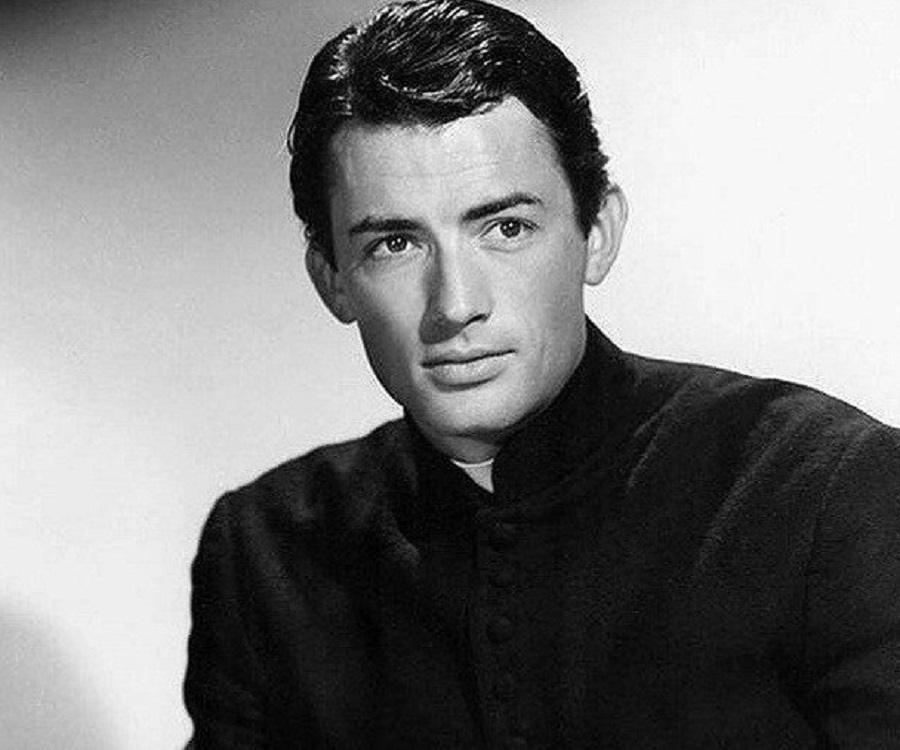
Gregory Peck (1916–2003) was the “conscience of Hollywood.” Standing 6’3″ with a resonant baritone and a face that seemed carved from granite, he became the ultimate cinematic symbol of American rectitude, dignity, and quiet strength.

While he is often remembered as the “perfect” man, a critical analysis of his five-decade career reveals an actor who frequently fought against his own heroic image, seeking out roles that explored trauma, obsession, and moral ambiguity.


Career Overview

  • The Overnight Sensation (1944–1945): After a brief but acclaimed Broadway career, Peck arrived in Hollywood during WWII. Because of a spinal injury that kept him out of the draft, he was in high demand. His second film, The Keys of the Kingdom (1944), earned him his first Oscar nomination and established his “saintly” screen persona.

  • The Hitchcock and Noir Years (1945–1950): Peck quickly sought to complicate his image. He played an amnesiac murder suspect in Hitchcock’s Spellbound (1945) and a ruthless, leather-clad outlaw in the controversial “lusty” western Duel in the Sun (1946).

  • The “Social Conscience” Era (1947–1962): He became the face of Hollywood’s postwar liberalism, starring in Gentleman’s Agreement (1947), the first major film to tackle anti-Semitism. This culminated in his career-defining role as Atticus Finch in To Kill a Mockingbird (1962), for which he won the Academy Award.

  • The Elder Statesman and the “Omen” Pivot (1970s–1990s): In his later years, Peck surprised critics by leaning into the thriller genre with The Omen (1976) and playing the villainous Nazi doctor Josef Mengele in The Boys from Brazil (1978).


Detailed Critical Analysis

1. The Architecture of “The Good Man”

Critically, Peck is analyzed for his physical and moral stasis. Unlike the kinetic energy of James Cagney or the “everyman” anxiety of Jimmy Stewart, Peck’s power came from his stillness.

  • The Atticus Finch Archetype: In To Kill a Mockingbird, Peck’s performance is built on listening. Critics note that he rarely raises his voice; the moral weight comes from his posture and his refusal to look away.

  • The Voice as Moral Authority: His baritone was used as a tool of persuasion. In films like Twelve O’Clock High (1949), he used his voice to project “leadership under pressure,” creating the blueprint for the modern cinematic military commander.

2. Subverting the Hero: The Obsessive Peck

While the public loved “Heroic Peck,” critics often find his most interesting work in his “Obsession Trilogy.”

  • Moby Dick (1956): Playing Captain Ahab, Peck pushed against his natural dignity to play a man consumed by madness. At the time, critics felt he was “too noble” for the role, but modern re-evaluations praise his “submerged” performance, noting how he used his height to make Ahab’s physical decay more tragic.

  • The Gunfighter (1950): In this landmark “psychological western,” Peck played Jimmy Ringo, a tired outlaw who just wants to retire. Critics point out that Peck was the first star to wear a “handlebar mustache” in a Western (which the studio hated), using it to signify the character’s weariness and age.

3. The “Gentleman” in Conflict

Peck was one of the few stars who could play “romance” and “intellect” simultaneously.

  • Roman Holiday (1953): Critically, Peck is praised here for his generosity. As a veteran star, he insisted that the newcomer Audrey Hepburn get equal billing above the title. His performance is a masterclass in “the reaction”: he allows Hepburn to be the center of gravity while he provides the sophisticated, protective frame.

  • The Big Country (1958): In this film, his character refuses to engage in a public brawl, being labeled a coward by the town. Critics analyze this as the “Essential Peck”: a man whose masculinity is so secure he doesn’t feel the need to prove it through violence.

4. The Boys from Brazil (1978): The Villainous Turn

One of the most analyzed shifts in his career was his portrayal of Josef Mengele.

  • The Mirror Image: Critics noted that by casting the “Most Trusted Man in America” as one of history’s greatest monsters, the film created a visceral sense of horror. Peck relished the role, using a sharp, clipped German accent and a predatory sneer that stripped away every ounce of his “Atticus” warmth.


Major Awards & Milestone Credits

Project Role Significance
The Keys of the Kingdom Father Chisholm His first Oscar nomination; established his “moral” persona.
Gentleman’s Agreement Philip Schuyler Green Tackled anti-Semitism; cemented him as a “Social Conscience” star.
Roman Holiday Joe Bradley Showcased his romantic leading-man charm and legendary screen chemistry.
To Kill a Mockingbird Atticus Finch Oscar Win; voted the #1 Movie Hero of All Time by the AFI.
The Omen Robert Thorn Proved he could carry a modern blockbuster in the horror genre.

Legacy of the “AFI Top Hero”

In 2003, the American Film Institute named Atticus Finch the Greatest Movie Hero in history. Critically, this legacy is seen as a double-edged sword: it immortalized Peck as a symbol of justice, but it sometimes overshadowed his technical versatility as a character actor who could play cowards, killers, and madmen just as effectively.

The 1962 Alabama premiere of To Kill a Mockingbird was a complex cultural event. While the rest of the world saw a heartwarming masterpiece, the “Deep South” reception was a mix of intense local pride for author Harper Lee and a cautious, sometimes defensive reaction to the film’s portrayal of racial injustice.

1. The Birmingham News & Local Pride

The Birmingham News and other major Alabama papers were initially effusive, but their praise often focused on the authenticity of the setting rather than the political message.

  • The “Homegrown” Success: Reviews heavily emphasized that the child actors, Mary Badham (Scout) and Phillip Alford (Jem), were Birmingham natives. The press treated them like local heroes, with the Birmingham News noting that they “didn’t have to act—they just were right.”

  • A “Believable” Alabama: Critics praised the film’s “down-to-earth” depiction of the Depression-era South. By focusing on the “small-town” charm and childhood innocence, many Southern reviewers were able to embrace the film as a nostalgic piece of their own history.

2. Critical “Fire” in the Deep South

While the national press was unanimous in its acclaim, Southern critics recognized the “inflammatory” nature of the trial.

  • The Mobile Press-Register: This paper famously noted that while it was a “wonderfully absorbing story,” it would undoubtedly “come under some fire in the Deep South.”

  • The Defensiveness: Some local editorials bristled at what they perceived as “Northern liberalism” or “Anti-Southern” propaganda. There was a prevailing sentiment among some more conservative readers that the film portrayed the entire white population of the South through the lens of the “despicably nasty” Bob Ewell.


3. Gregory Peck: The “Un-Hollywood” Southerner

Interestingly, the Alabama press was remarkably kind to Gregory Peck, despite him being a Californian playing a Southerner.

  • The “Atticus” Seal of Approval: The fact that Harper Lee herself publicly stated that Peck was her father (the model for Atticus) carried immense weight in Alabama. Her endorsement silenced many critics who might have otherwise nitpicked his accent or “outsider” status.

  • The Verdict on the Closing Speech: Even in the racially charged climate of 1962 Alabama, Peck’s nine-minute closing argument was described as “compassionate and democratic.” Some reviewers focused on Atticus as a “principled gentleman” of the Old South—a framing that made his challenge to the status quo more palatable to local audiences.


Reception Comparison: Alabama vs. The Nation (1962)

Feature Alabama Press Focus National (NYC/LA) Focus
Acting Local children (Badham/Alford). Gregory Peck’s Oscar-worthy turn.
Setting Accuracy of the “Maycomb” set. The “Universal” small-town tragedy.
Race Theme A “delicate” or “painful” depiction. A “plea for tolerance” and justice.
Boo Radley The “creepy neighbor” legend. Robert Duvall’s haunting debut.

Legacy in the South

Decades later, the film’s reception in Alabama has shifted from “controversial” to “foundational.” The Old Monroe County Courthouse in Monroeville (Harper Lee’s hometown) is now a museum where the play is performed annually, and Mary Badham remains a beloved figure in the Birmingham arts community.

Leave a Reply

Your email address will not be published. Required fields are marked *