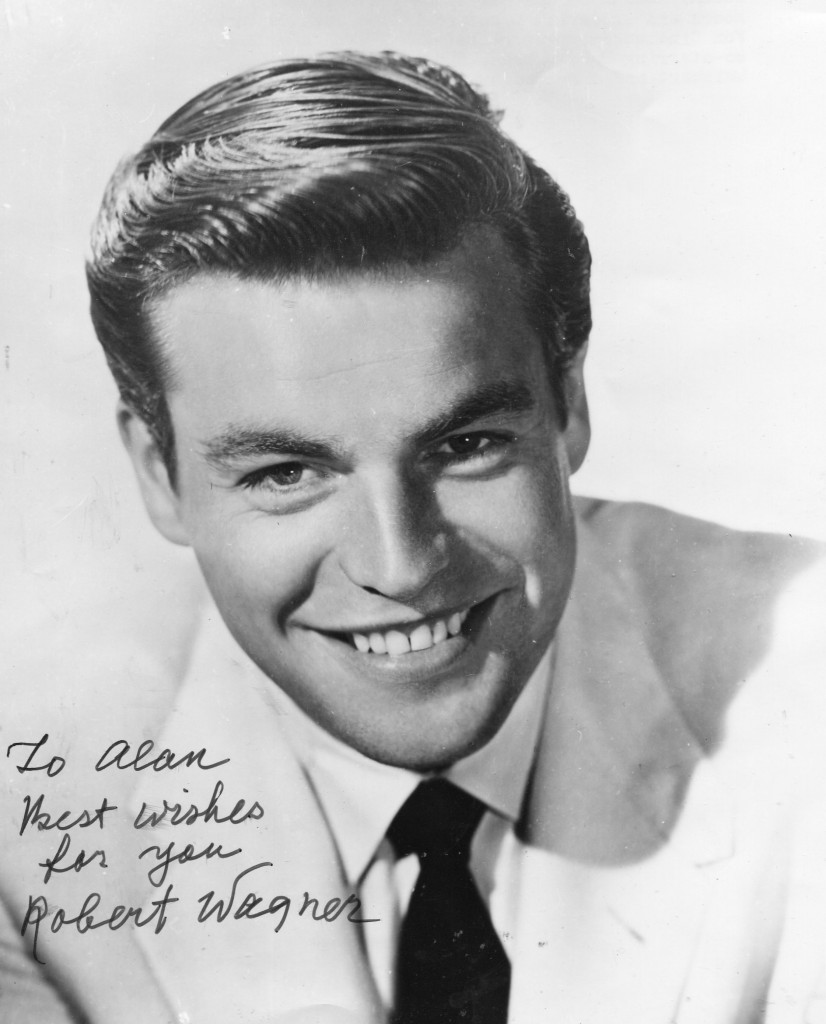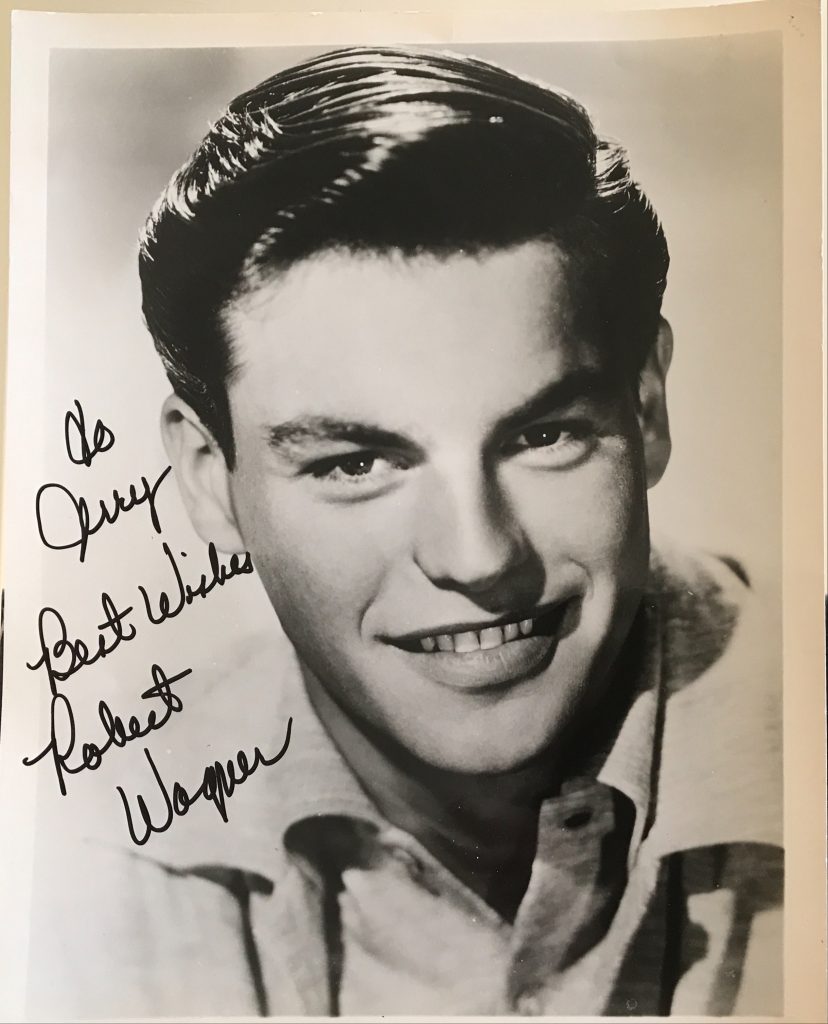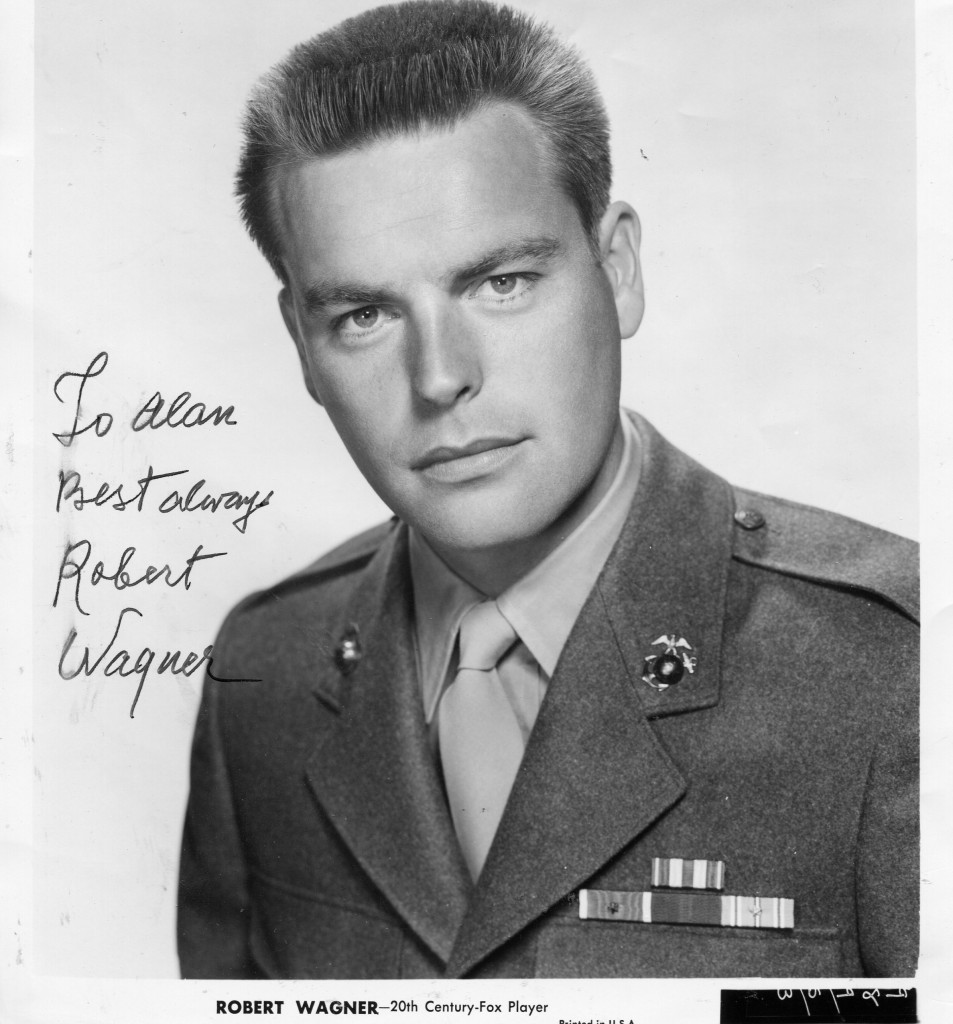

Ben Murphy is best known for the very popular television series “Alias Smith & Jones” with the late Pete Duel which ran from 1972 to 1973. He was born in Arkansas in 1942. When the series filded, he starred in several other shows. In 1983 he starred in the very popular TV mini-series “The Winds of War”. His film career has not been extensive but he was in “The Graduate”, “Your’s Mine and Ours” and “To Protect and Serve”. Ben Murphy’s website can be accessed here.
“Wikipedia” entry:
Ben Murphy was born in Jonesboro, Arkansas, to Nadine (Steele) and Benjamin E. Castleberry. When his mother remarried in 1956, Ben was adopted by his stepfather, Patrick Henry Murphy.[3] Murphy grew up in Clarendon Hills, Illinois, a suburb of Chicago.[1] An alumnus of Benet Academy in Lisle, Illinois,[citation needed] he attended eight colleges before deciding to pursue an acting career.
Murphy appeared in a supporting role in The Name of the Game, a series featuring a rotating leading cast including Tony Franciosa,Gene Barry, and Robert Stack. Murphy played a semi regular role as ‘Joseph Sample’ assistant to Robert Stack’s leading character ‘Dan Farrell’ in Stack’s segments of the show. From 1971 to 1973, he starred in Alias Smith and Jones with Pete Duel (1971–72) andRoger Davis (1972–73). After Alias Smith and Jones, Murphy joined Lorne Greene in the 1973 ABC crime drama Griff. He played detective S. Michael “Mike” Murdock, assistant to Greene’s character, Wade “Griff” Griffin, a Los Angeles retired police officer turned private eye. The series had some notable guest stars but folded after thirteen weeks. In the 1983–84 season, Murphy co-starred with Marshall Colt in the ABC drama series Lottery!. Murphy played Patrick Sean Flaherty, the man who informed lottery winners of their stroke of fortune, and Colt, formerly with James Arness on NBC‘s short-lived crime drama,McClain’s Law, portrayed the Internal Revenue Service agent, Eric Rush, who made sure the winners pay the U.S. government up front.
In 1985, Murphy co-starred as department store heir, Paul Berrenger, on the short-lived drama, Berrenger’s. His character was at odds with his former wife, Gloria (Andrea Marcovicci) and his own father, Simon (Sam Wanamaker) due to his romance with executive, Shane Bradley (Yvette Mimieux). Murphy starred in his own series Gemini Man, in which he played a secret agent who could become invisible for 15 minutes a day through the use of a special wristwatch. However, the show did not run beyond a single season. Murphy has since appeared in guest-starring parts, including having been a murder suspect in CBS‘s Cold Case.
The above “Wikipedia” entry can also be accessed online here.
Brian Hyland was born in 1943 and is an American pop singer and instrumentalist who was particularly successful during the early 1960s. He continued recording into the 1970s. Allmusicjournalist Jason Ankeny says “Hyland’s puppy-love pop virtually defined the sound and sensibility of bubblegum during the pre-Beatles era.”Although his status as a teen idol faded, he went on to release several country-influenced albums and had additional chart hits later in his career.
Hyland was born in Woodhaven, Queens, New York City. He studied guitar and clarinet as a child, and sang in his church choir. When aged 14 he co-founded the harmony group the Delfis, which recorded a demo but failed to secure a recording contract. Hyland was eventually signed by Kapp Records as a solo artist, issuing his debut single, “Rosemary”, in late 1959. The label employed the Brill Buildingsongwriting duo of Lee Pockriss and Paul Vance to work with Hyland on the follow-up, “Four Little Heels (The Clickety Clack Song)”, which was a minor hit, and the songwriting duo continued to work with Hyland
Thus in August 1960, Hyland scored his first and biggest hit single at the age of 16, “Itsy Bitsy Teenie Weenie Yellow Polkadot Bikini“, written by Vance and Pockriss. It was a novelty song that reached #1 on the Billboard Hot 100chart, (#8 in the UK) and sold almost a million copies in the first two months of its release, and over two million copies in total. It got rewarded a RIAA certification as a golden disc.
Hyland moved on to ABC-Paramount Records, where he began working with the songwriting and production team of Gary Geld and Peter Udell, and further hits followed with “Let Me Belong to You” and “I’ll Never Stop Wanting You”.[1]
Hyland’s other major hit during this period was 1962’s “Sealed with a Kiss“, which reached #3 in 1962 on both the American and UK Singles Chart.[4][6] It stayed on the US pop chart for eleven weeks and got rewarded as a Recording Industry Association of America golden disc too. Another 1962 hit was “Ginny Come Lately”, which reached #21 on the U.S. chart and #5 in the UK.[4][6] Hyland’s 1962 Top 30 hit “Warmed-Over Kisses (Leftover Love)” incorporated elements of country music into his work, which continued with singles including “I May Not Live to See Tomorrow” and “I’m Afraid to Go Home” and on the 1964 album Country Meets Folk. This approach was out of step with the changes brought about by British Invasion bands. Hyland’s commercial success became limited, but he continued that in vein and had further hits with “The Joker Went Wild” and “Run, Run, Look and See”, working with producer Snuff Garrett and sessionmusicians including J. J. Cale and Leon Russell.
Hyland appeared on national television programs such as American Bandstand and The Jackie Gleason Show, and toured both internationally and around America with Dick Clark in the Caravan of Stars. The caravan was in Dallas, Texas on the day of the assassination of President Kennedy in 1963.[7][8] To commemorate the event, Hyland wrote the song “Mail Order Gun”, which he recorded and eventually released on his 1970 eponymous album.
From 1963 through 1969, Hyland scored several minor hits, but none reached higher than #20 (“The Joker Went Wild”) on the U.S. pop chart. An album released in 1964 featured numbers that hearkened back to the 1950s including such hits as “Pledging My Love” and “Moments to Remember”—at a time when The Beatles were sweeping the pop music world with a very different style. Hyland afterward shifted into a phase of recording country music and folk rock styles. Songs such as “I’m Afraid To Go Home” and “Two Brothers” had an American Civil War theme. Hyland played harmonica on a few numbers.
Hyland attempted several departures from the norm, including the psychedelic single “Get the Message” (#91 on the U.S. pop chart), and “Holiday for Clowns” (#94), but despite their more contemporary arrangements, they failed to get much airplay. He went on to chart just two more Top 40 hits, both cover versions, in 1971: “Gypsy Woman” a 1961 hit for The Impressions written by Curtis Mayfield, and “Lonely Teardrops“, a 1959 hit for Jackie Wilson. Hyland recorded them in 1970, and Del Shannon produced the tracks. “Gypsy Woman” reached #3 on the 1970 U.S. pop chart, making it the second-biggest hit of his career, selling over one million copies, and being certified gold by the RIAA in January 1971. Two of his previous hits, “Itsy Bitsy Teenie Weenie Yellow Polkadot Bikini” and “Sealed with a Kiss” were also awarded gold discs.
In 1975, “Sealed With A Kiss” became a hit again in the UK (#7) and Hyland performed the song on Top Of The Pops on July 31 of the same year. By 1977, he and his family had settled in New Orleans, and in 1979 the In a State of Bayou album, on which he had worked with Allen Toussaint, was issued by the Private Stock label.
In June 1988, Dutch singer Albert West asked Hyland to record some duets of his hits: “Itsy Bitsy Teenie Weenie Yellow Polkadot Bikini“, “Sealed With A Kiss” and “Ginny Come Lately”, the latter song had been covered before by Albert West in 1973, becoming his biggest – a huge European continental – hit. “Itsy Bitsy…” was released as a single and reached #43 on the Dutch singles chart. Hyland and West performed on TV shows in Germany, Belgium and a Dutch TV special in Aruba.
Today, Hyland continues to tour internationally with his son Bodi, who assists on drums from time to time.
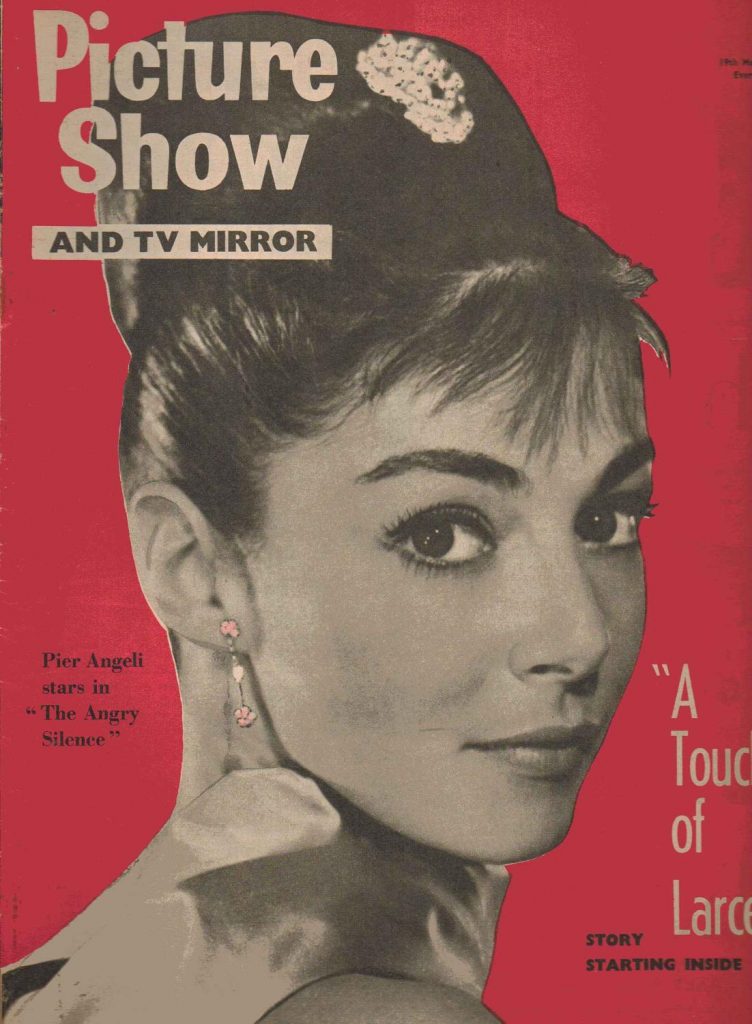
Brian Murray was born in South Africa in 1937. He began his acting career in Britain and had a prominent supporting role in “The Angry Silence” as one of the thugs menancing Richard Attenborough. His career though has been primarily on the stage in the U.S.A.
Gary Brumburgh’s entry:
This wonderfully witty, enormously talented, classically-trained theatre actor has yet to find THE film project to transition into twilight screen stardom; yet, at age 70 plus, there is still a glimmer of hope for Brian Murray if one fondly recalls the late-blooming adulation bestowed upon such illustrious and mature stage stars Judi Dench, Hume Cronyn and Jessica Tandy.
Born Brian Bell in September of 1937 in Johannesburg, South Africa, the Shakespearean titan attended King Edward VII School, while there. It must have been a sign. He made his stage bow in 1950 as “Taplow” in “The Browning Version” and continued on the South African stage until 1957. Though he made his film debut fairly early in his career with The League of Gentlemen (1960) and showed strong promise and presence in The Angry Silence (1960), his first passion was, and is, the theatre and instead chose to join the Royal Shakespeare Company where his impressively youthful gallery of credits included those of “Romeo”, “Horatio” in “Hamlet”, “Cassio” in “Othello”, “Edgar” in “Lear” and “Lysander” in “A Midsummer Night’s Dream”.
Eventually Broadway (off- and on-) took notice of this mighty thespian and utilized his gifts quite well over the years. A three-time Tony nominee (for “Rosenkrantz and Guildenstern Are Dead”, “The Little Foxes” and “The Crucible”), not to mention a recipient of multiple Obie (“Ashes” and “The Play About the Baby”) and Drama Desk (“Noises Off”, “Travels with My Aunt” and “The Little Foxes”) awards, this lofty veteran continues to mesmerize live audiences with a wide range of parts, both classical and contemporary. Two of his later roles, that of “Sir Toby Belch” in “Twelfth Night” and “Claudius” in “Hamlet”, were taken to TV and film. A more recent movie project was a nice change of pace — voicing the flamboyant role of “John Silver” in the animated feature, Treasure Planet (2002).
– IMDb Mini Biography By: Gary Brumburgh / gr-home@pacbell.net
Dennis Cole was an American screen and television actor who featured in several TV series. He was born in 1940 in Detroit. In 1966 he was in his first series “Felony Squad”. He was in “Bracken’s World” and then went on to star with Rod Taylor in the series “Bearcats”. He died in 2009. His obituary in “The New York Times” here.
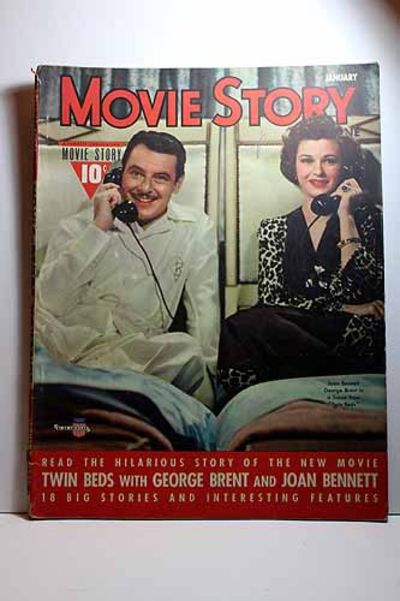
Gary Brumburgh’s entry:
A virile, beefcake blond of the late 1960s and 1970s small screen, Dennis Cole certainly had it all going for him, but tragic circumstances prevented an all-out successful career. A rugged TV version of Robert Redford, his tan, chiseled, surfer-fit looks were ideally suited for crime action and adventure stories and he gained ground by appearing everywhere — daytime soaps, prime-time series, mini-movies — you name it.
The Detroit-born and -raised stunner was the son of Joseph C. Cole, a musician during the 1940s and 1950s. His parents, both alcoholics, divorced when he was young (his father later committed suicide). Dennis was first noticed on the pages of physique magazines serving the likes of Robert Henry Mizer (aka Bob Mizer) and his Athletic Models Guild as well as other photographers. Paying his dues as a motion picture and television stuntman, Cole also appeared in an occasional bit part and in the background of a few movie musicals. His photogenic appeal could not be denied for long and eventually he took a front-and-center position, launching his acting career on the short-lived daytime soap Paradise Bay (1965) as a spoiled rich boy who causes tongues to wag after falling for a Mexican girl. However, it was the subsequent nighttime police seriesFelony Squad (1966) alongside veterans Howard Duff and Ben Alexander (of Dragnet(1951) fame) that set Cole’s TV career in high gear. As hunky rookie detective Jim Briggs, Dennis was able to ride high on the fame his two-and-a-half season series offered.
With this success came two very short-lived series: the glossy ensemble drama Bracken’s World (1969) and opposite Rod Taylor as a trouble-prone stud in the more adventurousBearcats! (1971). Females couldn’t get enough of Cole and his athletic skills had males idolizing from afar. Guest appearances on Medical Center (1969), Barnaby Jones (1973),Police Story (1973), Love, American Style (1969), The Love Boat (1977), The Streets of San Francisco (1972) and Police Woman (1974) kept him highly visible in between series runs. During this career peak, he made his Broadway debut in “All the Girls Came Out to Play” in 1972. He also decided to tap into his musical side and dabbled in his own musical revue, which showcased on the Sunset Strip and in Las Vegas. A guest TV appearance on Charlie’s Angels (1976) led to his meeting and, in 1978, marrying “Angel”Jaclyn Smith. As one of Hollywood’s more beautiful couples, they kept cameras flashing for a number of years until their breakup and divorce in 1981.
The early 1980s started off well for Cole as replacement “Lance Prentiss” in the soap-opera The Young and the Restless (1973) in 1981. Very much a product of TV, he was unable to permanently transition into films; he appeared occasionally in dismissible low-budget action fare such as Amateur Night (1986), Death House (1987), Pretty Smart(1987), Dead End City (1988) and Fatal Encounter (1990). He continued showing up on all the popular series of the day, including Silk Stalkings (1991), Murder, She Wrote (1984),Pacific Blue (1996) and Baywatch Nights (1995), among others, while appearing in such legit stage plays as “The Tender Trap”, “Lovers and Other Strangers”, “The Boys in the Band”, and the British farces “Run for You Life” and “Out of Order”. Very much involved with charity work, his endeavors over the years have included an over-two-decade involvement with the Cancer Society (Honorary Chairman), as well as the Arthritis and Cystic Fibrosis foundations.
Dennis’ later personal and professional lives suffered as a result of a chronic alcohol problem, but an even greater setback occurred when his only child, Joey (whom he named after his father), was murdered during a 1991 robbery attempt in Venice, California. He continued to perform on TV and stage (as the “Narrator” in a production of “Blood Brothers” and the James Garner “King Marchan” role in the first national tour of the musical “Victor/Victoria”). Severe injuries suffered while performing in the latter show led to multiple surgeries, a three-year convalescence and a new direction.
Dennis returned to school and started up his own real estate company, setting up an office in Fort Lauderdale, FL. Married for several years to his third wife Marjorie (“Ree”), Dennis filed for divorce in May of 2007, which became final on April 21, 2008. He died at age 69 on November 15, 2009, in a Fort Lauderdale hospital of liver failure.
– IMDb Mini Biography By: Gary Brumburgh / gr-home@pacbell.
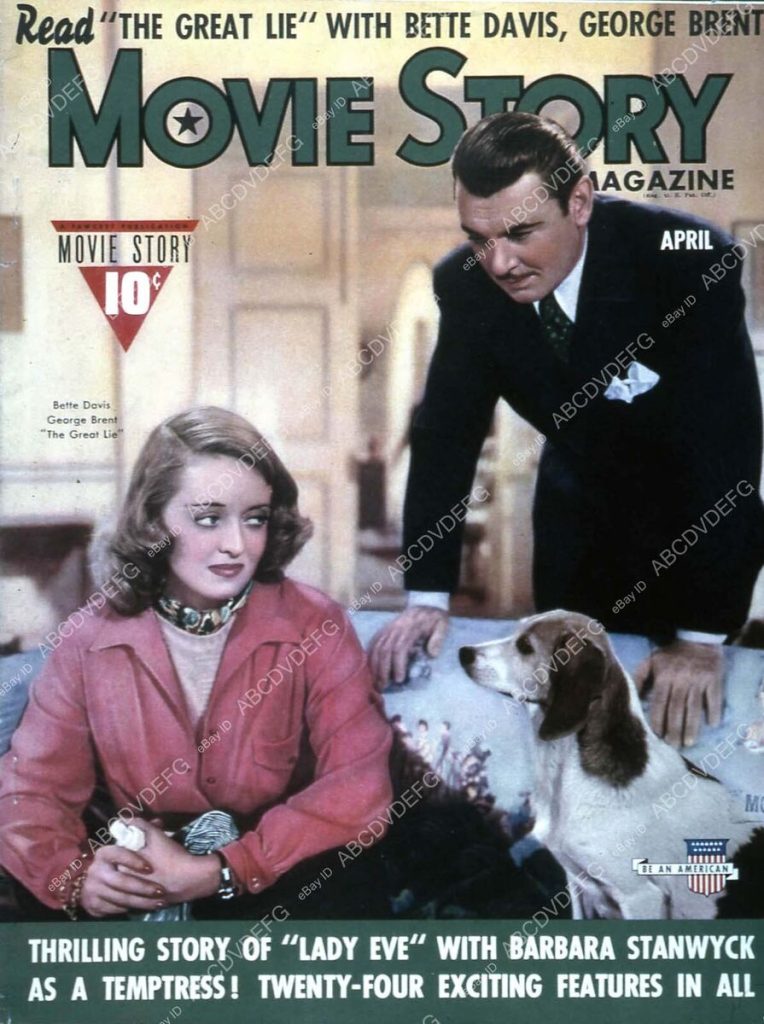
Charles Lane was an American character actor who died at the age of 102 in 2007. His last film was “The Night Before Christmas” which he made when he was 101 years old. He was a solid reliable actor who usually played cranky neighbours or grouchy hotel clerks/sales assistants. He was very active in both film and television. He was never a leading player but was easily identifible in the background or in a supporting part. Among his many films are “It’s A Wonderful Life”, “”You Can’t Take It With You”, “Golden Boy” and “Mr Smith Goes to Washington”.
“Guardian” obituary:
Charles Lane, who has died aged 102, was probably the most celebrated of “I-know-the-face-but-not-the-name” actors. Most filmgoers, some time or other, were bound to have seen the prolific Lane, who made hundreds of appearances in films and on television.
If casting directors wanted a mean-spirited bureaucrat, hard-hearted businessman, tightfisted relative, crotchety clerk or cantankerous neighbour, the thin, sour-faced, bespectacled Lane was their man. On being typecast, he commented that it was “a pain in the ass. You did something that was pretty good, but that pedigreed you into that type of part, which I thought was stupid and unfair. It didn’t give me a chance, but it made the casting easier for the studio.”
Most typical was his role in Frank Capra’s It’s a Wonderful Life (1946) as the rent collector for Mr Henry F Potter (Lionel Barrymore), the richest and meanest man in the county, who owns every institution in Bedford Falls except the Bailey Building and Loan Society. “Look, Mr Potter, it’s no skin off my nose,” Lane says, using his most raspy voice. “I’m just your little rent collector. But you can’t laugh off this Bailey Park any more. Dozens of the prettiest little homes you ever saw. Ninety per cent owned by suckers who used to pay rent to you. The Baileys were all chumps. Every one of these homes is worth twice what it cost the Building and Loan to build.”
Of course, Lane would never be in a role as big as Barrymore’s, though he admitted that “having had so many small parts, there was a [type of] character I played that showed up all the time and people did get to know him, like an old friend.” During his busiest period in films, the 1930s and 40s, he would sometimes play more than one role at once, getting into costume and filming his two or three lines, then hurrying off to another set for a different costume and different role.
Lane was born in San Francisco as Charles Gerstle Levison. Appropriately, he started out as an insurance salesman until an acquaintance, film director Irving Pichel suggested he try acting. His first role in the movies was in the uncredited role of a hotel clerk in Smart Money (1931), which starred Edward G Robinson and James Cagney. After a dozen further uncredited parts, he was named (as Charles Levison) playing the cashier in Blondie Johnson (1933). Capra gave him more than a couple of lines as a gangster in Broadway Bill (1934), a lawyer in Mr Deeds Goes to Town (1936), a tax collector in You Can’t Take it With You (1938), newspaper reporters in Mr Smith Goes to Washington (1939) and Arsenic and Old Lace (1944), and It’s a Wonderful Life.
For decades, Lane was also a permanently scowling regular on television, in Petticoat Junction as a scheming, cost-cutting railroad executive; The Beverly Hillbillies as an untrustworthy landlord; Dennis the Menace as a drugstore owner, and Soap, as a judge. He was often seen in I Love Lucy in different roles and later played Lucy’s banker boss on The Lucy Show, belying his stern acting persona.
Lane was known to be a gentle, kind, warm and witty man. In 1990, he was rushed to hospital, having difficulty breathing. When asked if he smoked, he replied that he had kicked the habit 45 minutes earlier. He never smoked again. His last performance, as grumpy as ever, was aged 90, in the television remake of The Computer Wore Tennis Shoes (1995). His last public appearance was at the 2005 Emmy awards, when he was honoured as one of the founders of the Screen Actors Guild in 1933. Appearing via satellite, he announced: “Hello, I’m Charles Lane. I’m an actor and I’m 100 years old. And, in case anyone’s interested, I’m still available.”
In 1931, Lane married his childhood sweetheart Ruth Covell. They remained together until her death in 2002. He is survived by his son and daughter.
· Charles Lane (Charles Gerstle Levison), actor, born January 26 1905; died July 9 2007
His obituary by Ronald Bergan in “The Guardian” can also be accessed here.
Gary Brumburgh’s entry:
Mean, miserly and miserable-looking, they didn’t come packaged with a more annoying and irksome bow than Charles Lane. Glimpsing even a bent smile from this unending sourpuss was extremely rare, unless one perhaps caught him in a moment of insidious glee after carrying out one of his many nefarious schemes. Certainly not a man’s man on film or TV by any stretch, Lane was a character’s character. An omnipresent face in hundreds of movies and TV sitcoms, the scrawny, scowling, beady-eyed, beak-nosed killjoy who usually could be found peering disdainfully over a pair of specs, brought out many a comic moment simply by dampening the spirit of his nemesis. Whether a Grinch-like rent collector, IRS agent, judge, doctor, salesman, reporter, inspector or neighbor from hell, Lane made a comfortable acting niche for himself making life wretched for someone somewhere.
He was born Charles Gerstle Levison on January 26, 1905 in San Francisco and was actually one of the last survivors of that city’s famous 1906 earthquake. He started out his working-class existence selling insurance but that soon changed. After dabbling here and there in various theatre shows, he was prodded by a friend, director Irving Pichel, to consider acting as a profession. In 1928 he joined the Pasadena Playhouse company, which, at the time, had built up a solid reputation for training stage actors for the cinema. While there he performed in scores of classical and contemporary plays. He made his film debut anonymously as a hotel clerk in Smart Money (1931) starring Edward G. Robinson and James Cagney and was one of the first to join the Screen Actor’s Guild. He typically performed many of his early atmospheric roles without screen credit and at a cost of $35 per day, but he always managed to seize the moment with whatever brief bit he happened to be in. People always remembered that face and raspy drone of a voice. He appeared in so many pictures (in 1933 alone he made 23 films!), that he would occasionally go out and treat himself to a movie only to find himself on screen, forgetting completely that he had done a role in the film. By 1947 the popular character actor was making $750 a week.
Lane’s career was interrupted for a time serving in the Coast Guard during WWII. In post-war years, he found TV quite welcoming, settling there as well for well over four decades. Practically every week during the 1950s and 1960s, one could find him displaying somewhere his patented “slow burn” on a popular sitcom – Topper (1953), The Real McCoys (1957), The Many Loves of Dobie Gillis (1959), Mister Ed (1958), Bewitched(1964), Get Smart (1965), Gomer Pyle: USMC (1964), The Munsters (1964), Green Acres(1965), The Flying Nun (1967) and Maude (1972). He hassled the best sitcom stars of the day, notably Lucille Ball (an old friend from the RKO days with whom he worked multiple times), Andy Griffith and Danny Thomas. Recurring roles on Dennis the Menace (1959),The Beverly Hillbillies (1962) and Soap (1977) made him just as familiar to young and old alike. Tops on the list had to be his crusty railroad exec Homer Bedloe who periodically caused bucolic bedlam with his nefarious schemes to shut down the Hooterville Cannonball on Petticoat Junction (1963). He could also play it straightforward and serious as demonstrated by his work in Twilight Zone (1959), Perry Mason (1957), Little House on the Prairie (1974) and L.A. Law (1986).
A benevolent gent in real life, Lane was seen less and less as time went by. One memorable role in his twilight years was as the rueful child pediatrician who chose to overlook the warning signs of child abuse in the excellent TV movie Sybil (1976). One of Lane’s last on-screen roles was in the TV-movie remake of The Computer Wore Tennis Shoes (1995) at age 90. Just before his death he was working on a documentary on his long career entitled “You Know the Face”.
Cinematically speaking, perhaps the good ones do die young, for the irascible Lane lived to be 102 years old. He died peacefully at his Brentwood, California home, outliving his wife of 71 years, former actress Ruth Covell, who died in 2002. A daughter, a son and a granddaughter all survived him.
– IMDb Mini Biography By: Gary Brumburgh / gr-home@pacbell.net
Alexander Godunov was born in Sakhalin, Russia in 1949. He joined the Bolshoi Ballet in 1971 and soon became it’s premier dancer. He also began acting in Russian films and played Count Vronsky in “Anna Karenina” in 1974. Whilst touring with the Bolshoi in New York in 1979, he defected and was granted political asylum. He joined the American Ballet and danced with them until 1982. In the mid 80’s he turned to acting. He wa seen with Harrison Ford in “Witness” where he played an Amish farmer. In “Die Hard” with Bruce Willis, Godunov played a violent German terrorist. His last film was “The Zone” in 1995. He died the same year at the age of 45.
“Independent” obituary:
Alexander Godunov was a dancer of handsome stature and blond good looks. He possessed a virtuoso technique and enjoyed a career of glamorous highlights in ballet and film; but his triumphs were short-lived.
From Igor Moiseyev’s Young Dancers Company, to Bolshoi Ballet, to American Ballet Theatre, to Hollywood, he brought a glossy trail of spectacular appearances that glowed brightly in the limelight of the moment.
Born in Riga in 1949, Godunov first studied ballet in his native city where he was a classmate of Mikhail Baryshnikov. In 1964 the Wonder-Boy Baryshnikov joined the Vaganova Choreographic Academy in Leningrad. A year later Godunov endeavoured to follow him but could not obtain a permit. Much dismayed, he resorted to Moscow and continued his studies at the Bolshoi Choreographic School where he was fortunate enough to be taught by that consummate artist Sergei Koren.
After graduating in 1967 he spent three years with Moiseyev’s Young Dancers Company before returning to the Bolshoi fold as a soloist. He made his debut as the youth in Chopiniana and appeared in a number of classical roles in such ballets as Swan Lake, Giselle, The Nutcracker and Don Quixote.
His fame soared when Maya Plisetskaya gave him the role of Karenin in her ballet Anna Karenina (1972). He succeeded Nicolai Fadeyechev as her regular partner and danced a flamboyant Jose to her Carmen in the Alberto Alonso production of that name. He brought a panache to everything he did. He won a gold medal in the Moscow International Ballet Competition in 1973. His future with the Bolshoi seemed assured.
He married Ludmilla Vlasova, a dancer renowned for spectacular lifts. She was considerably older than him. He was a man who needed mothering. In August 1979, during the Bolshoi season in New York, Godunov decided to defect. There were dramatic scenes, with his wife sitting for three days on a plane at Kennedy airport while Soviet officials debated her freedom of choice to stay with her husband or to separate. In the end she elected to return to the Soviet Union.
It was a curious stroke of fate that Godunov’s path should cross again with that of his old class-mate Baryshnikov; or was Baryshnikov, who had become the idol of American ballet, the crucial spur for his defection? At any rate, Godunov defected in order to join American Ballet Theatre of which Baryshnikov was the star and was due to be appointed its artistic director the following year.
Godunov’s career with ABT was loaded with publicity: he was the golden boy, the talk of the town. His every appearance in the repertoire was hailed by press and public with eulogies amounting almost to hysteria, but after three years he was told there were no new roles for him. He did some guest appearances in South America under the banner Godunov and Friends and danced Swan Lake with Eva Evdokimova at the Deutsche Oper, Berlin.
During this time he built up a very close friendship with the film star Jacqueline Bisset, with whom he went to live in Los Angeles. She introduced him to movie agents and a new career in film and television opened up for him.
Godunov loved the United States and took a great interest in politics. He settled permanently in Hollywood and spent much time at the studio of Tatiana Riabouchinska, widow of David Lichine, who had been a star of de Basil’s Ballet Russe in the 1930s. Recently he had found time to visit his mother in Riga and only a month ago was filming in Budapest.
Playing in turn a kindly farmer, a tempestuous orchestral conductor and a vicious terrorist, Alexander Godunov displayed a remarkable range of characterisation in his first three film roles, and it can only have been his apparently tenuous grasp and pronunciation of the English language that impeded his movie career, writes Tom Vallance.
His debut, in Peter Weir’s Witness (1985), was particularly well received. In this popular thriller he plays an Amish farmer in love with a young widow (Kelly McGillis) whose son has witnessed a murder in New York City. Godunov makes clear (with a minimum of dialogue) the farmer’s unease as he senses a rival in the tough cop (Harrison Ford) who joins the non-violent community to trap the killers; and he retains audience sympathy with an engaging portrait of rustic equanimity.
In Richard Benjamin’s hyperactive comedy The Money Pit (1986), Godunov prudently underplayed his role as a tempestuous conductor, self-described as “shallow and self-centred”, lending droll understatement to expressions of his temperament (“The union forces me to allow you to go to lunch,” he tells his orchestra, “in spite of the way you played”) and conceit – when his ex-wife splits with her new boyfriend he comments, “He’s lost a wonderful woman and I know what it’s like – I’ve lost many.” Some of his lines, though, were less easily discerned behind his thick accent.
John McTiernan’s Die Hard (1988) was one of the best thrillers of the decade, and as the most sinister of the arch- villain Alan Rickman’s team of lethal terrorists, Godunov uses his blond athleticism to menacing effect as he stalks the hero (Bruce Willis) through the high-rise building that has been commandeered by the killers. Their encounter culminated in a particularly ferocious hand-to- hand struggle, with Godunov ultimately the vanquished.
It is surprising that after this telling role in a cinematic blockbuster, Godunov made only two further screen appearances and in horror films that had only limited release: Willard Carroll’s The Runestone (1992), in which an archaeologist is turned into a monster by a piece of rock, and Waxwork 2: Lost in Time.
Boris Alexander Godunov, dancer, actor: born Riga 28 November 1949; married 1971 Ludmilla Vlasova (marriage dissolved 1982); died Los Angeles c18 May 1995.
The above “Independent” obituary can also be accessed online here.
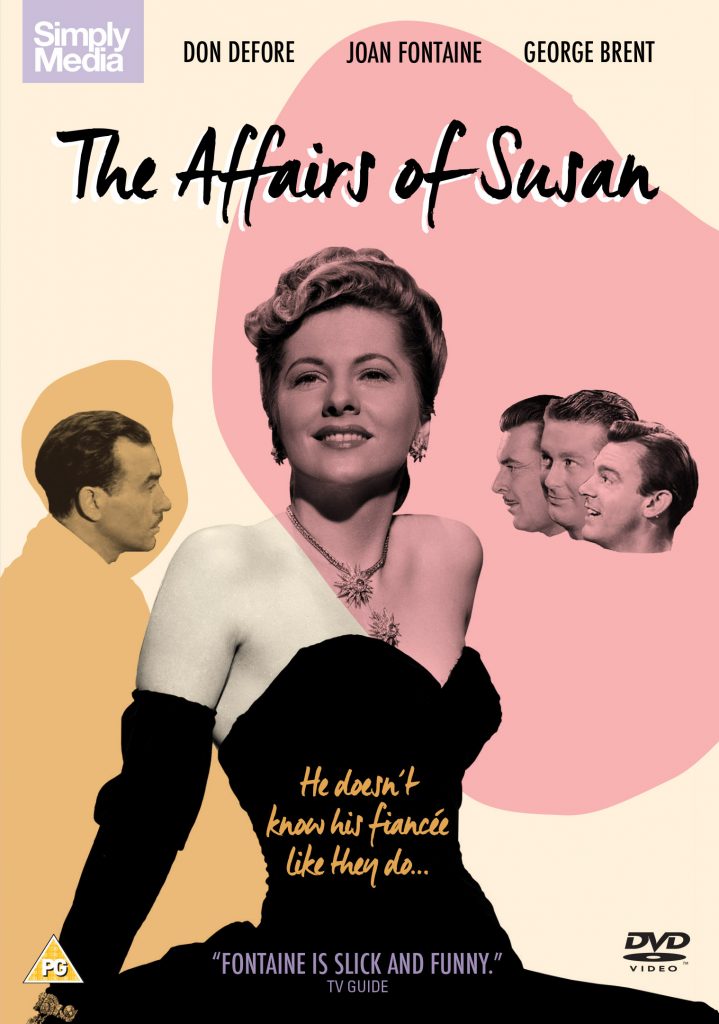
It was hard to cast the lead in Daphne du Maurier’s Rebecca, filmed by Alfred Hitchcock in 1939. The female fans of the bestseller were very protective of the naive woman whom the widower Max de Winter marries and transports to his ancestral home of Manderley. None of the contenders – including Vivien Leigh, Anne Baxter and Loretta Young – felt right for the second Mrs de Winter, who was every lending-library reader’s dream self.
To play opposite Laurence Olivier in the film, the producer David O Selznick suggested instead a 21-year-old actor with whom he was smitten: Joan Fontaine. The prolonged casting process made Fontaine anxious. Vulnerability was central to the part, and you can see that vulnerability, that inability to trust her own judgment, in every frame of the film. The performance brought Fontaine, who has died aged 96, the first of three Oscar nominations.
She was born Joan de Beauvoir de Havilland to British parents – Walter, a lawyer, and Lillian, an actor – in Tokyo, where her father was working. Her parents divorced when she was two and, along with her older sister, Olivia de Havilland, she grew up in California.
Olivia’s beauty won her lead roles on the arm of Errol Flynn, while Fontaine – who took her professional name from her mother’s remarriage, to George Fontaine – lagged behind. No less fine-boned but more tentative, Fontaine seemed somehow more British than her sister. She tried out on the West Coast stage and took small movie parts, advancing gradually in 1939 to be the dewy thing sighed over byDouglas Fairbanks Jr in Gunga Din and the dopiest of The Women in George Cukor’s film of Clare Boothe Luce’s Broadway play.
Meanwhile, De Havilland had been nominated for an Oscar for her performance in that year’s Gone With the Wind. Selznick seems to have intuited that Fontaine’s envy and distress about her more glamorous sibling would inform her playing of the chatelaine of Manderley.
The period from the late 1930s to the end of the second world war is usually seen as an era of ever stronger movie women: career gals, swell dames and tough cookies. But there was a genre of threatened-women films, too: not the physical threat of modern stalker/slasher films, but something subtler, where a woman is destroyed by her fears and insecurities about men and her social competence.
In Rebecca and in Suspicion (1941), Fontaine’s next film for Hitchcock, the heroines – although that’s rather too active a noun for them – marry men more exciting and worldly than they believe they are entitled to. In Rebecca, Fontaine is tempted to take her own life because she is made to feel unworthy of her husband (although he proves to be a lying murderer); in Suspicion she comes near to a breakdown because she believes that her husband (Cary Grant) is trying to murder her.
Fontaine had deserved an Oscar for Rebecca (she lost to Ginger Rogers for Kitty Foyle), but she won for Suspicion, beating De Havilland (nominated for Hold Back the Dawn). Rebecca had updated Charlotte Brontë, so it seemed fitting that Fontaine was cast as Jane Eyre, opposite Orson Welles as Mr Rochester, in a 1943 film directed by Robert Stevenson. She has the wary stubbornness all right, but not the soul afire under the alpaca frock.
There was another Oscar nomination (for The Constant Nymph, 1943) and another Du Maurier adaptation, Frenchman’s Creek (1944). Her onscreen tension appealed to audience sympathy when she was young, and it could also be used, with skill, to suggest sinful scheming, as in Ivy (1947), in which she played a poisoner. But the best film she made was Max Ophüls’s Letter from An Unknown Woman (1948), in which her nervous romanticism was heightened into heroism. Her character had once adored a concert pianist neighbour and become one of his many conquests (and pregnant by him). She abandons her safe marriage and child for one more assignation with the weary creep – only to find he does not remember her. She is just another lovely face.
If, at this point, Fontaine had moved to, say, France she might have had 10 or 20 good years and films, clad in couture to flatter the physical sophistication she had achieved by her 30s. Instead, she was indifferent in Hollywood films by directors who should have made better – The Emperor Waltz (Billy Wilder, 1948), Born to Be Bad (Nicholas Ray, 1950), Serenade (Anthony Mann, 1956), Beyond a Reasonable Doubt (Fritz Lang, 1956) and Until They Sail (Robert Wise, 1957). There was a rather pearls-and-twinset Lady Rowena in the glum Ivanhoe (1952) – did she take the part to prove she could do what her sister had done so well in swashbucklers? – and a then shocking suggestion of an interracial affair with Harry Belafonte in Island in the Sun (1957). In her last major film she was the support – significantly, the sister – in F Scott Fitzgerald’s Tender Is the Night (1962).
Fontaine appeared twice on Broadway as a replacement for current stars, in lieu of Deborah Kerr in Tea and Sympathy, in 1954, and succeeding Julie Harris in Forty Carats, in 1968, both parts closely linked to her introverted screen roles. She continued on stage, though never Broadway again, until she was in her 70s, and worked in television (most successfully a soap, Ryan’s Hope, in 1980) and TV movies, her last appearance being in Good King Wenceslas, on the Family Channel, in 1994.
In her autobiography, No Bed of Roses (1978), she was fearlessly honest about the fearfulness that had dominated all of Hollywood in her prime. Yet in her own life, Fontaine was a brave pilot of planes and balloons, and a deep-sea diver. She married and divorced four husbands: the actor Brian Aherne, the film producer William Dozier, the screenwriter Collier Young and the journalist Alfred Wright.
She is survived by her daughter, Deborah, from her second marriage, a grandson, and her sister.
This “Guardian” obituary can also be accessed here.
Hope Lange was a very pretty actress who starred in some of 20th Century Fox’s most popular films of the late 1950’s. She was born in 1933 in Redding, Connecticut. She was a child actress and at the age of nine made her Broadway debut in “The Patriots” in 1943. Her first film role was “Bus Stop” in 1956 with Marilyn Monroe and Don Murray whom she married. Among her other popular films were “Peyton Place”, “The Young Lions” and “The Best of Everything”. In the sixties she had a popular success with the TV series “The Ghost and Mrs Muir”. In one of her later films “Just Cause” it seemed odd to see her play the mother-in-law of Sean Connery, when she was a few years younger than him. Hope Lange died in 2003.
Ronald Bergan’s “Guardian” obituary:
In the mid-1950s, 20th Century Fox decided to put a group of young actors under contract, calling them Showcase Stars. They all posed linking arms, staring with optimism at the camera. Standing among Patricia Owens, Christine Carere, Dolores Michaels and Diane Varsi was Hope Lange, who has died of an intestinal infection aged 72.Only Lange was to gain any real semblance of film stardom. The gentlemen at Fox preferred blondes, and the demure and refined Lange contrasted with Marilyn Monroe, who had emerged as the epitome of 1950s eroticism. In fact, Lange made her screen debut in Bus Stop (1956), as the sympathetic waitress who befriends dancehall girl Monroe – and that after director Joshua Logan turned down Marilyn’s demand that Lange dye her hair because the star did not want to share the screen with another blonde.
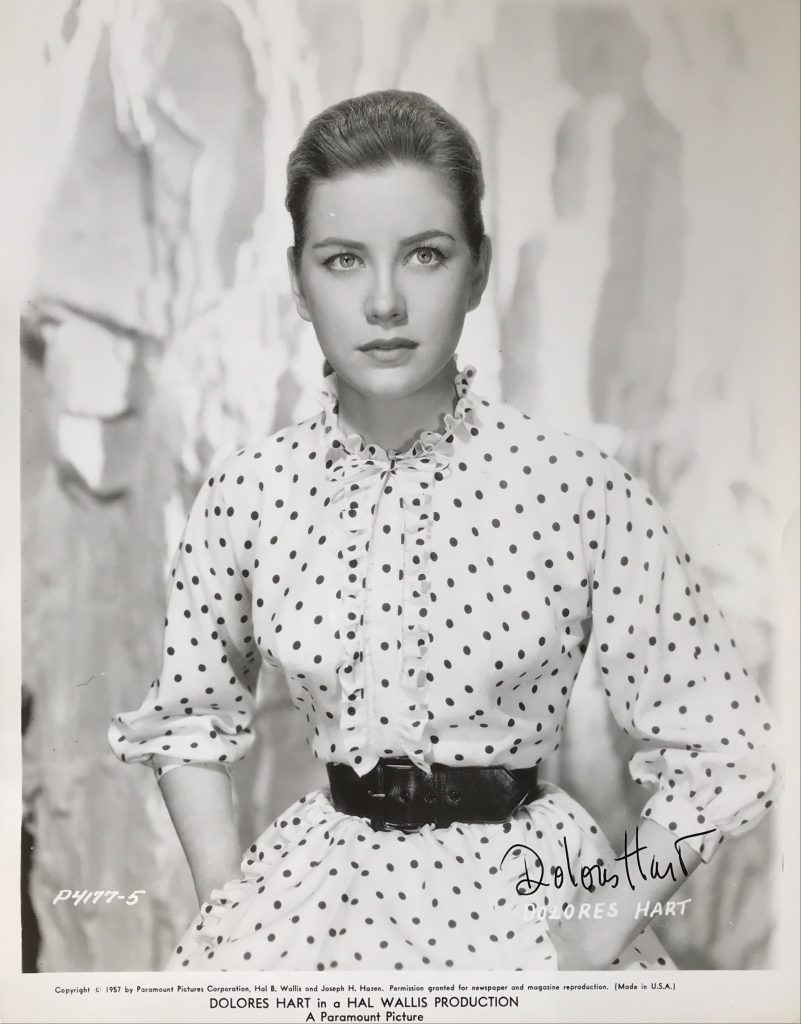
Hope Lange
According to Don Murray, who played the cowboy enamoured of Marilyn, and who married Lange the same year, she “was considered a great beauty, and a serious and dedicated actor who didn’t pay attention to being glamorous”.
Largely eschewing glamour, Lange gave a sensitive performance in Peyton Place (1957), the film for which she is most remembered, and for which she was Oscar-nominated. In this glossy melodrama of dark doings behind the curtains of a small New England town, she played Selena Cross, who lives in a shack, literally on the wrong side of the tracks from her middle-class best friend, is raped by her drunken stepfather (Arthur Kennedy) and is then accused of murdering him.
Born to show-business parents in Redding Ridge, Connecticut, Lange appeared on Broadway at the age of 12, in Sidney Kingsley’s Pulitzer prize-winning play The Patriots (1945). As a teenager, she worked as a waitress at a Greenwich Village restaurant run by her widowed mother. She also walked the dog of Eleanor Roosevelt, who had a house in the village. A photograph of Lange and the Scots terrier appeared in the newspapers, and she was offered work as a model.
She resumed her acting career in her early 20s, appearing in live television dramas before attracting the attention of Fox producer Buddy Adler, who put her in some of the studio’s biggest and widest CinemaScope films.
Stephen Boyd & Hope Lange
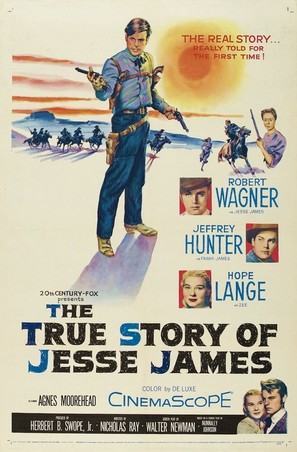
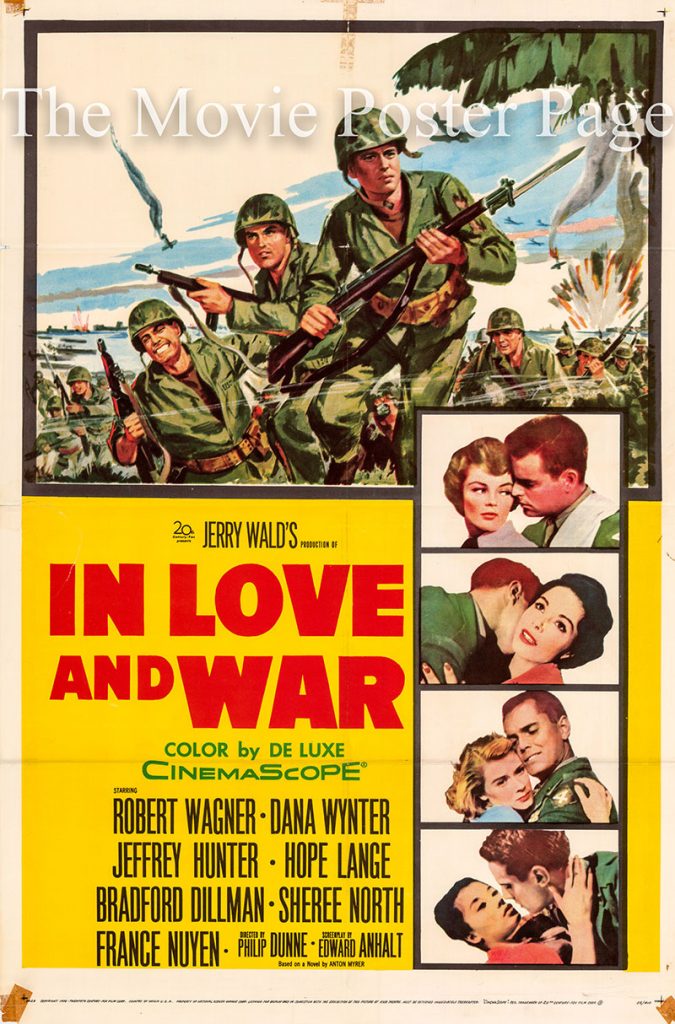
Apart from Peyton Place, however, there was not much meat in the roles. She was the feminine interest in the misnamed The True Story Of Jesse James (1957), which was dominated by Robert Wagner and Jeffrey Hunter as the outlaw brothers. In The Young Lions (1958), she played the quiet Vermont girl who marries Jewish GI Montgomery Clift before he goes off to war, and, in the same year, she was the sweetheart of cowardly marine Robert Wagner in In Love And War.
She had far more to do in The Best Of Everything (1959), a delirious example of that decade’s kitsch. Although dominated by the ageing Joan Crawford, playing a bitter and unfulfilled publishing executive, Lange held her own as a young hopeful in the business. At the beginning of the film, she declares that “if I’m not married by the time I’m 26, I may have to take myself a lover”, then later throws herself at Stephen Boyd. “Please make love to me, even if you don’t love me,” she begs, “26 is too far ahead.”
In reality, Lange, who was already 28, was nearing the end of her Fox contract, and her marriage to Don Murray. In 1961, having played a psychiatrist to the delinquent Elvis Presley in Wild In The Country – she encourages him to go to college and become a writer – she went freelance.
Now divorced, she began a relationship with Glenn Ford, who insisted that she co-star with him in Pocketful Of Miracles (1961), a situation that angered the director Frank Capra, who had wanted Shirley Jones for the part. As it turned out, the film, a dated remake of his 1933 masterpiece Lady For A Day, was an inglorious end to Capra’s career, with Lange miscast as the flashy nightclub owner Queenie Martin, who keeps pressing bootlegger Dave the Dude (Ford) to marry her. Lange also co-starred with Ford in Love Is A Ball (1963), playing a wild millionairess on the French Riviera, to his racing driver posing as her chauffeur.
This frothy nonsense, desperately trying to be satirical about the rich, was Lange’s last film for five years. She retired from acting during her marriage to producer-director Alan Pakula, returning only after their separation in 1968 (they divorced the following year) to star in a US television series The Ghost And Mrs Muir, opposite Edward Mulhare.
· Hope Lange, actor, born November 28 1931; died December 19 2003
Her “Guardian” obituary can also be accessed here.
This was followed by her sweet housewife role in The New Dick Van Dyke Show (1971-74), but the show was cancelled after Lange refused to sign for a fourth season because CBS would not show an episode implying that the couple were having sex in their bedroom. “They have three children, for Pete’s sake. Was that by immaculate conception?” she exclaimed.
She married theatre producer Charles Hollerith Jr in 1986. He survives her, as do the son and daughter of her first marriage.
Over the next few decades, Lange continued to guest frequently in TV shows, and appeared sporadically in feature films. In 1974, as Charles Bronson’s wife in Death Wish, she spent most of her time in a coma, before dying; in 1985, she was in A Nightmare On Elm Street 2: Freddy’s Revenge; and, the following year, she was Laura Dern’s mother in David Lynch’s Blue Velvet. In 1977, she appeared on Broadway in Same Time, Next Year, opposite her ex-husband Murray.
“In the 30s, Bing Crosby virtually had the field to himself. Over at Warners, Dick Powell also crooned, at RKO Fred Astaire sang as he tapped and at MGM Nelson Eddy gave out in stentorian tones. None of the other male singers made much impression or stayed long. In the 40s, after the success of Frank Sinatra, there was a new influx – Perry Como, Dick Haymes, Andy Russell. Crosby stayed way out in front. Gordon MacRae, also came to movies via radio and records, and he developed into one of the best singing stars – almost as easy as Bing, more animated than Como or Haymes, more virile then was Sinatra of the 40s” – David Shipman – “The Great Movie Stars – The International Years”.
Gordon MacRae was a fine singer who has made an impression in several fine musicals e.g. “Oklaholma”, “Carousel”, “By the Light of the Silvery Moon” and “The Desert Song”. He was born in 1921. In 1948 he made his film debut in “The Big Punch” and his cinema peak was in the 1950’s. He made many fine recordings including several albums with Jo Stafford. Gordon MacRae died in 1986 at the age of 64.
Obituary in “Los Angeles Times”:
Gordon MacRae, the clean-cut, full-throated baritone who triumphed over the alcoholism that threatened a career which peaked with his portrayal of Curly in the film version of “Oklahoma,” died today at Bryan Memorial Hospital in Lincoln, Neb.
He was 64, said hospital spokesman Edwin Shafer, who added that MacRae had been hospitalized since November suffering from cancer of the mouth and jaw and pneumonia.
Although he appeared in several successful stage, radio and television programs, MacRae will best be remembered for two film musicals–“Carousel” and “Oklahoma.” In each he appeared opposite Shirley Jones, and her lilting soprano proved an appealing complement to MacRae’s sonorous baritone.
Father Saw Talent
MacRae was the son of “Wee Willie MacRae,” a singer turned businessman who encouraged his son’s innate talent.
The young MacRae was a page boy with NBC who joined “Horace Heidt and His Musical Knights” as a vocalist in 1941. He had minor roles on Broadway and radio but was drafted into the Army in 1943. After the war he starred on NBC radio on the old “Teentimers” show, but his career didn’t really take off until Warner Brothers signed him to a contract in the late 1940s.
In all he made 25 films including “West Point Story,” “The Best Things in Life Are Free” and “Look for the Silver Lining.”
But by the 1970s his life and his career were in decline because of his drinking.
“I was one hell of a drunk,” he said in 1982, referring to the Lakeside Club in North Hollywood as his prep school for alcoholics. “I used to stand at the bar and try to out-drink Bogey (Humphrey Bogart) and Errol Flynn.”
Couldn’t Remember Lyrics
In 1978, a year after he was unable to sing in concert in South Carolina because he couldn’t remember his lyrics, he entered an alcoholism treatment center in Lincoln.
He lived in Lincoln with his second wife, Elizabeth, until his death because “it reminded me of my hometown” (East Orange, N.J.).
One of his last appearances was in Las Vegas in October, 1982, shortly before he suffered a stroke.
It was a benefit for the National Council on Alcoholism, which MacRae adopted as a favored charity after his own recovery.
He referred to the occasion as “our third annual Follies Berserk” but on a more serious note reflected how “you hit bottom, then you make up your mind. I’m sober 23 months now.”
His obituary in “The Los Angeles Times” can also be accessed here.